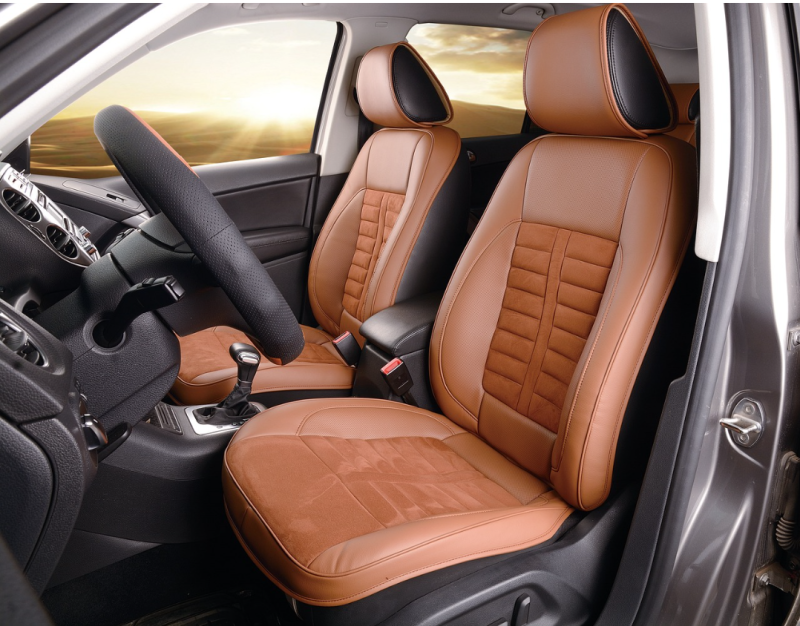


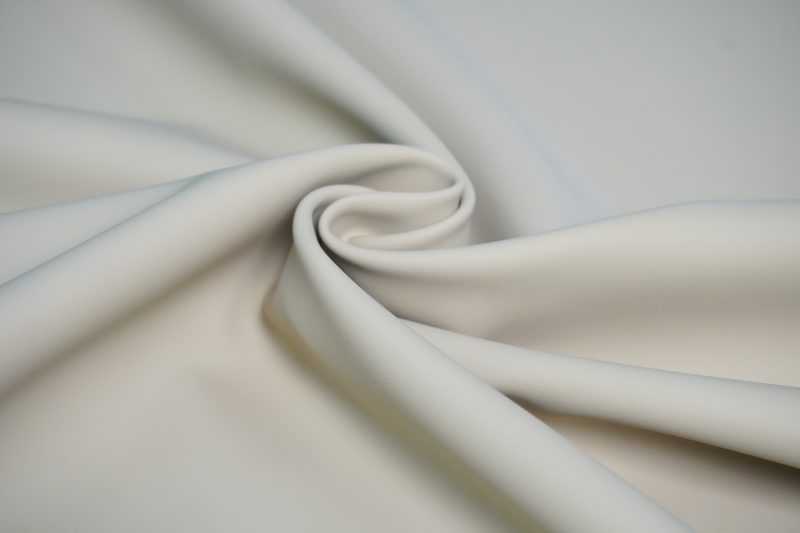
How silicone leather is redefining the tactile feel of interiors: In the automotive and home interior fields where the ultimate experience is pursued, a material called silicone leather is attracting attention for its “skin-like” properties. It offers the delicate feel of genuine leather while breaking through the limitations of traditional leather maintenance; It has been maintained artificial leather easy to process, while also offering a skin-friendly texture closer to natural materials. The emergence of this material has taken a key step from “visual beauty” to “tactile immersion” for interior surfaces.
The tactile code within the molecular structure
The core of silicone leather lies in its unique silicon-oxygen bond (Si-O-Si) main chain structure. This flexible chain segment, made of alternating silicon and oxygen, gives the material microelasticity similar to human skin—when stretched, the molecular chains can stretch by over 300%, and when released, they quickly return to their original shape. Compared to traditional PVC or PU leather, its surface energy is lower (about 24mN/m), approaching the skin’s 28mN/m, and it does not feel sticky or rough to the touch.
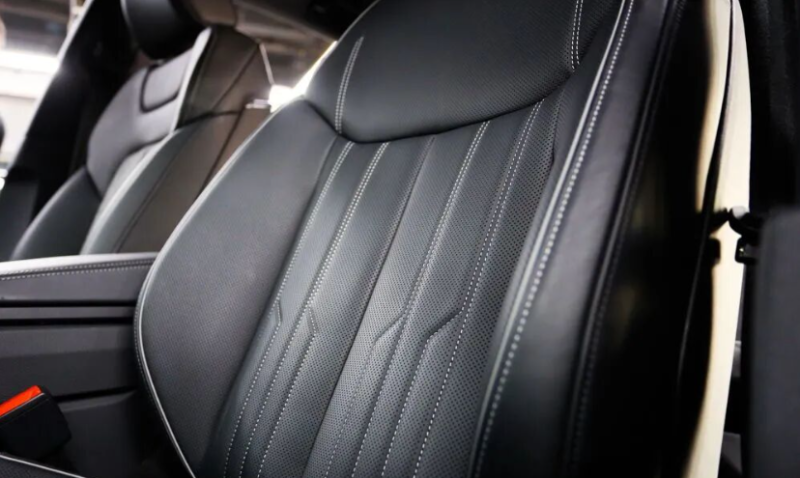
More importantly, it is its microscopic surface structure. Through nanoscale foaming technology, the material surface forms a microporous structure with a density of about 10^6 cells/cm², and the pore size is controlled between 5-20μm. These micropores ensure breathability (with a breathability rate of 500-800g/m2·24h) while giving the surface a delicate texture similar to skin pores. When fingers glide over the micropores, slight deformation triggers the “active feedback” of the tactile nerves, creating a “sense of life” similar to touching the skin.
![Image [1]-Silicone Leather Redefines the Tactile Feel of Automotive and Home Interiors with Skin-Like Microporous Structure, High Durability, and Self-Cleaning Performance-Nleather](https://www.nleather.com/wp-content/uploads/2026/06/产品-高性能系列-汽车座椅-1024x802.png "产品-高性能系列-汽车座椅 – Nleather")
Breaking the boundaries of traditional leather experiences
In practical applications, silicone leather demonstrates advantages that traditional materials cannot match. Actual test data from a German car manufacturer shows that after 50,000 rubs, the seat surface gloss only decreases by 15%, while ordinary Nappa leather loses by 40%. This is thanks to the high bond energy (452 kJ/mol) of the silicon-oxygen bond, which allows it to withstand temperatures from -50°C to 200°C, far exceeding the 60°C threshold of genuine leather, thus avoiding cracking after exposure to high temperatures.
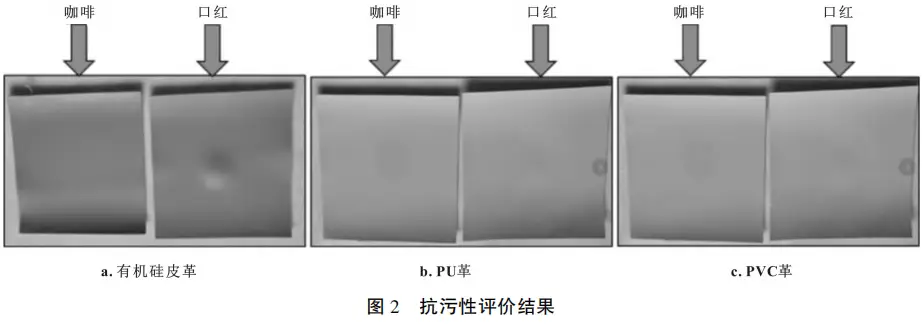
Its anti-stain performance is a revolutionary breakthrough. Due to low surface energy and dense microporous structure, the contact angle for liquids such as coffee and oils can exceed 110°, and the penetration time is three times longer than traditional leather. Experiments show that spilled coffee can be completely removed after 24 hours on the surface, requiring only a dry cloth to wipe it off completely, without the need for cleaning agents. This “self-cleaning” completely solves the pain point of genuine leather interiors being “easily dirty and hard to maintain.”
![Image [2]-Silicone Leather Redefines the Tactile Feel of Automotive and Home Interiors with Skin-Like Microporous Structure, High Durability, and Self-Cleaning Performance-Nleather](https://www.nleather.com/wp-content/uploads/2026/06/产品-高性能系列-游轮家具-1024x770.png "产品-高性能系列-游轮家具 – Nleather")
A tactile revolution from lab to cockpit
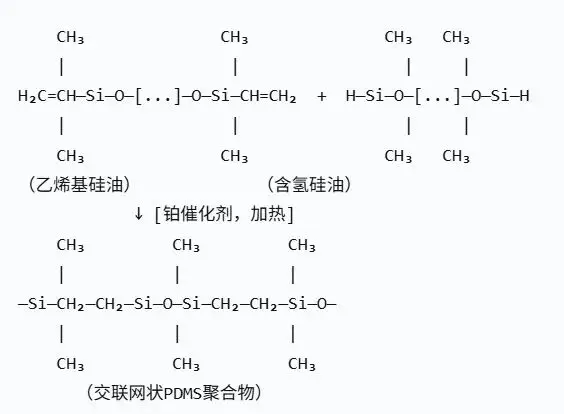
The implementation of this technology relies on precise manufacturing processes. Using a two-component addition vulcanization system, Agent A (polysiloxane containing vinyl) and Agent B (crosslinker containing silicon hydrogen bonds) are cured under the action of a platinum catalyst at 150°C within 3 minutes. This “instant cross-linking” characteristic ensures batch stability of the material, with surface roughness Ra controlled between 0.8-1.2μm, close to the 0.5-1.0μm range of infant skin.
In automotive cockpit scenarios, a certain new energy brand has already applied it to high-touch areas such as steering wheels and door panels. User surveys show that 83% of users feel the texture is “closer to skin than genuine leather,” and 76% say “prolonged exposure does not easily cause fatigue.” What’s even more noteworthy is that this material passed the in-car VOC test, with formaldehyde emissions of ≤5mg/kg and no benzene compounds detected, perfectly meeting the needs of a healthy cabin.
From precise design of molecular chain segments to nano-control of microscopic surfaces, silicone leather is redefining tactile standards for interior materials. It is not only an alternative to traditional leather but also a technological revolution in “tactile aesthetics.” The moment your fingertips touch the interior surface, that skin-like smoothness and warmth quietly change how we perceive “home” and “mobile space.”

No comments yet