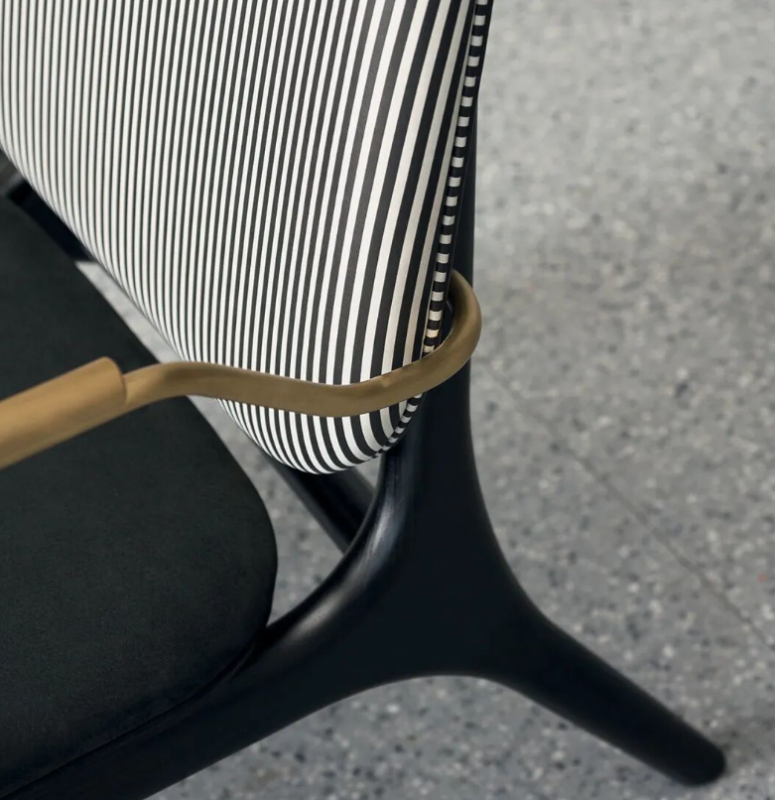


Abrasion resistance is an important indicator of textile product quality, directly affecting durability and performance. Specifically, it refers to the resistance to wear between fabrics or other materials during repeated friction.
![Image [1]-Martindale Method: Effortless, Best Fabric Abrasion Testing – Nleather-Nleather](https://www.nleather.com/wp-content/uploads/2026/06/image-196.png "image – Nleather")
Wear on textile products mainly manifests in the following five aspects:
- During friction, fibers continuously collide, causing fiber fragments in the yarn to break due to fatigue damage, resulting in yarn breakage.
- Fibers are pulled out of the fabric, causing the yarn and fabric structure to become loose. Under repeated action, the fibers may be completely pulled out, resulting in thinner yarns, thinner, or even disintegration.
- Fibers are cut and broken, causing yarn breakage.
- Fiber surface wear causes fragments to appear and be lost.
- Friction generates high temperatures, causing fibers to melt or undergo plastic deformation, affecting the fiber’s structure and mechanical properties.
Wear is manifested in changes in fabric shape, mainly due to damage, loss of mass, discoloration, fuzzing, pilling, and other changes.
There are various methods for testing the wear resistance of textile products, such as flat grinding, curved grinding, edge grinding, and compound grinding. The Martindale method is a type of flat grinding method widely used for testing the wear resistance of clothing, home textiles, decorative fabrics, and furniture fabrics. The Martindale Wear Resistance Tester sold directly by Luozhong Technology uses the Martindale Method for testing wear performance:
Introduction to the standard system
1.1 International Standards
ISO12947.2—1998 “Measurement of Fabric Abrasion Resistance Using the Martindale Method for Textiles: Part 2: Determination of Specimen Damage”;
ISO12947.3—1998 “Measurement of Fabric Abrasion Resistance Using the Martindale Method in Textiles Part 3: Measurement of Quality Loss”;
ISO12947.4—1998 “Measurement of Fabric Abrasion Resistance Using the Martindale Method in Textiles, Part 4: Evaluation of Appearance Changes.”
1.2 ASTM standards
ASTMD4966-2010 “Fabric Abrasion Resistance Tester Martindale Abrasion Tester.”
1.3 EU Standards
EN ISO12947.2-1998 “Measurement of Abrasion Resistance of Textile Martindale Fabrics Part 2: Determination of Specimen Damage”;
EN ISO12947.3-1998 “Measurement of Fabric Abrasion Resistance Using the Martindale Method in Textiles Part 3: Measurement of Quality Loss”;
EN ISO12947.4-1998 “Measurement of Fabric Abrasion Resistance Using the Martindale Method in Textiles, Part 4: Evaluation of Appearance Changes.”
The German Institute of Standardized Chemistry (DIN) standards
DIN EN ISO12947.2-2007 Textiles. Fiber abrasion resistance was measured using the Mars method. Part 2: Experimental Damage Determination;
DIN EN ISO12947.3-2007 Textiles. Fiber abrasion resistance was measured using the Mars method. Part 3: Mass Loss Measurement;
DIN EN ISO12947.7-2007 Textiles. Fabric abrasion resistance was measured using the Martindale method. Part 4: Evaluation of Appearance Changes.
British Standards Institution (BS) standards
BS ISO 12947.2-1998 “Measurement of Fabric Abrasion Resistance Using the Martindale Method for Textiles: Part 2: Determination of Specimen Damage”;
BS ISO 12947.3-1998 “Measurement of Fabric Abrasion Resistance Using the Martindale Method in Textiles Part 3: Measurement of Quality Loss”;
BS EN ISO 12947.4-1999 “Measurement of Textile Fabric Abrasion Resistance by Martindale Method, Part 4: Evaluation of Appearance Changes.”
Chinese National Standards
GB/T 21196.2-2007 “Measurement of Abrasion Resistance of Textile Martindale Fabrics Part 2: Determination of Specimen Damage”;
GB/T 21196.3-2007 “Measurement of Fabric Abrasion Resistance Using the Martindale Method in Textiles Part 3: Measurement of Quality Loss”;
GB/T 21196.4-2007 “Measurement of Fabric Abrasion Resistance Using the Martindale Method in Textiles, Part 4: Evaluation of Appearance Changes.”
The standards presented above are the Martindale method standards for fabric abrasion resistance testing, issued by several influential international standardization organizations. Among them, EU standards, German Standards Society standards, and British Standards Institution standards all adopt International Organization for Standardization standards. The Chinese national standard has been revised to adopt the International Organization for Standardization standards, with testing methods basically equivalent to those specified in the International Organization for Standardization, except that the scope of application of the standard has been expanded to cover coated fabrics, and corresponding provisions for coating fabric damage, friction load parameters, standard abrasives, and standard abrasive replacement requirements have been added for coating fabric testing. The ASTM D4966-2010 ASTM D4966-2010 “Fabric Abrasion Resistance Tester Martindale Abrasion Tester” includes two parts: the abrasion resistance testing method specification and the Martindale Abrasion Tester and auxiliary materials. The testing method is basically consistent with the International Organization for Standardization standard ISO 12947.2~4, and the determination of quality loss and evaluation of appearance changes differ slightly from ISO 12947.3~4. The endpoint conditions for the test and the presentation of test results have been further simplified.
Methods for evaluating fabric abrasion resistance
The conditions for determining sample damage are: at least two independent yarns in the woven fabric are completely broken; A thread in the knitted fabric breaks, causing an appearance tear; The fuzz on the surface of raised or cut fleece fabrics is worn down to the exposed base or has tufts falling off; Nonwoven fabrics have holes caused by friction, with a diameter ≥ 0.5mm; the coating part of the coated fabric is damaged until the base fabric is exposed or the flake-like coating peels off. Fabric abrasion resistance is generally analyzed and evaluated from three aspects: testing for specimen damage, measuring body for mass loss, and evaluation of appearance changes.

![Image [2]-Martindale Method: Effortless, Best Fabric Abrasion Testing – Nleather-Nleather](https://www.nleather.com/wp-content/uploads/2026/07/image-37-1024x263.png "image – Nleather")
- Specimen damage measurement: Under a certain load, the specimen inside the fixture moves along a Lissajous curve plane and rubs against the abrasive. The total number of frictions when the specimen breaks is used to determine the fabric’s wear resistance.
- Measurement of mass loss: Under a certain load, the specimen inside the fixture moves along a Lissajous curve plane and rubs against the abrasive. The wear resistance is determined by the mass difference before and after the test at a specific number of rubs.
- Evaluation of appearance changes: Under a certain load, the specimen inside the fixture moves along a Lissajous curve plane and rubs against the abrasive. The appearance changes before and after friction determine the fabric’s wear resistance.
Among the three methods above, the most commonly used is the sample damage detection method, which has low error, provides clear and intuitive results, and makes it easy to compare the abrasion resistance of different fabrics. It is widely used in apparel products and decorative fabrics. The methods for measuring mass loss and appearance quality change are relatively complex, but they can reflect the wear resistance of samples at different friction stages, making them highly practical for manufacturers or research institutions in analyzing the use of fabrics.




No comments yet