

Leather materials, with their excellent physical and mechanical properties and refined appearance, are widely used in automotive, medical, aerospace, furniture, luggage, apparel, and many other fields. Traditional leather materials mainly include natural leather and polyvinyl chloride (PVC) artificial leather Combined with polyurethane (PU). finished leather 。 However, these traditional leathers face varying degrees of environmental and health issues during production and use.
In recent years, a new type of eco-friendly leather made primarily from silicon-based polymers—organosilicon leather—has gradually entered the public eye. This material is based on abundant silicon elements in the Earth’s crust and uses a solvent-free production process, showing promise for solving traditional synthesis problems finished leather Dependence on petrochemical resources aligns with the national “dual carbon” strategy. This article will systematically explain the production technology and process principles of silicone leather, and conduct a comprehensive comparison of its advantages and disadvantages with traditional leather.
Overview of Silicone Leather
Silicone leather is a new type of environmentally friendly synthetic material made from silicone as raw material, combined with microfibers, non-woven fabrics, and other substrates, processed using solvent-free technology. Its core component, polydimethylsiloxane (PDMS), features a unique Si-O-Si- backbone structure and a methyl outward helical molecular structure, giving this material excellent overall performance.
Silicone leather belongs to the new materials industry developed in the 21st century. Due to its excellent weather resistance, flame retardancy, stain-resistant and easy maintenance, skin-friendly and non-allergenic, mildew and antibacterial properties, wear resistance and durability, and safety and non-toxicity, it is suitable for major industries such as hotels, medical care, home furnishings, 3C electronics, automotive, and children’s products.
Production technology and craftsmanship of silicone leather
Core Chemical Reaction Principles
The production of silicone leather is based on the silicon hydrogen addition reaction mechanism. Research by Professor Fan Haojun’s team at Sichuan University shows that using vinyl silicone oil and hydrogen-containing silicone oil in in-situ polymerization in a thermally induced catalytic system can produce organosilicon polymer (PDMS) coatings.
The main reaction formulas are as follows:
Main chain formation reaction (silico-hydrogen addition):
![Image [1]-Silicone Leather Production Technology and Craftsmanship: Comprehensive Comparison with PVC, PU, and Natural Leather on Environmental, Safety, and Performance Aspects-Nleather](https://www.nleather.com/wp-content/uploads/2026/05/image-2.png "– Nleather")
Under the action of a platinum catalyst, vinyl silicone oil (containing carbon-carbon double bonds) and hydrogen-containing silicone oil (containing silicon-hydrogen bonds) undergo an addition reaction to form a three-dimensional crosslinked network structure of polydimethylsiloxane elastomer. This reaction process does not release small molecules and is considered a green chemical process.
To improve coating performance, vinyl MTQ silicone resin and spherical vinyl MQ silicone resin are often added as reinforcing fillers in the formulation. The amount of resin added needs to be precisely controlled: compared to 100 parts by weight of organic polysiloxane, the recommended addition of vinyl MTQ silicone resin is 1-60 parts by weight. Too little will not provide significant reinforcement, while too much will result in excessive hardness and poor tactile feel.
Production Process Flow
The production of silicone leather follows the traditional dry method finished leather Manufacturing technology mainly uses the release paper process. According to the report from the Sichuan University research team, the typical preparation process flow is shown in the diagram below:
Organosilicon combination finished leather Manufacturing Process Diagram:
![Image [2]-Silicone Leather Production Technology and Craftsmanship: Comprehensive Comparison with PVC, PU, and Natural Leather on Environmental, Safety, and Performance Aspects-Nleather](https://www.nleather.com/wp-content/uploads/2026/05/image-3.png "– Nleather")
The specific process steps are as follows:
Step 1: Preparation and coating of the surface adhesive
Mix organic polysiloxane (vinyl silicone oil), organic hydrogenated polysiloxane (hydrogen-containing silicone oil), vinyl MTQ silicone resin, spherical vinyl MQ silicone resin, etc., according to the formula ratio, and adjust the silicon-to-hydrogen ratio (molar ratio of active hydrogen to vinyl) within an appropriate range. The mixed topping paste is evenly coated onto the release paper, then placed in an oven for heating and curing.
Step 2: Apply the base coat
Apply a high-strength silicone bonding layer (primer) to the cured surface of the adhesive layer. Primer formulations usually do not add spherical vinyl MQ silicone resin to ensure good bonding performance.
Step 3: Base fabric bonding and curing
The base fabric (which can be polyester, nylon, microfiber nonwoven fabric, etc.) is laminated onto the base adhesive layer. After maturing at appropriate temperature and time, the base adhesive is fully cross-linked and cured, firmly bonding the base fabric to the surface layer.
Step 4: Stripping and post-processing
After curing is complete, the release paper is peeled off to obtain organosilicon polymer finished leather Finished product. Depending on requirements, surface embossing, printing, and other post-processing processes can be performed.
Notably, the entire production process uses solvent-free technology, eliminating the need for organic solvents such as toluene, MET, or DMF, eliminating VOC emissions at the source.
Comparison with the advantages and disadvantages of traditional leather
Comprehensive Performance Comparison
According to testing data from multiple research institutions and companies, silicone leather shows significant differences in various performance aspects compared to traditional leather.
Performance comparison between silicone leather and traditional leather:
| Comparison projects | Silicone leather | Natural leather | PU combined finished leather | PVC artificial leather |
| Environmental friendliness | Excellent, no harmful substances released, no odor during burning | Generally, chromium salts and aniline dyes are used during processing, releasing nitrogen oxides and sulfur dioxide when burned | Relatively poor, production uses solvents. Combustion releases hydrogen cyanide and carbon monoxide | Poor. Contains plasticizers, releases hydrogen chloride when burned |
| Cold resistance | Excellent (Tg-131.8°C) -20°C, 60,000 folds with no damage | Relatively good, but it hardens easily at low temperatures | Generally (Tg -35°C), prone to breakage at low temperatures | Poor (Tg -15°C), low-temperature brittle cracking |
| Wear resistance | Excellent, 100,000 Martindale test surfaces intact | Good, but needs maintenance | Generally, after wear, it tends to fade and peel | Poor quality, with obvious wear |
| Weather resistance | Excellent, UV resistant, hydrolysis resistant | Relatively good, but long-term exposure can cause aging | Poor quality, prone to yellowing | Generally, plasticizers harden and become brittle after migration |
| Stain resistance | Excellent, low surface energy, ink residue can be easily wiped off | Poor quality, easily contaminated, difficult to clean | Average | Average |
| Hydrophobicity | Excellent, water contact angle of 112.4°, long-lasting hydrophobicity | Better, but it absorbs water | Good waterproofing but poor breathability | Good waterproofing |
| VOC release | Extremely low, with no solvent residue | Chemical reagent residues may be present during processing | Solvent residues are released | Plasticizers continue to be released |
| Security | Skin-friendly, non-allergenic, anti-toxin and antibacterial | May contain heavy metals such as chromium | May contain isocyanates | Plasticizers are harmful to health |
| 比较项目 | 有机硅皮革 | 天然皮革 | PU合成革 | PVC人造革 |
| 环保性 | 优异,无有害物质释放,燃烧无异味 | 一般,加工使用铬盐、苯胺染料,燃烧释放氮氧化物、二氧化硫 | 较差,生产使用溶剂。燃烧释放氰化氢、一氧化碳 | 差。含增塑剂,燃烧释放氯化氢 |
| 耐寒性 | 优异(Tg-131.8℃)-20℃6万次耐折无损伤 | 较好,但低温易变硬 | 一般(Tg -35℃),低温易折损 | 较差(Tg -15℃),低温脆裂 |
| 耐磨性 | 优异,10万次马丁代尔测试表面完好 | 良好,但需保养 | 一般,磨损后易掉色起皮 | 较差,磨损明显 |
| 耐候性 | 优异,耐紫外线,耐水解 | 较好,但长期暴露易老化 | 较差,易黄变 | 一般,增塑剂迁移后发硬变脆 |
| 防污性 | 优异,表面能低,墨迹可被轻松擦拭 | 较差,易被污染难清理 | 一般 | 一般 |
| 疏水性 | 优异,水接触角112.4°,持久疏水 | 较好,但会吸水 | 防水性好,但透气性差 | 防水性好 |
| VOC释放 | 极低,无溶剂残留 | 加工过程有化学试剂残留 | 有溶剂残留释放 | 增塑剂持续释放 |
| 安全性 | 亲肤不致敏,防毒防菌 | 可能含铬等重金属 | 可能含异氰酸酯 | 增塑剂危害健康 |
Detailed explanation of key performances
1. Environmental protection and safety
Silicone leather is produced using a solvent-free process, without plasticizers or organic solvents, eliminating the use of harmful substances at the source. During burning, silicone leather releases no harmful gases, and the burning process is fresh and odorless.
In contrast, PVC artificial leather During production and combustion, highly toxic substances such as dioxins and hydrogen chloride are produced, which may lead to cancer and other diseases. PU combined finished leather Combustion produces harmful gases such as hydrogen cyanide and carbon monoxide. Natural leather itself burns harmlessly, but its processing uses large amounts of aniline dyes, chromium salts, and other chemical agents, posing a risk of heavy metal contamination.
2. Resistance to high and low temperatures
Research from Sichuan University shows that the glass transition temperature (Tg) of silicone leather coatings is -131.8°C, far lower than PU combination finished leather -35°C and PVC artificial leather -15°C. After 60,000 fold fastness tests at room temperature (25°C) and low temperature (-20°C), the differences among the three types of artificial leather coatings at room temperature were minimal, but in the low-temperature flex test, severe creases and damage appeared on the surfaces of PU and PVC leather, while silicone was used finished leather The surface shows almost no visible damage.
3. Wear resistance
Through the Martindale wear resistance test and 100,000 friction tests, PVC and PU artificial leather coatings showed high wear, obvious surface damage, and fading, while silicone coatings finished leather The coating wears less and the surface texture remains clear.
4. Anti-stain and self-cleaning performance
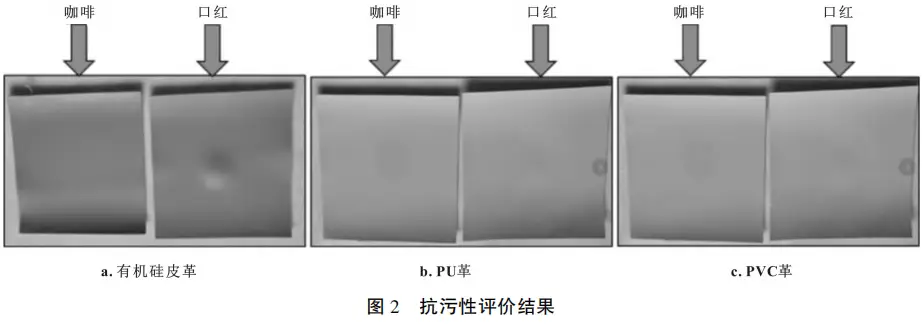
The surface energy of the silicone coating is very low, with a water contact angle of up to 112.4°, and within 0~180 seconds, the water contact angle drops by only 7.3°, demonstrating excellent hydrophobicity. When oil-based pens are combined with silicone components, finished leather When writing on the coated surface, ink marks visibly shrink, and after drying, pen marks can be easily removed with tissues. Common stains like ballpoint pens, markers, soy sauce, and snacks are difficult to adhere to the surface.
3.3 Cost and Economic Analysis
From a cost perspective, silicone leather is moderately priced and relatively stable, while natural leather is more expensive and highly volatile, while PVC/PU leather is cheaper but varies in quality. As China’s organic silicon raw material supply chain matures, silicon is abundant in the earth’s crust, and organosilicon is combined finished leather It has promising prospects for industrialization.
Comparison of Comprehensive Costs and Benefits of Various Types of Leather:
| Silicone leather | Natural leather | PU combined finished leather | PVC combination finished leather | |
| Raw material costs | Moderate | High | Lower | Low |
| Environmental investment | Low (solvent-free process) | High (wastewater treatment) | (Solvent recovery) | (Plasticizer migration issue) |
| Service life | Long, wear-resistant, and weather-resistant | Relatively long and requires maintenance | Average | Short and prone to aging |
| Full lifecycle cost | Lower | High | Average | Moderately high |
| 有机硅皮革 | 天然皮革 | PU合成革 | PVC合成革 | |
| 原料成本 | 适中 | 高 | 较低 | 低 |
| 环保投入 | 低(无溶剂工艺) | 高(废水处理) | 中(溶剂回收) | 中(增塑剂迁移问题) |
| 使用寿命 | 长,耐磨耐候 | 较长,需保养 | 一般 | 短,易老化 |
| 全生命周期成本 | 较低 | 高 | 中等 | 中等偏高 |
4.Application Fields and Development Prospects
With its outstanding overall performance, silicone leather shows broad application prospects in multiple high-end fields:
Automotive interior: seats, steering wheel covers, instrument panel upholstery, etc., weather resistance and chemical stability adapt to the complex interior environment of the vehicle
Medical and Health: Medical equipment surfaces, mattress care, etc., skin-friendly, non-allergenic, easy to clean and disinfect
Furniture decoration: sofas, chairs, mattresses, etc., waterproof, stain-resistant, easy to maintain
Electronics: phone cases, tablet cases, earphone covers, etc., with a soft touch enhancing user experience
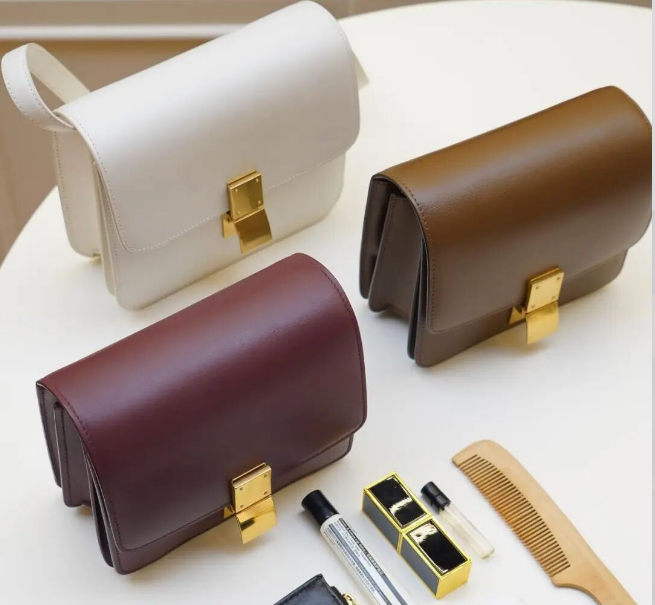
Bags and handbags: Waterproof, wear-resistant, and aesthetically pleasing, meeting the needs of different consumers
Infant products: safe, non-toxic, mold-resistant, and antibacterial
According to data from the National Bureau of Statistics, China’s leather material production and sales volume currently exceeds 3 million tons, with an output value exceeding 60 billion yuan, representing a huge market scale. Our country unites finished leather Annual output reaches 7 billion meters, requiring 2 million tons of polyurethane coating materials per year. Replacing traditional coating materials with silicone materials, achieving “silicon” instead of “carbon,” and creating an ecological synthesis for the preparation of non-isocyanate-based and non-petroleum-based materials finished leather It provides a new path.
Conclusion
Silicone leather, as a new environmentally friendly synthetic material, forms a three-dimensional cross-linked network structure through the silicon hydrogen addition reaction between vinyl silicone oil and hydrogen-containing silicone oil, which is laminated with the substrate using a solvent-free coating process. Combined with traditional natural leather and PU finished leather 、PVC artificial leather In comparison, silicone leather has significant advantages in environmental safety, resistance to high and low temperatures, wear resistance, and stain resistance and self-cleaning performance.
With the advancement of the national “dual carbon” strategy and growing consumer environmental awareness, silicone leather is expected to see broader applications in high-end fields such as automotive, medical, and home furnishings, becoming an important alternative to traditional leather materials. China’s organic silicon raw material supply chain is mature and has good industrialization prospects, providing strong support for the green and sustainable development of the leather industry.

No comments yet