

Veg-tan , as one of the oldest leather tanning methods in human history, it remains irreplaceable in today’s industrial era due to its eco-friendliness, naturalness, and unique texture. It is not only a craft passed down for millennia, but also an embodiment of lifestyle aesthetics. This article will provide a comprehensive analysis from two dimensions: production process flow and in-depth analysis Veg-tan Hide.
![Image [1]-Veg-tan Leather: Stunning, Timeless Quality Unveiled – Nleather-Nleather](https://www.nleather.com/wp-content/uploads/2026/07/20260726-175101-Wm4sm-nleather-silicone-leather.png "20260726-175101-Wm4sm-nleather-silicone-leather – Nleather")
The production process of Veg-tan leather
Veg-tan As the name suggests, it is a process that combines tannic acid extracted from plants with collagen from raw hides, transforming it into leather that is resistant to decay and has good physical properties. Its core process can be divided into the following three major stages:
Preparation Phase
The goal at this stage is to remove all non-collagen components from the hides, preparing the process for tanning.
1. Soaking: Place salted or dried raw hides into a clear water pool to restore their softness and moisture, and wash off dirt and salt first.
2. Soaking in lime: Place the skin in lime solution. This step is crucial and can:
· Expands skin fibers and loosens collagen structure.
· Remove the epidermis and hair.
· Removes intradermal fat and some soluble proteins.
· This increases the thickness of the leather and facilitates subsequent processing.
3. Layering: Use a large layering machine to split the leather sheet into multiple layers according to thickness requirements. The topmost layer of “top-layer leather” fibers is the densest and of the best quality, used for high-end production Veg-tan Hide.
4. Deminering: Use an acidic solution to neutralize the residual alkaline lime inside the hide, adjusting the pH to a mildly acidic environment suitable for tanning.
5. Enzyme Softening: Enzyme preparations are used to further soften the skin fibers, making them more elastic and supple.
6. Acid soaking: Further lowers the pH of the skin to achieve optimal penetration and binding of plant tannins.
![Image [2]-Veg-tan Leather: Stunning, Timeless Quality Unveiled – Nleather-Nleather](https://www.nleather.com/wp-content/uploads/2026/07/20260726-175135-DTbnL-nleather-silicone-leather.png "20260726-175135-DTbnL-nleather-silicone-leather – Nleather")
Core Tanning Stage
1. Veg-tan:
· Method: Traditionally, the “pond tanning method” is used. The processed sheets are placed sequentially into tanning cells with tannin concentrations from low to high, repeating the process, with the process potentially lasting weeks or even months. Modern drum tanning is also used, which shortens the time, but traditional pool tanning is believed to produce leather with a tighter texture and more stable quality.
· Ingredients: Tannins mainly come from hard wood, chestnut, thorn bark, and acorn. Different plants give leather different colors and characteristics; for example, hardwood tannins tend to be reddish, while thorn bark tannins are lighter.
2. Rest and De-tanning: After tanning, the leather is stacked for a period of time to allow tannins to bond more thoroughly and evenly with the fibers. Afterwards, washing removes unbound excess tannins.
![Image [3]-Veg-tan Leather: Stunning, Timeless Quality Unveiled – Nleather-Nleather](https://www.nleather.com/wp-content/uploads/2026/07/20260726-175202-wSQgW-nleather-silicone-leather.png "20260726-175202-wSQgW-nleather-silicone-leather – Nleather")
Sorting Stage
1. Water Squeezing and Smoothing: Mechanically squeeze out the moisture, and use a leveling machine to shave the leather to a uniform thickness.
2. Neutralization: Use a mildly alkaline solution to neutralize residual acids inside the leather and stabilize its chemical properties.
3. Dyeing and lipidation:
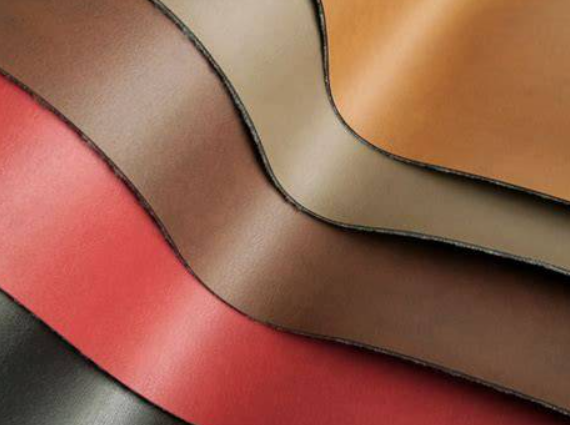
· Dyeing: Veg-tan Leather has good color absorption and can be dyed as needed. But many are of high quality Veg-tan Leather retains its natural color (light cream or light brown).
· Fatting: Natural oils (such as fish oil, cow’s feet, etc.) are injected into the leather to replenish the natural oils lost during tanning, making the leather soft, tough, and somewhat waterproof.
![Image [4]-Veg-tan Leather: Stunning, Timeless Quality Unveiled – Nleather-Nleather](https://www.nleather.com/wp-content/uploads/2026/07/20260726-175228-VS56n-nleather-silicone-leather.png "20260726-175228-VS56n-nleather-silicone-leather – Nleather")
4. Drying and Finishing:
· Drying: Methods such as hanging drying or laminated drying are used. Natural hanging preserves the leather’s most natural texture and shrinkage, forming a unique ” Veg-tan Taste.”
· Softening/Dropping: Softening leather by mechanical pulling or pounding in stainless steel drums to make the leather softer.
· Calendering/Polishing: Use heavy-duty calenders or hand polishing to create a smooth, firm, or shiny finish on the leather. The high-gloss “Tochigi leather” is the result of multiple polishing processes.
· Embossing: If special surface textures (such as crocodile or lychee patterns) are needed, hot pressing is performed at this stage.



No comments yet