
Veg-tan Leather is made by using natural tannic acid extracted from plants (such as hardwood, chestnut, lacquer tree, etc.) as a tanning agent, and processing raw hide. It is praised as “breathing leather,” highly praised for its eco-friendliness, naturalness, strong plasticity, and unique color-nourishing effects.
![Image [1]-Water-based Veg-tan Leather: Stunning Eco-Friendly Craft – Nleather-Nleather](https://www.nleather.com/wp-content/uploads/2026/07/20260726-175613-VEVdh-nleather-silicone-leather.png "20260726-175613-VEVdh-nleather-silicone-leather – Nleather")
Water-based Veg-tan The production process of leather
Water-based Veg-tan Leather production can be divided into two main stages: the first is the tanning stage of the leather (the process of obtaining the leather). Veg-tan Leather blanks), the second is the finishing and finishing stage of the water-based system (water-based products). Veg-tan Finished leather). The core process flow chart is as follows:
Raw hides → preparation sections → Veg-tan → Squeeze water, neutralize, → dry → crust leather → Water-based coating → finishing → Water-based finished products Veg-tan Hide
1. Preparation section
· Soaking: Restores preserved raw hides to fresh hides and removes impurities and salt.
· Depilation and soaking: Using lime and alkali sulfide to remove hair, epidermis, and subcutaneous fat, loosening collagen fibers in preparation for tanning.
· Delysing and softening: Removes alkaline substances from the leather and further purifies the fibers with enzyme preparations, making the leather soft and plump.
2. Veg-tan Work section
· Tanning: This is the core step. Place the treated leather sheet into a rotary drum and react with plant tannin liquids (such as hardwood tannin gel, vitex bark knot gel, etc.). Veg-tan It is a slow process in which tannin molecules gradually penetrate the gaps between skin fibers, combine multiple points with functional groups on collagen fibers, forming a stable cross-linked network that transforms the raw hide into leather that is resistant to decay, heat-resistant, and structurally solid.
· Features: Veg-tan Leather is usually hard, full, and elastic, with a color mostly natural light brown or light yellow.
3. Finishing Section ( crust leather )
· Squeeze water and smooth cutting: Control the moisture content and thickness of the blank to ensure uniformity and consistency.
· Neutralization: Removes excess free acids from the leather and stabilizes the leather’s pH value.
· Drying: The leather blank is dried and shaped by hanging, boarding, and other methods.
At this point, we have the unadorned Veg-tan Leather blanks. It is already in place Veg-tan The basic characteristics of leather, but the surface is unprotected, so direct use is prone to stains and wear.
The concept of “water-based” is mainly reflected in this stage. Traditional leather finishing uses large amounts of solvent-based resins, pigments, and additives, which contain volatile organic compounds (VOCs) that are unfriendly to humans and the environment. and it is water-based Veg-tan The leather uses a water-based system for surface treatment.
1. Primer
· Purpose: To seal the leather surface, improve the uniformity of the leather surface, and provide a good adhesion base for subsequent coatings.
· Materials: Water-based acrylic resin and water-based polyurethane resin are used as film-forming agents, combined with penetrants, wetting agents, etc. These materials use water as the dispersion medium and have extremely low VOC content.
· Process: Thin, transparent primer paste is evenly applied to the leather surface by spraying or rolling. The requirement is to maintain it as much as possible Veg-tan The natural texture and feel of the leather.
2. Intermediate coating/coloring
· Purpose: To give leather its color and some coverage, while further enhancing its physical properties (such as abrasion resistance and scratch resistance).
· Materials: Use water-based color paste or water-based pigment paste, mixed with water-based resin. To maintain it Veg-tan The natural appearance of leather is usually achieved using semi-aniline or light finishing techniques, such as transparent or semi-transparent pigments that make the leather’s natural grain clearly visible.
· Process: Fine spraying ensures uniform color and thin, lightweight coating.
3. Topcoat/tactile layer
· Purpose: To provide the ultimate tactile feel (such as smoothness, silkiness, oily wax feel) and key durability (waterproof, stain-resistant, UV protection).
· Ingredients:
· Water-based brightener: provides gloss.
· Water-based hand sensitizers: such as silicone oil and wax lotion, used to adjust the feel.
· Water-based crosslinking agents: Enhance coating strength and wet rub resistance.
· Eco-friendly fluorocarbon/fluorine-free waterproofing agents: Endow leather with excellent waterproof, oil-resistant, and stain-resistant properties.
· Process: Lightweight spraying, then pressing and ironing to fix the final effect and shine.
4. Organize and inspect
· After measurement, grading, and comprehensive physical property testing (such as color fastness, wear resistance, breathability, etc.), the finished product is considered water-based Veg-tan Hide.
Core characteristics
1. Environmental Protection Analysis
· Low VOC and no harmful solvents: The entire coating process uses water as the diluent, containing almost no harmful benzene or ketone solvents, making it harmless to the health of production workers and end consumers, and complies with strict environmental regulations such as the EU REACH.
· Biodegradability: Veg-tan The main components of the leather blank are natural collagen fibers and plant tannins, which naturally degrade in the environment. Compared to solvent-based coatings, water-based coatings have less impact on the overall biodegradability of the leather.
· Sustainable resources: The tannins used come from sustainably managed forested land, making them a good alternative to petrochemicals.
2. Physical and operational performance analysis
· Preserving the natural texture: Water-based coatings are usually thinner and more breathable, maximizing retention Veg-tan The leather blanks have a raw, three-dimensional grain texture and a warm touch. This is something that solvent-based heavy coatings cannot match.
· Outstanding durability and protection:
· Through water-based crosslinking technology, the coating can achieve excellent wear and fracture resistance.
· Modern water-based fluorocarbons provide outstanding “triple protection” effects, making it resistant to water stains and oil droplets from daily use, greatly improving the situation Veg-tan The practicality and ease of care of leather overcome tradition Veg-tan Eliminate the drawback of being “afraid of water.”
· Good processing adaptability: water-based Veg-tan The leather remains intact Veg-tan Leather is highly malleable, easy to carve, emboss, and emboss, making it very suitable for high-end leather goods, handmade leather crafts, and similar fields.
· Unique “cattle raising” pleasure: Although painted, it is high-quality water-based Veg-tan As the leather continues to deepen over time, its color deepens, producing a unique honey transformation effect and sheen, capturing the wearer’s distinctive marks.
3. Style and aesthetic analysis
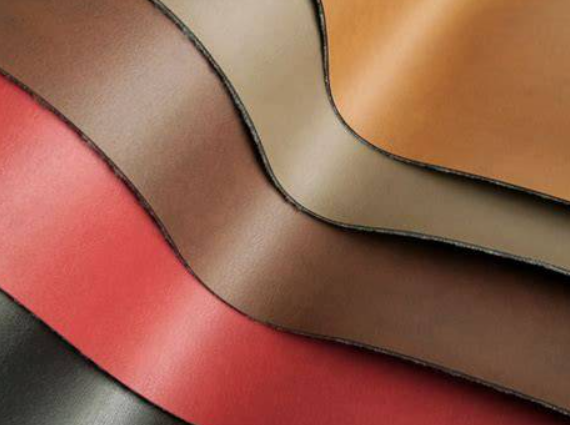
· Natural and soft colors: Water-based color paste produces colors closer to natural, with saturated colors that are not gaudy and can effectively showcase the high-end texture of leather.
· Realistic and diverse tactile sensations: Using different water-based hand sensors, various styles can be created, ranging from natural matte to oily wax with a silky smooth texture, meeting the personalized needs of different brands and consumers.

No comments yet