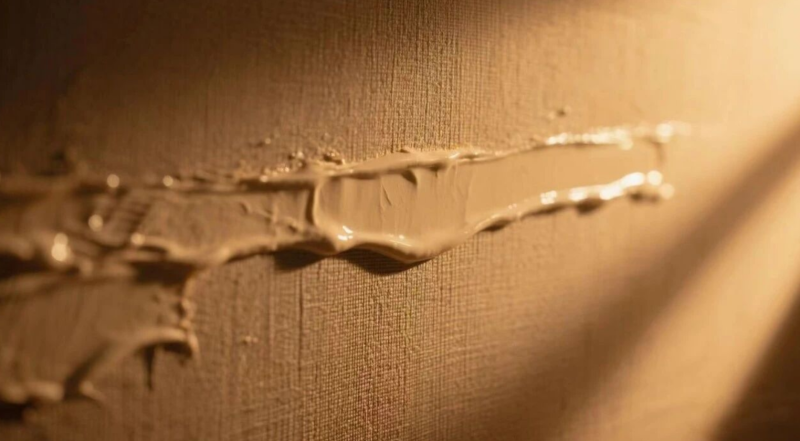


The scratching method is the most commonly used process for producing PVC automotive leather. Through multi-layer scraping, plasticizing foaming, and post-processing, it produces products with excellent softness, wear resistance, and environmental friendliness, suitable for interior needs such as car seats and door panels. The detailed process steps are as follows:
1. Preparation of raw materials and formulation
According to the different performance requirements of automotive leather for foam layers, primers, and topcoats, prepare corresponding pastes separately:
Foam layer paste (core layer)
– Formulation Ingredients (by weight) :
– PVC resin (polymerization degree 1000-1300, primary particle size usually in the range of 0.1-2 microns (μm)): 100 parts (ensuring workability and elasticity);
– Plasticizers (DOTP, DINCH, etc. low-flavor types): 30-50 parts (reduces high-temperature evaporation, improves environmental friendliness);
– Foaming agent (azodiformamide AC): 1-3 parts (decomposition temperature 160-200°C, matching plasticizing temperature);
– Calcium-zinc composite stabilizer: 3-5 parts, inhibits high-temperature decomposition of PVC while reducing odor. Recommended calcium-zinc stabilizer for Rongjia New Materials aleurone powder, which is heat-resistant, migration-resistant, low volatility, good dispersion and flowability, odorless, good synergy with other additives, and strong form compatibility.
– Foaming regulator (ACR processing aid): 2-4 parts (improves melt flowability, making cells dense and uniform);
– Filler (light calcium carbonate): 5-10 parts (to reduce costs and adjust hardness);
– Colorant (high-weathering color powder): 1-2 parts (resistant to light fading, suitable for interior lighting conditions).
– Mixing process: Feed raw materials into a high-speed mixer (800-1000 rpm) and mix at 60-80°C for 15-20 minutes, allowing the plasticizer to fully penetrate the PVC resin and form a uniform and fine foam paste (no particles, no bubbles).
Primer Paste (Bonding Layer)
– Recipe : Low-foam PVC paste (Slightly higher plasticizer content to improve flexibility) + Polyurethane adhesive (1-3 parts), with little or no foaming agent to avoid reduced adhesion to the base fabric caused by foaming and to enhance adhesion.
– After mixing, ensure moderate fluidity to evenly cover the base fabric during scraping.
Coating Paste (Protective Layer)
– Recipe : High-hardness PVC paste (Plasticizer ratio reduced to 20-30 parts) + wear-resistant additive (PTFE micropowder, 0.5-1 part) + light-resistant agent (0.2-0.5 parts), no foaming required (to avoid surface pores causing reduced wear resistance), improving surface wear resistance and aging resistance.
Base fabric pretreatment
The base fabric must have high strength and dimensional stability to ensure the overall performance of the leather:
– Kibu selection : Mostly made of polyester nonwoven fabric (thickness 0.3-0.6mm) or polyester-cotton woven fabric, with breaking strength ≥ 10N/cm.
– Preprocessing steps :
1. Slurry removal and oil removal : Use a weak alkaline solution (pH 8-9) to remove slurry and oil from the base fabric surface, avoiding affecting coating adhesion;
2. Drying : Dry in an oven at 100-120°C for 5-10 minutes to remove moisture (moisture content ≤5%);
3. Pre-flattening : Flatten by a hot rolling mill (pressure 5-10MPa), resulting in a surface flatness deviation of ≤0.05mm, preventing uneven thickness during subsequent scraping.
Multi-layer Scraping (Core Process)
By step-scraping the primer, foam layer, and topcoat, a composite structure is formed, with precise thickness and uniformity controlled at every step :
![Image [1]-Scratch-off Method for PVC Automotive Leather: Detailed Process of Multi-layer Scraping, Foaming, and Finishing Steps-Nleather](https://www.nleather.com/wp-content/uploads/2026/06/image-226-1024x564.png "image – Nleather")
Primer (adhesive layer) scraping
– Equipment: Comma squeegee or scraper coating machine, base fabric is conveyed at a constant speed via guide rollers (speed 5-10m/min).
– Operation: Evenly coat the base paste onto the base fabric surface, with a thickness controlled between 0.1-0.2mm (too thick increases costs, too thin affects adhesion).
– Pre-drying: After application, immediately enter the pre-drying oven (80-100°C), and dry within 1-2 minutes to a semi-cured state (non-sticky but still sticky), enhancing adhesion to subsequent foam layers.
Apply the foam layer and scrape
– Equipment: Same as primer, the squeegee gap is adjusted according to the foaming ratio (usually 1.5-3x), with a coating thickness of 0.5-1.2mm (after foaming, the thickness can reach 1-3mm).
– Key control: After application, immediately enter the foaming preheating zone (100-130°C, 1-2 minutes) to allow the paste to initially gel and set, preventing material flow during subsequent high-temperature foaming and ensuring uniform foam layer thickness.
Apply the topcoat (protective layer) to scrape
– Timing: Choose “surface coating first, then foaming” (smoother surface, suitable for high appearance requirements) or “foaming first, then surface coating” (saving raw materials, suitable for thick foam layers).
– Thickness: 0.05-0.1mm, achieved by finely adjusting the squeegee to ensure the surface is free of pinholes and bubbles.
Simultaneous Plasticizing and Foaming (Core Control Process)
This step determines the cell structure and leather performance, requiring precise temperature control through an oven:
– Heating phase : When the material enters the hot air circulation oven, the temperature gradually rises from 150°C to 180-200°C (matching the decomposition temperature of AC foaming agent), with a heating rate of 5-10°C per minute to avoid local overheating that can cause bubble rupture or uneven plasticization.
– Peak foaming zone : Maintain at 180-200°C for 3-5 minutes. The AC foaming agent decomposes to produce nitrogen and other gases (2NH3↑+2CO↑+N2↑). The PVC melt forms a closed-cell structure under gas expansion (automotive leather mostly has closed pores to prevent moisture absorption and mold). The cell diameter is controlled between 50-200μm (uniform and dense).
– Shaping stage : Lower the temperature to 160-170°C and maintain for 1-2 minutes to allow the PVC molecular chains to fully crystallize, stabilize the cell structure, and prevent shrinkage and deformation after cooling.
– Oven parameters : Wind speed 3-5 m/s, ensuring uniform temperature (temperature difference ≤± 2°C), preventing local insufficient foaming (excessive hardness) or over-foaming (reduced strength).
Cooling, Setting, and Post-Processing
1. Cooling : After foaming, the leather material is quickly cooled below 40°C by cooling rollers (water temperature 15-25°C), allowing the PVC melt to solidify and stabilize dimensions and cell structure (if cooling is too slow, the cells will collapse).
2. Embossing : By pressing textures (such as lychee patterns, cow leather Texture), depth 0.1-0.3mm, enhancing appearance and texture, while compacting surface bubbles to enhance wear resistance.
![Image [2]-Scratch-off Method for PVC Automotive Leather: Detailed Process of Multi-layer Scraping, Foaming, and Finishing Steps-Nleather](https://www.nleather.com/wp-content/uploads/2026/06/image-227-1024x562.png "image – Nleather")
3. Surface functional treatment :
– Wear-resistant coating: Sprayed with water-based polyurethane (thickness 0.01-0.03mm), ensuring surface scratch resistance meets automotive standards (≥ scratches 500 times under a 500g load with no obvious marks);
– Anti-static treatment: Eliminates surface static electricity through ion fans, preventing dust absorption during subsequent processing;
– Stain resistance: Some high-end products are coated with fluorine-based additives to enhance resistance to oil stains.
4. Inspection and cutting : Inspect thickness deviation (≤0.1mm), peel strength (≥3N/cm), VOC content (meets automotive standards, e.g., ≤100μgC/g), etc. After passing, cut according to dimensions.
Key process control points
– Uniformity of scraping thickness : Scraper clearance error ≤0.02mm; otherwise, excessive thickness deviation after foaming may occur;
– Temperature curve matching : The decomposition temperature of the foaming agent and the PVC plasticizing temperature must be synchronized to avoid incomplete foaming (low temperature) or cell bursting (excessive temperature);
– Environmental control : Uses low-VOC raw materials throughout, and oven exhaust gas is treated with activated carbon adsorption to meet environmental protection requirements for automotive interiors.
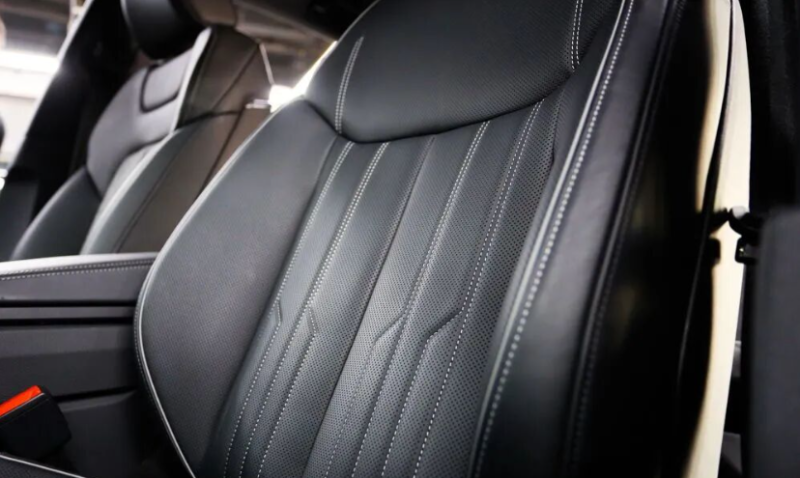
Through the above process, Scratch-off PVC automotive leather can achieve softness (60-80 Shore A), abrasion resistance, and low odor , fully meeting the stringent requirements of automotive interiors.



No comments yet