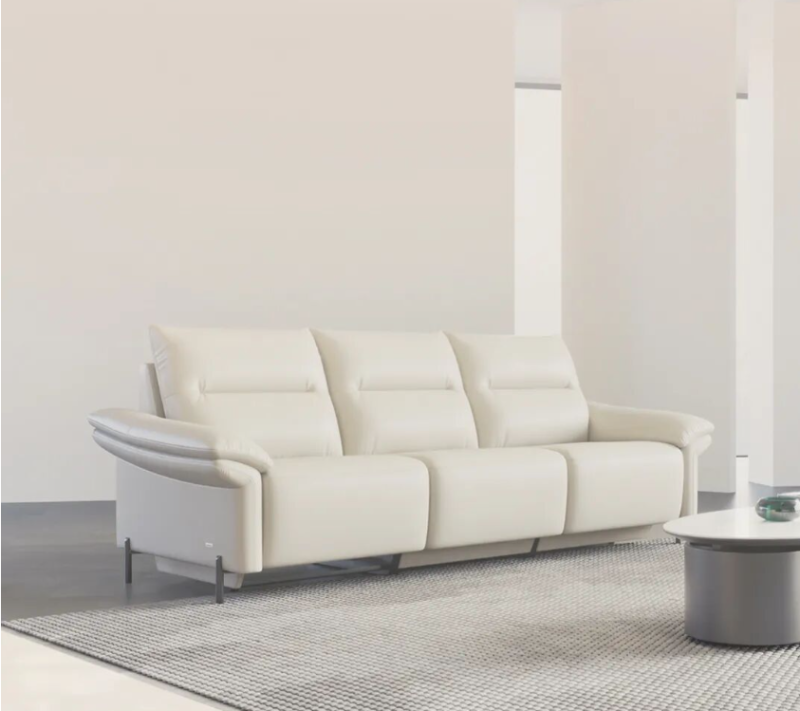


As the core furniture frequently used in the home, choosing the right sofa is crucial. Among them, genuine leather sofas, with their delicate texture and sophisticated style, have become the top choice for many families. Adding a leather sofa to your living room not only provides a place for your soul but also brings a pleasing visual experience and a comfortable sitting and lying experience.
Cortex
From the perspective of leather characteristics, the mainstream genuine leather sofa material currently includes yellow cow leather , water cow leather And milk cow leather.
![Image [1]-How to Choose the Best Leather Material for a Genuine Leather Sofa: Cowhide Types, Leather Grades, and Textures Explained-Nleather](https://www.nleather.com/wp-content/uploads/2026/06/image-97.png "image – Nleather")
yellow cow leather
The surface has dense and delicate pores arranged irregularly, forming a star-like sky. The leather is smooth, elastic, soft to the touch, and breathable, making it the preferred material for genuine leather sofas.
water cow leather
The surface has large pores, large differences in the area, the skin is rough and loose with poor elasticity, feels hard, has poor breathability, and is inexpensive. However, after a period of use, the skin may become hard and peel.
milk cow leather
Grandmother cow leather The surface has large pores, the leather is fine but overall loose, soft to the touch, and breathable.
Genuine leather grade
Genuine leather grades can generally be divided into: top-grain leather, double-layer leather, and regenerated leather.
Top-layer leather
After tanning, the original animal hides retain the epidermis (granular layer) and part of the dermis layer. The fibers are tightly structured, highly wear-resistant, tear-resistant, long-lasting, retain the natural pore structure, and have excellent breathability.
Two-layer leather
Second-layer leather is the residual dermis stripped from beneath the top-layer leather, coated with chemical materials (such as PU, PVC) or filmed to mimic a grainy effect. The structure is looser than top-layer leather, with lower strength and wear resistance, and it is prone to cracking.
Regenerated skin
Genuine leather fibers (scraps) or waste hides are crushed and then mixed with chemical raw materials and pressed. These products use a large number of chemical components and have poor microstructure and properties.
Texture
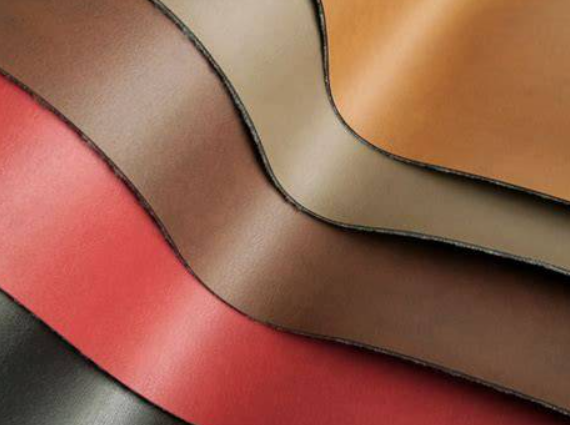
Based on market maturity and the characteristics of finished leather, it is suitable for use as the top layer of sofas cow leather Types of finishes.
Lychee pattern
Medium-thick leather feels thick and soft, with moderate texture depth, resistant to scratches and wear
Break the patterned leather
Through natural hammering techniques, irregular patterns are formed, retaining natural pores, with a soft texture, soft touch, and natural texture
Nappa leather
Through meticulous tanning, the leather becomes exceptionally soft, without embossing, with a slight surface refinement that greatly preserves the original leather’s texture
oil wax leather
After special oil wax treatment, it comes with a Xiagu style. It has an aged effect, but the leather is relatively hard and will undergo unique changes over time
Suede leather
After a delicate matte finish, the surface has a matte matte texture, soft and comfortable to the touch, and exudes a low-key and understated sense of sophistication
![Image [2]-How to Choose the Best Leather Material for a Genuine Leather Sofa: Cowhide Types, Leather Grades, and Textures Explained-Nleather](https://www.nleather.com/wp-content/uploads/2026/06/image-96.png "image – Nleather")

No comments yet