

In a market where outdoor seats frequently crack and fade after heavy rain and sun, and automotive interior leather hardens and peels after long-term use, silicone leather stands out thanks to its comprehensive performance advantages. As a new leather alternative combining silicone materials with base fabric, it not only inherits the signature anti-aging properties of the silicone family, but also achieves breakthroughs in physical strength, environmental safety, and practical adaptability, making it the preferred material for homes, automobiles, maternal and infant products, and outdoor applications. This article will use simple technical language to disassemble the core principle behind the anti-aging of the raw material organosilicon.
Why do materials “age”?
“In daily life, plastics become brittle after exposure to sunlight, and rubber cracks after long-term use. Essentially, this is due to external environmental damage to the material’s molecular structure, mainly manifested in the following three aspects:
1. Ultraviolet rays (especially the UVC and UVB bands in sunlight) have high energy and can sever the bonds between molecular chains in materials, causing loose molecular structures and leading to material performance degradation;
2. Oxygen undergoes oxidation reactions with material molecules, forming easily fractured oxygen-containing groups, causing the material to lose its original elasticity and mechanical strength;
3. Temperature fluctuations and humidity changes accelerate these processes, further shortening the material’s service life.
The key to organosilicon’s ability to withstand these damages lies in its inherent molecular structure providing stable protective properties.
Secret 1: Si-O bonds — a molecular backbone more stable than carbon bonds
The core of the molecular structure of silicone is a linear backbone formed by alternating silicon atoms (Si) and oxygen atoms (O). This Si-O bond is the primary defense line against silicone aging.
![Image [1]-Organic Silicone Leather Anti-Aging Molecular Mechanism: How Si-O Bonds, Methyl Barriers, and Crosslinked Structure Resist UV and Oxygen-Nleather](https://www.nleather.com/wp-content/uploads/2026/05/image.png "Custom Styles – Nleather")
Comparing common plastics and rubber materials, their structural advantages are clearly evident:
1. The molecular backbone of plastics and rubber is formed by carbon-carbon bonds (C-C bonds), with bond energy of about 347 kJ/mol. Ultraviolet energy can reach the threshold for breaking C-C bonds, causing molecular chain breakage;
2. The Si-O bond energy of silicone can reach up to 452 kJ/mol, much higher than that of C-C bonds. Ultraviolet energy is insufficient to break Si-O bonds, and even in high-temperature environments above 150°C, Si-O bonds can maintain structural stability.
Additionally, Si-O bonds have extremely strong chemical inertness, with high activation energy when reacting with oxygen. Even after long-term exposure to air, the molecular backbone is less likely to oxidize or deteriorate, fundamentally reducing the aging rate.
Secret 2: Methyl groups on the molecular chain — the surface protective barrier
If the Si-O bond backbone is regarded as the molecular core of the organosilicon, then the methyl group (-CH₃) attached to the silicon atom forms the surface barrier protecting the main chain.
Methyl groups are evenly distributed on the outer side of the Si-O bond backbone, and their protective functions are mainly reflected in three aspects:
1. When exposed to ultraviolet light, methyl groups can absorb part of the ultraviolet energy, reducing the direct intensity of UV exposure on the Si-O bond backbone;
2. The methyl group is chemically stable and does not easily react with oxygen, forming a dense isolation layer on the molecular surface that blocks oxygen penetration into the molecule and prevents oxidation of the main chain;
3. The methyl group is hydrophobic, which reduces the adhesion of water molecules on the material surface and lowers the probability of hydrolysis between water and silicone (hydrolysis is an important factor in the aging of various materials).
Taking outdoor silicone leather as an example, its methyl groups form a stable protective layer. Even after long-term exposure to natural environments, the internal Si-O bond main chain remains intact, thus maintaining elasticity over time without cracking, hardening, or aging.
Secret 3: Cross-linked structure — enhances the structural foundation for anti-aging
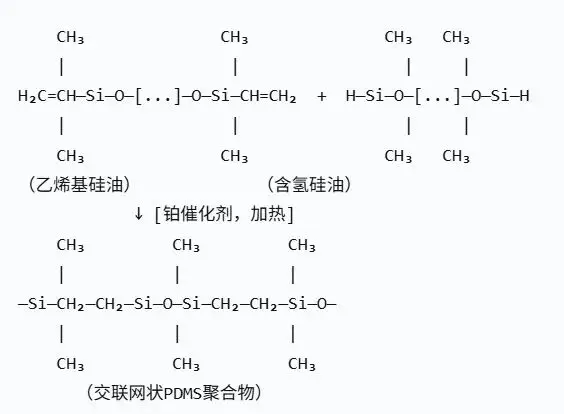
In addition to the structural advantages of the molecule itself, organosilicon forms a three-dimensional network crosslinking structure during processing through crosslinking agents, providing additional anti-aging support for organosilicon.
Specifically, the molecular chains of silicone do not exist independently, but are connected by crosslinkers to form a three-dimensional network structure. Its anti-aging mechanisms include:
1. Once the molecular chains of ordinary materials break, it directly causes overall structural damage and irreversible performance decline;
2. In the cross-linked network of organosilicon, even if some molecular chains break due to ultraviolet or oxygen exposure, the surrounding cross-linked nodes can still maintain the integrity of the overall structure, preventing structural collapse;
3. Some types of silicone (such as room-temperature vulcanized silicone rubber) can, under specific conditions, form new crosslinked bonds through intermolecular reaction, repairing minor aging damage and further extending service life.
This cross-linked structure significantly enhances the structural toughness of organosilicon, allowing the overall performance to remain stable even when local molecular chain damage occurs.
All these scenarios hide the anti-aging power of silicone.
Scenario-based applications: comprehensive coverage from industry to everyday life
The comprehensive properties of silicone leather make it extremely suitable for a wide range of scenarios, and it has now penetrated multiple fields, becoming a traditional leather combination finished leather Ideal alternatives:
Home furnishing sector: Sofas, dining chairs, mattresses, curtains, etc., combining texture and durability;
Transportation: Automotive interiors, high-speed rail, and aircraft seats offer strong weather resistance and reduce maintenance costs;
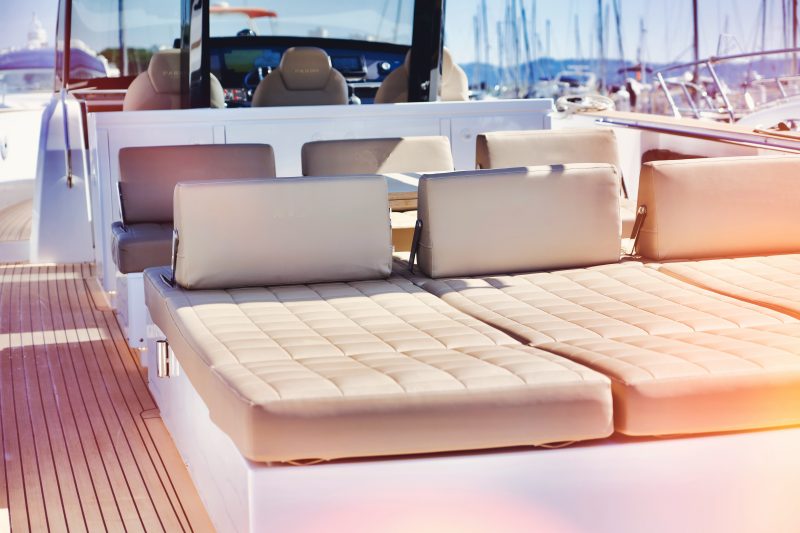
Outdoor Field: Outdoor seats resist UV rays and rain erosion, adapting to complex weather conditions;
Medical Field: Medical beds, medical seat systems, ward interiors, medical incubators, etc., all non-toxic and sterile, easy to clean and disinfect;
Maternal and Infant Sector: Crawling mats, stroller seat mats, comfort toy jackets—safe, skin-friendly, wear-resistant, and durable.
The comprehensive advantages of silicone leather are essentially the dual result of “molecular structure advantages + process innovation”: the Si-O bond backbone and methyl groups form the foundational protection, solving the aging problem; The three-dimensional cross-linked structure and base fabric composite technology enhance physical performance; The non-toxic formula and hydrophobic design meet both safety and practical requirements. This material not only breaks the performance limitations of traditional leather but also aligns with the trend of environmentally friendly and healthy consumption. As production processes continue to be optimized, its application scenarios will continue to expand, making it an “all-rounder” in the materials field.

No comments yet