

What Makes Sheepskin the Go‑To Choice for Leather Jackets?
Let’s start with a fact that often gets overlooked: sheepskin is not the toughest leather out there.
When most people hear “sheep leather,” they think of softness, fineness, and premium quality—and they’re right. But even among sheep leathers, sheepskin and goatskin follow completely different paths. Goatskin is tough and abrasion‑resistant; a goatskin jacket can easily last ten years or more. Sheepskin, on the other hand, has a loose fibre structure, lower tensile strength, and is actually weaker than some synthetic materials like PU.
So why do most high‑end leather jackets choose this “less durable” material?
The answer comes down to one word: comfort.
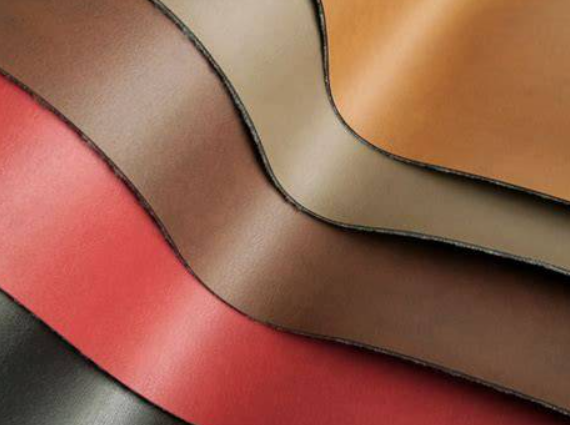
![Image [1]-Sheepskin Leather for Jackets: Why Comfort Wins Over Durability – A Complete Guide – Nleather-Nleather](https://www.nleather.com/wp-content/uploads/2026/08/20260816-133009-uWKgJ-nleather-silicone-leather.png "20260816-133009-uWKgJ-nleather-silicone-leather – Nleather")
The Core Competitiveness of Sheepskin: The On‑Body Experience
Sheepskin’s defining characteristics are thinness, lightness, and softness. Its fibre bundles are fine, with small interlacing angles and large gaps, giving it about 40% more stretch than cowhide. When worn, it does not stand stiffly away from the body; instead, it naturally conforms to the shoulders and waistline.
What’s more, this softness deepens with wear. Body heat, movement, and ambient humidity gradually relax the fibre micro‑gaps, making the hide increasingly supple and form‑fitting. Many leathers require a long “break‑in” period to reach this state; sheepskin offers it from day one.
At the same time, the fibre structure of sheepskin contains air pockets that provide excellent insulation. In autumn and winter, a sheepskin jacket feels neither cold nor clammy. Its natural pores are flattened and evenly distributed, giving it far better breathability than heavily finished leathers. During seasons with large indoor‑outdoor temperature swings, a sheepskin jacket blocks wind without trapping heat, and it won’t become sticky or flabby as your body warms up.
There is a saying in the industry that captures it perfectly: sheepskin on the body feels like a second skin. Not a tight wrap, not a constraint—just a barely‑there fit that moves with you.
How Much Does “Less Durable” Really Matter?
It is true that sheepskin’s strength does not match that of goatskin or cowhide. Goatskin can have tensile strength 1.5 times higher than sheepskin. Sheepskin has a thin grain layer and a relatively weak connection between the grain and the reticular layer, which can lead to looseness or sponginess during processing. In daily use, it is more prone to showing marks if rubbed against rough surfaces or scratched by sharp objects.
But this needs to be considered in context.
Sheepskin is primarily used for jackets, skirts, and gloves—not for shoe uppers, bags, or belts. In these applications, the material does not endure the level of abrasion that soles face, nor the constant friction against hard objects that bags encounter. It only needs to handle the bending, stretching, and light rubbing that come with normal body movement. In these scenarios, sheepskin’s strength is more than adequate.
In other words, sheepskin is not “weak”; rather, durability is not the top priority for its intended use. The top priority is comfort.
Sheepskin vs. Goatskin: Which One Should You Choose?
The difference between the two is straightforward.
Sheepskin: fine grain, dense and uniform pores, smooth and soft hand‑feel, excellent stretch. Ideal for garments that are worn directly against the skin—jackets, skirts, gloves. High‑end apparel leather is predominantly sheepskin.
Goatskin: coarser grain, less smooth and supple than sheepskin, but with a tighter fibre structure and superior abrasion resistance and strength. Better suited for bags, belts, and footwear.
Simply put: choose sheepskin for wearing comfort; choose goatskin for long‑term durability. Neither is inherently better—they serve different purposes.
![Image [2]-Sheepskin Leather for Jackets: Why Comfort Wins Over Durability – A Complete Guide – Nleather-Nleather](https://www.nleather.com/wp-content/uploads/2026/08/20260816-132930-z8ydq-nleather-silicone-leather.png "20260816-132930-z8ydq-nleather-silicone-leather – Nleather")
What to Watch Out for When Buying a Sheepskin Jacket
Prices for sheepskin vary widely. Premium imported sheepskin (e.g., Turkish A‑grade) feels like touching a baby’s skin—resilient, lightweight, and supremely comfortable. Cheap domestic sheepskin can be bought for a few hundred yuan, but the quality is often poor: rough hand‑feel, numerous defects, and sometimes made from mouldy stock hides. Wearing such leather can be uncomfortable and may even cause skin irritation.
When shopping, keep these points in mind:
Examine the surface. Good sheepskin should be smooth, not coarse; the colour should be even, and the grain clear and tight. An overly shiny or dull, lifeless appearance are both warning signs.
Feel the texture. It should be full, smooth, soft, and elastic. If it feels gritty, stiff, or granular, the quality is sub‑standard.
Check the strength. Sheepskin naturally has lower tear strength, but good tanning and retanning processes can improve tensile and tear resistance considerably. When trying on, gently pull the leather to gauge its resilience and elasticity.
Consider the price. A “genuine leather jacket” priced at 300–400 yuan is almost certainly made from low‑grade domestic sheepskin, or even stock hides. You get what you pay for, and this is especially true with sheepskin.
Routine Care for Sheepskin Jackets
Sheepskin is delicate, but it is not as high‑maintenance as many fear.
After each wear, simply wipe the surface gently with a soft flannel cloth. If it gets rained on or damp, dab off the moisture with a soft cotton cloth and hang it in a well‑ventilated area to dry naturally—never in direct sunlight. Before storing, apply a thin layer of leather conditioner to prevent mildew and insect damage.
For wrinkles, use a non‑steam iron set to 60–70°C and press lightly. For stubborn stains, the safest option is to take it to a professional dry cleaner—do not attempt to wash it by hand. Also, avoid prolonged contact with rough surfaces and keep it away from sharp objects.
In essence, caring for sheepskin is no different from caring for any other fine leather: keep it away from water, sunlight, and harsh chemical cleaners. Follow these three rules, and a good sheepskin jacket will serve you well for three to five years or more.
![Image [3]-Sheepskin Leather for Jackets: Why Comfort Wins Over Durability – A Complete Guide – Nleather-Nleather](https://www.nleather.com/wp-content/uploads/2026/08/20260816-133055-XhmY5-nleather-silicone-leather.png "20260816-133055-XhmY5-nleather-silicone-leather – Nleather")
Why Sheepskin Is Gaining Popularity Today
There has been an interesting trend in recent years: high‑end leather and fur consumption is rising on social media, and demand for sheepskin is growing steadily. More and more people are willing to pay for the “on‑body comfort” experience.
Sheepskin fits this trend perfectly. It does not promise indestructible durability; it promises an exceptional wearing experience. As consumer mindsets shift from “buying something to last a lifetime” to “paying for the experience of the moment,” the logic behind sheepskin becomes increasingly compelling.
Moreover, sheepskin is evolving. Modern processing techniques now allow sheepskin to take on embossed, washable, and printed finishes. Eco‑friendly tanning methods are also gaining ground—chrome‑free sheepskin can even be made biodegradable. New materials emerge all the time, yet sheepskin remains firmly entrenched in the apparel sector—not because of marketing hype, but because that immediate, irresistible comfort is something other leathers simply cannot replicate.
Ultimately, people who choose sheepskin are not just choosing a piece of hide—they are choosing a feeling against their skin. That feeling cannot be quantified in a lab, but your body knows it instantly.






No comments yet