

In the production of footwear uppers, bags, garments, gloves, workwear, and leather goods, split suede leather (also known as split reverse suede or split velvet leather) is a commonly used material. Its napped surface offers a soft hand feel and a natural visual effect, making it suitable for a wide range of product developments. However, during sampling and bulk production, many procurement professionals encounter a recurring issue: the sample color looks acceptable, but the production batch arrives with noticeable shade variations—some areas lighter, some darker.
When clients spot color differences, their first reaction is often to assume the dyeing process was faulty. In reality, some degree of shade variation in split suede leather does not necessarily mean the material is substandard, nor is it always solely a dyeing problem. It is often related to the leather structure, fiber condition, dyeing parameters, buffing effects, nap direction, drying state, moisture content, packaging, transportation, and batch-to-batch inconsistencies.
![Image [1]-Why Does Split Suede Leather Show Color Difference? Key Factors to Know Before Sourcing – Nleather-Nleather](https://www.nleather.com/wp-content/uploads/2026/08/20260816-130515-2DVEP-nleather-silicone-leather.png "20260816-130515-2DVEP-nleather-silicone-leather – Nleather")
In the industry, this type of material goes by many names—rough leather, reverse suede, suede split, nubuck-style split, velour leather, rough calf, or even “cow nubuck” in some regions. Essentially, they all refer to a similar style: a cattle-hide leather with a napped, velvet-like surface, sometimes also called “cow suede.” Different regions and tanneries use different terms, but when sourcing, one should not rely solely on the name. It is essential to confirm whether the material is a top-grain reverse suede or a split reverse suede, as the two differ significantly in structure, price, hand feel, and stability.
The Structure of Split Suede Leather Makes Color Differences More Visible
Split suede leather is produced primarily from the fibrous side of the split layer after the hide has been split. The napped surface is created through buffing, dyeing, and finishing processes.
Unlike smooth top-grain leather, split suede does not have a continuous, compact grain layer. Top-grain finished leather can hide underlying surface inconsistencies through pigmented or transparent coatings. In contrast, the surface of reverse suede consists of a mass of exposed fine fibers, with much less coverage capacity. The condition of the fibers themselves directly affects how the color appears.
Differences in fiber thickness, density, length, orientation, and compactness all influence dye uptake and light reflection. As a result, subtle shade variations may occur between different parts of the same hide, or between different hides within the same batch.
In simple terms, the color of suede leather is not just about the dye—it also depends on how the fibers themselves absorb color and reflect light.
![Image [2]-Why Does Split Suede Leather Show Color Difference? Key Factors to Know Before Sourcing – Nleather-Nleather](https://www.nleather.com/wp-content/uploads/2026/08/20260816-130552-UBvXE-nleather-silicone-leather.png "20260816-130552-UBvXE-nleather-silicone-leather – Nleather")
Natural Variations in the Raw Hide Affect Color Expression
Cattle hide is a natural material, not a fully standardized industrial substrate.
Factors such as the animal’s breed, age, origin, and the specific anatomical location on the hide all affect the fiber structure of the split. As a general rule, fibers in the shoulder and back areas are denser, while those in the belly area are looser; the flank areas may also differ from the central region.
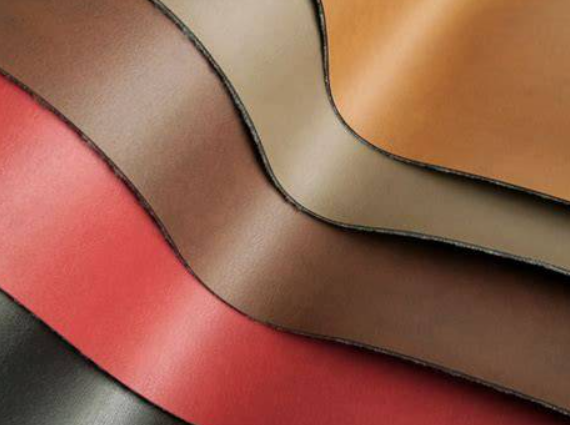
Different areas absorb dyes at different rates, resulting in varying depth and shade even after the same dyeing process.
This is why, on a single piece of suede leather, different zones may show slight shade variations; and across a bulk production batch, different hides may exhibit color cast differences.
For pigmented or coated smooth leathers, finishing layers can mask much of the underlying variation. But suede leather aims for a natural, uncoated nap effect—heavy finishing would compromise hand feel, nappiness, and breathability. Consequently, natural hide variations are more visible in suede than in coated leathers.
![Image [3]-Why Does Split Suede Leather Show Color Difference? Key Factors to Know Before Sourcing – Nleather-Nleather](https://www.nleather.com/wp-content/uploads/2026/08/20260816-130622-JP2Ls-nleather-silicone-leather.png "20260816-130622-JP2Ls-nleather-silicone-leather – Nleather")
The Dyeing Process Affects Bulk Consistency
Leather dyeing is not a straightforward coloring operation.
It involves multiple interdependent parameters: pH value, temperature, float ratio, drum speed and duration, dye selection, auxiliary chemicals, fixation methods, and subsequent finishing processes. Because split suede leather has an open fibrous surface with high absorbency, it is more sensitive to dyeing conditions.
Differences between lab-dipped samples and bulk production are also common.
Samples are small in quantity—fewer hides, easier to control. Bulk production involves larger quantities with more variation in hide sources, thickness, moisture content, and mechanical action during processing. If any parameter fluctuates, color replication becomes more challenging.
Thus, when sourcing suede leather, relying on a single small sample is not sufficient. A more prudent approach is to agree on an acceptable color range for bulk production and, where necessary, request a bulk trial or pre-production sample for confirmation.
Buffing Effects and Nap Direction Create Visual Shade Differences
The characteristic nap of suede leather comes from buffing, brushing, and other mechanical finishing operations.
This material has a distinct trait: the shade may appear different when viewed with the nap (smooth direction) versus against the nap (rough direction). Because fiber orientation changes the reflection of light, the visual perception of depth and tone shifts accordingly.
Sometimes the leather itself has no significant color defect, but due to flattened nap, pressure marks, creases, or uneven buffing, it can visually appear as a shade mismatch.
This point is particularly critical for products like footwear uppers, bags, gloves, and coordinated leather goods sets.
If the cutting direction is not standardized—for example, left and right shoe panels, left and right bag pieces, or flap versus body panels—they may look inconsistent in color when assembled. When clients inspect the finished goods, they often attribute the issue to material color difference, but the root cause may be related to nap orientation, cutting layout, or workshop handling.
Therefore, when working with suede leather, in addition to checking material color, it is essential to ensure uniformity in cutting direction and nap orientation across all components.
Drying, Packaging, and Warehousing Also Affect Color Appearance
After dyeing and finishing, split suede leather goes through drying, setting, packing, shipping, and warehousing.
These post-production stages can also influence color appearance:
- Uneven or excessively rapid drying can create light/dark patches;
- Inconsistent moisture content may affect color shade;
- Moisture exposure during transport can leave water stains;
- Heavy stacking during warehousing can cause pressure marks and flattened nap;
- Prolonged stacking of hides can alter the fiber condition in localized areas.
In summary, color variation in suede leather is not always related solely to dyeing—it may also be linked to finishing, drying, packaging, transport, and storage conditions.

No comments yet