

If you regularly use leather‑finished 3C accessories, the following scenarios are probably all too familiar.
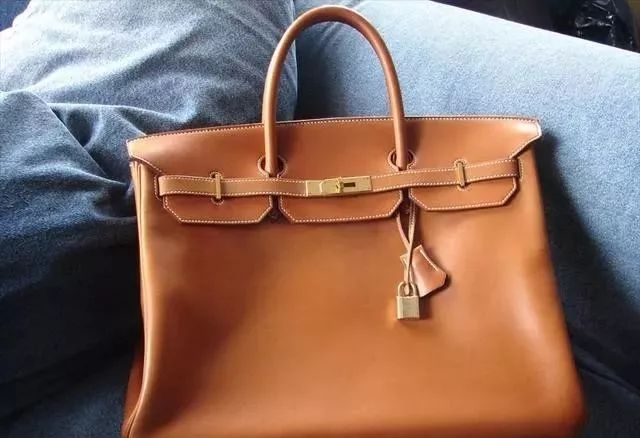
After a month of commuting in a crowded bag, the corners of your laptop sleeve start showing whitish scuff marks. On closer inspection, the surface coating has worn through, exposing the fabric substrate underneath. The grip area of your game controller, after half a year of use, begins to shed tiny particles; with sweaty palms, it becomes slippery, and your control precision suffers. The ear cushions on your over‑ear headphones develop fine cracks within three or four months, and if you keep using them, the cracks widen and flakes stick to your cheeks—irritating and hard to clean. The protective case on your child’s learning tablet, after being scribbled on with markers, won’t come clean; the pigment penetrates the surface and becomes more stubborn over time.
![Image [1]-Abrasion Resistance of Silicone Leather for 3C Electronics: Lab Data vs. Real-World Performance – Nleather-Nleather](https://www.nleather.com/wp-content/uploads/2026/08/20260816-122317-EzTyd-nleather-silicone-leather.png "20260816-122317-EzTyd-nleather-silicone-leather – Nleather")
All these troubles point to one core performance attribute: abrasion resistance.
In the 3C electronics sector, leather‑based accessories endure friction frequencies and intensities that are simply not comparable to those in furniture or automotive interiors. Phone cases share bag space with keys, power banks, and metal objects on a daily basis, rubbing continuously. Tablet sleeves are repeatedly taken out and put back, their edges scraping against hard surfaces. Game controller grips are rubbed hundreds of times per match by the palm. Headphone ear cushions constantly adjust against the skin of the cheeks. These routine actions add up to sustained, high‑intensity wear on the surface material.
Currently, more than half of leather‑style 3C accessories on the market still use PU (polyurethane) synthetic leather as the surface layer. The appeal of this material lies in its low cost and mature processing; its initial softness and gloss are entirely acceptable. However, the intrinsic physical properties of PU make it inherently inadequate for the high‑frequency friction scenarios described above. The coating is thin, the surface hardness is limited, and with repeated contact against hard objects, whitening, peeling, and substrate exposure are structurally inevitable.
So, in terms of abrasion resistance, exactly how much better is silicone leather than PU—and what is the substantive gap between them? We will examine this from three angles: standardised test data, real‑world use cases, and the underlying materials science.
Quantitative Comparisons Under Laboratory Conditions
Subjective impressions of material performance can vary among individuals, but standardised test data provide a benchmark for objective comparison.
The two most commonly used methods for evaluating the abrasion resistance of leather materials are the Taber abrasion test and the Martindale abrasion test.
The Taber test involves mounting a specimen on a rotating platform and subjecting it to abrasive wheels under a fixed load; abrasion resistance is quantified by the number of cycles required to produce visible surface damage. The Martindale test, by contrast, measures wear under a reciprocating planar motion and assesses changes in surface appearance.
Under Taber abrasion conditions (CS‑10 wheels, 1000 g load), ordinary PU leather typically shows clear surface wear—loss of grain pattern and onset of coating detachment—at 2,000 to 4,000 cycles. Even with optimised formulations, most PU products struggle to exceed 5,000 cycles.
![Image [2]-Abrasion Resistance of Silicone Leather for 3C Electronics: Lab Data vs. Real-World Performance – Nleather-Nleather](https://www.nleather.com/wp-content/uploads/2026/08/20260816-122355-TmxaG-nleather-silicone-leather.png "20260816-122355-TmxaG-nleather-silicone-leather – Nleather")
Silicone leather delivers markedly different figures. Mainstream commercial products under the same test conditions routinely achieve more than 3,000 cycles, and high‑performance formulations can exceed 10,000 cycles. The gap is even wider in Martindale testing: silicone leather commonly withstands over 150,000 cycles of reciprocating friction, whereas PU leather usually stays in the range of tens of thousands of cycles.
A comparative study on synthetic leather coatings reported a wear index of 160.9 cycles/mg for silicone‑based coatings, compared to 80.5 cycles/mg for PU coatings. In other words, for the same loss of material mass, silicone leather can endure approximately twice the number of rubbing cycles as PU.
Performance Differences in Real‑World Usage Scenarios
Laboratory figures provide a reference, but in day‑to‑day use, these numbers translate into perceptible differences in user experience.
Laptop sleeves. In a typical commute, your bag contains not only the laptop but also keys, power banks, cosmetics, cables, and other items that press and rub against each other. After two to three months, a PU sleeve will show whitish scuff marks and fuzzy wear on its corners and back; in severe cases, the surface coating peels off in patches, exposing the base fabric. A silicone‑leather sleeve under the same usage period maintains its surface integrity; even light scratches, if they occur, can be reduced by gentle wiping. Lenovo chose silicone‑leather cladding for the A‑cover of its YOGΛ series laptops precisely for its combined abrasion, stain, and weather resistance.
Game controllers. Moderate to heavy gamers often play for three or more hours daily; the contact between the grip and the palm is constant and intensive. After extended use, PU grips tend to become glossy, then begin to flake; under sweat, their non‑slip performance drops markedly. Silicone grips offer a more stable coefficient of friction over time; their surface condition degrades slowly, avoiding the “progressively slicker and stickier” deterioration that characterises PU.
Headphone ear cushions. This category is where PU ageing issues are most pronounced. The cushions contact the cheeks, and the sebum, salts, and acids in skin secretions accelerate hydrolysis of the PU coating. Many products develop surface cracks and shedding within six months. Silicone ear cushions, with their better hydrolysis and abrasion resistance, maintain surface integrity much longer under prolonged skin contact.
![Image [3]-Abrasion Resistance of Silicone Leather for 3C Electronics: Lab Data vs. Real-World Performance – Nleather-Nleather](https://www.nleather.com/wp-content/uploads/2026/08/20260816-122445-kesmr-nleather-silicone-leather.png "20260816-122445-kesmr-nleather-silicone-leather – Nleather")
Materials‑Science Explanation for the Abrasion‑Resistance Gap
The difference in abrasion performance is not accidental; it stems from structural distinctions at the molecular level.
PU molecular chains contain numerous ester (–COO–) or ether (–C–O–C–) groups, which are sensitive to ultraviolet light, heat, and moisture. Under the combined effects of frictional heat, oxygen, and humidity, the chains undergo scission and re‑crosslinking, causing the surface to gradually harden and embrittle. As coating integrity and adhesion decline, peeling eventually occurs.
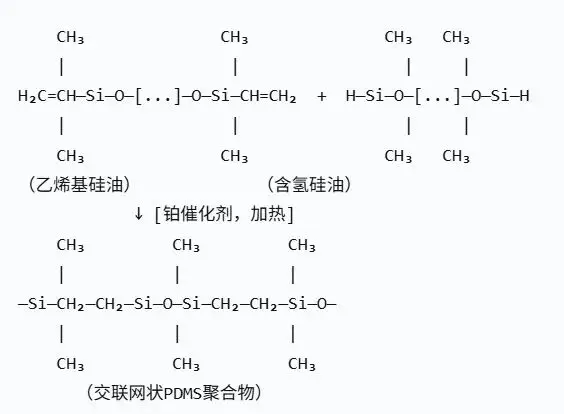
Silicone leather, by contrast, has a backbone of siloxane bonds (Si–O–Si) with a bond energy of 445 kJ/mol—substantially higher than the approximately 348 kJ/mol of the C–C bond in PU. This higher bond energy means the molecular chains are much less prone to breakage under mechanical stress and thermo‑oxidative attack. In addition, silicone’s low surface energy gives it a lower coefficient of friction than PU; for the same applied force, the shear stress on the surface is smaller, and the wear rate is consequently lower.
The elastic recovery of silicone also contributes to its wear resistance. When pressed or scratched, the silicone surface rebounds quickly, dissipating part of the deformation and preventing permanent indentations or deep grooves. PU has much weaker recovery; it retains scratches permanently, and the accumulated damage over time creates widespread worn areas.
Key Technical Factors to Consider When Selecting Silicone Leather
Not all materials labelled “silicone leather” offer the same abrasion resistance. Formulation differences and processing capabilities among suppliers directly affect the end product’s performance. When making a selection, the following points are worth examining:
Traceability of test data. A competent supplier should be able to provide abrasion test reports from accredited third‑party laboratories. For 3C applications, a Taber test (CS‑10) result of no less than 3,000 cycles and a Martindale result of at least 100,000 cycles are useful reference thresholds for basic suitability.
Authenticity of the coating structure. Some products on the market are marketed as “silicone leather” but are actually PU treated with a silicone‑oil topcoat. These offer a slippery feel initially, but once the silicone‑oil layer wears off, their abrasion performance reverts to that of ordinary PU. Simple field tests—such as the indentation‑recovery and scratch tests described earlier—can help distinguish genuine silicone coatings from such imitations.
Thin‑film processing capability. 3C devices demand tight thickness tolerances and precise conformability; an excessively thick coating compromises forming results and grip comfort. Manufacturers with dedicated expertise in the 3C segment, such as Guangdong Tianyue New Materials, have developed techniques to keep the functional coating thickness within 0.1–0.25 mm while retaining full abrasion resistance. This level of process control is an important indicator of whether a supplier is truly suitable for 3C applications.
Cost‑Benefit Considerations in Material Decision‑Making
PU leather has a lower unit cost than silicone leather, which is the primary reason it still holds a large market share. However, when replacement frequency over the product lifetime is factored in, the cost equation changes.
A PU phone case typically shows obvious wear and ageing after three to six months of normal use; a comparable silicone case can last 18 to 24 months. When amortised per day of use, the cost difference is far smaller than the upfront price gap. More importantly, there is the sustained impact on user experience—an accessory that starts peeling, scuffing, and losing grip after half a year stands in stark contrast to one that remains in good condition after more than a year.
The fundamental purpose of 3C accessories is to enhance the user experience, not to force the user to accommodate the material’s weaknesses. From this perspective, abrasion resistance—a seemingly basic performance metric—is in fact the core yardstick that determines how reliably a material performs throughout its intended service life.

No comments yet