

In leather processing, dyeing and finishing are key steps to give leather an attractive appearance and enhance its performance. Among these, color fastness, especially wash and wet rub resistance, is an important indicator for evaluating the quality of leather products. Understanding the interactions of charges among leather, dyes, and coating materials—that is, Principle of electrostatic adsorption — It is crucial for controlling color fastness.
![Image [1]-Principles of Electrostatic Adsorption in Leather Dyeing and Finishing and Their Impact on Color Fastness – Nleather-Nleather](https://www.nleather.com/wp-content/uploads/2026/08/20260802-140428-uyvS6-nleather-silicone-leather.png "20260802-140428-uyvS6-nleather-silicone-leather – Nleather")
Charge characteristics of leather, dyes, and coatings
Charge properties of leather: Animal leather tanned (especially mainstream chrome tanning processes) usually has a negative charge (anionic effect) on the surface of its collagen fibers. This mainly arises because the carboxyl group (-COOH) on the collagen molecular chain ionizes during the wet treatment stage after tanning, forming negatively charged carboxylate ions (-COO⁻).
Charge properties of dyes: The most widely used types of dyes in leather dyeing, such as acid dyes and direct dyes, are mostly anionic dyes. These dye molecules ionize in aqueous solution or dyeing medium, and their chromophore or sulfonate group carry a negative charge (anions).
Charge properties of coating film-forming agents: To improve the surface performance and color fastness of leather, coating modifications are often applied. In this process, an important category of materials is cationic film-forming agents or fixatives. These materials are ionized or have a positive charge (cation) in an aqueous or specific solvent system.
The mechanism by which cations and anions adsorption improve color fastness
When a cationic coating agent is applied to anionic leather (adsorbed with anionic dyes), a significant electrostatic adsorption effect occurs:
Dye Adhesion Enhancement: A strong electrostatic attraction (ionic bonding) is generated between positively charged cationic film-forming agents/fixatives and negatively charged dye anions. This force effectively “anchors” dye molecules more firmly to the surface of leather fibers or locks them within the soon-to-form coating network, significantly reducing the tendency for dye molecules to migrate or detach.
Enhanced coating adhesion: There is also static attraction between the cationic coating agent and the negatively charged leather substrate, which greatly enhances the bond between the coating and the leather surface, making it less likely to peel off.
Physical barrier function: The resulting coating (especially those designed to be hydrophobic) forms a dense physical barrier on the leather’s surface. This barrier effectively blocks water molecules from penetrating into the leather and dye molecules from leaching into the external water environment.
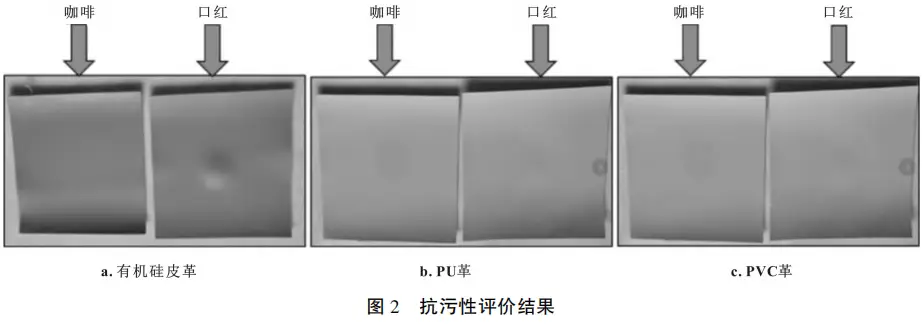
Overall Effect: The synergistic effect of these mechanisms—electrostatic adsorption fixing dyes and enhanced coating adhesion, combined with the physical sealing of hydrophobic coatings—jointly results in a significant improvement in the color fastness of the coating-modified leather (especially resistance to washing, wet rubbing, and sweat stains).
![Image [2]-Principles of Electrostatic Adsorption in Leather Dyeing and Finishing and Their Impact on Color Fastness – Nleather-Nleather](https://www.nleather.com/wp-content/uploads/2026/08/20260802-140502-J4TkM-nleather-silicone-leather.png "20260802-140502-J4TkM-nleather-silicone-leather – Nleather")
Analysis of the Reasons for Poor Color Fastness of Water-Dyed Leather
“Water-dyed leather” usually refers to leather that has undergone only dyeing without any coating or decoration (such as aniline leather, waxed leather, etc.). The color fastness of this type of leather, especially its wash resistance, is often relatively poor, and the root cause is closely related to the principle of electric charge:
State of charge: In water-dyed leather systems, the leather substrate carries a negative charge (anion), and the adsorbed dye also carries a negative charge (anions).
Lack of electrostatic adsorption: Because both have the same charge, electrostatic repulsion occurs (isotropic rejection). Dye molecules mainly rely on relatively weak intermolecular forces (such as van der Waals forces, hydrogen bonds) or binding to a small amount of unsaturated positive charge sites on the leather fiber (such as amino groups) to attach to the leather.
Damage from the washing process:
When washed, a large amount of water molecules penetrate the structure of the leather fibers.
Water acts as a solvent, which destroys the already weak physical adsorption between the dye and leather (van der Waals forces, hydrogen bonds).
There is no coating or fixative with an opposite charge (cations) to provide strong electrostatic attraction to “lock” the dye.
Without the physical barrier protection of the hydrophobic coating, dye molecules easily desorbate from the leather fibers and dissolve and migrate into the washing water.
Results: Therefore, uncoated water-dyed leather exhibits poor color fastness after washing, making it prone to issues such as fading and staining.
![Image [3]-Principles of Electrostatic Adsorption in Leather Dyeing and Finishing and Their Impact on Color Fastness – Nleather-Nleather](https://www.nleather.com/wp-content/uploads/2026/08/20260802-140524-5tLsC-nleather-silicone-leather.png "20260802-140524-5tLsC-nleather-silicone-leather – Nleather")
Summary and Extension
Using the principle of anionic electrostatic adsorption, treating leather substrates and anionic dyes containing anionic agents by applying cation-type film-forming agents or fixatives is a core technology and scientific foundation in the leather industry to improve product color fastness (especially wet treatment fastness). This treatment not only strengthens dye adhesion and coating bonding through charge attraction, but also provides additional protection through the physical film layer it forms.
In contrast, untreated water-dyed leather is mainly subject to the same charge or weak physical adsorption between the dye and leather, making it highly susceptible to dye desorption and migration under the action of water, resulting in insufficient color fastness. Understanding the principle of this charge interaction is crucial for optimizing leather dyeing formulas, selecting appropriate coating materials and process parameters, and precisely controlling the color fastness performance of the final product.



No comments yet