

As special household items, leather products are increasingly used in a wide range of applications. Its application areas have gradually expanded from initial wear to high-end consumer sectors such as interior decoration, office furniture, and transportation.
Industries such as airplanes, trains, automotive interior decoration, and seat cushions are closely related to people’s lives and property. The leather used in these areas must have certain flame retardancy properties to comply with government regulations and customer requirements.
![Image [1]-Interpretation of leather flame-retardant standards – Nleather-Nleather](https://www.nleather.com/wp-content/uploads/2026/08/20260802-111658-gnb7d-nleather-silicone-leather.png "20260802-111658-gnb7d-nleather-silicone-leather – Nleather")
Take the United States as an example: it has strict regulations on the flame-retardant properties of clothing, especially for flight attendants, including requirements for leather flame retardancy. Similarly, Boeing requires leather used inside aircraft to have self-extinguishing properties, and several brands of high-end car seat leather also need to be flame-retardant.
Currently, as the living standards of the Chinese people improve, flame retardant in leather products has also received increasing attention. Relevant departments and organizations have issued flame retardant standards for the combustion characteristics of leather products. However, on the other hand, some units and individuals believe that certain types of leather are quite special and should not specify too many flame retardant indicators. Some standards even do not specify flame retardant limits, for example, The two major flame-retardant standards in the field of bus interiors, JT/T 1095-2022 and GB 38262-2019, are both declared in the material classification The leather material is decorative or covering leather (excluding genuine leather), and these two standards effectively exempt the flame-retardant performance of genuine leather products. In practical applications, how to evaluate and verify the types and quality of leather materials, whether their flame-retardant performance needs to be tested, and how to conduct testing and evaluation are all mentally challenging matters.
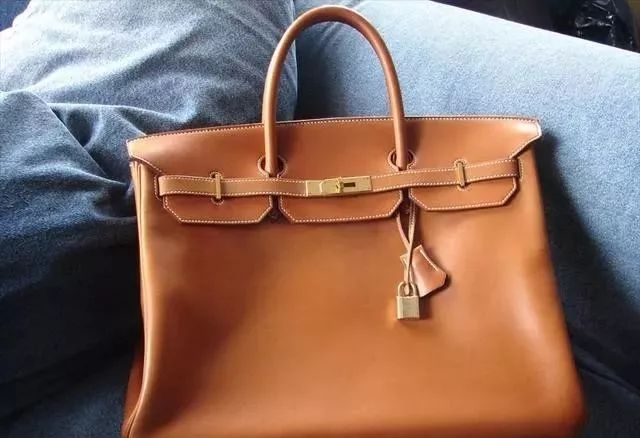
Generally speaking, leather is divided into genuine leather, recycled leather, and artificial leather 。 The processing of animal leather is extremely complex, requiring dozens of steps to produce finished leather. Animal leather undergoes repeated physical and chemical processing to obtain animal leather that has denatured and is not easily decomposed. Among these, tanning agents enhance the leather’s physical and chemical properties, including breathability, corrosion resistance, softness, tear resistance, and flex resistance.
Among leather materials, besides genuine leather, there are also recycled leather and artificial leather 。 Simply put, recycled leather is made by crushing the hides and scraps of various animals, then processing them together with chemical raw materials. Its surface manufacturing process is similar to that of genuine leather and refined leather, embossed leather Similarly, the characteristics are relatively neat edges, high utilization, and low cost; However, the leather is thicker and less strong. And artificial leather Also known as imitation leather or rubber material, it is a general term for synthetic materials such as PVC and PU, made by foaming or laminating various materials with different formulas. People can customize and process different types according to requirements such as strength, wear resistance, cold resistance, color, gloss, and patterns artificial leather . artificial leather The products are characterized by large-scale continuous processing, a wide variety of patterns, good waterproof performance, neat edges, high utilization rates, and generally lower prices compared to genuine leather.
![Image [2]-Interpretation of leather flame-retardant standards – Nleather-Nleather](https://www.nleather.com/wp-content/uploads/2026/08/20260802-111732-RZ6zf-nleather-silicone-leather.png "20260802-111732-RZ6zf-nleather-silicone-leather – Nleather")
artificial leather Among these, the most common major varieties are PVC leather and PU composites finished leather and more. PVC leather (polyvinyl chloride, artificial leather ) It is made by coating fabrics with PVC resin, plasticizers, stabilizers, and other additives, and then processing them through certain processes. The product has high strength, is easy to process, and low in cost. Can be used for various luggage, seat covers, linings, miscellaneous items, etc. However, it has poor oil and high temperature resistance, and its softness and feel at low temperatures are relatively poor.
PVC leather is generally classified by production method into the following types:
(1) Scraping PVC artificial leather ; Scraping PVC artificial leather There are various types, such as direct scraping PVC artificial leather ; Indirect scraping method for PVC artificial leather [Also known as transfer PVC artificial leather (including the steel strip method and release paper method)], and so on.
(2) Calendered PVC artificial leather ;
(3) Extrusion PVC method artificial leather ;
(4) Circular mesh coating method for PVC artificial leather.
PU combined finished leather (Polyurethane combined finished leather ) It is commonly made by impregnating nonwoven fabric as the mesh layer and microporous polyurethane as the grain surface layer. Both the front and back sides closely resemble genuine leather and have a certain degree of breathability, making it more breathable than ordinary ones artificial leather Closer to natural leather. PU combined finished leather It is widely used to make shoes, boots, bags, and ball games. PU combined finished leather Production methods can be divided into three types: dry, wet, and cohesive coating. Currently, a type of microfiber leather is popular, and the full name of microfiber leather is “microfiber reinforced PU leather.” It has outstanding wear resistance, cold resistance, breathability, and aging resistance.
Genuine leather is a product made by pre-treatment, tanning, fatting, dyeing, and finishing collagen. During these processes, compounds containing nitrogen, phosphorus, sulfur, and halogen are added. When burned, these compounds produce smoke, toxic gases, and corrosive gases: nitrogen-containing compounds release ammonia and nitrogen oxides, which combine with water to form corrosive nitrites and nitric acid; Phosphorus-containing compounds can release phosphorus oxides, which in turn form phosphoric acid and other phosphorus oxides; Sulfur-containing compounds can produce hydrogen sulfide with a rotten egg odor and sulfur oxides, which are precursors to sulfuric acid and other oxyacids; Halogen-containing compounds can release hydrogen halides, which dissolve in water to form hydrogen halides. According to reports, although leather burning has not yet received sufficient attention in China, the harm caused by burning leather products to society cannot be ignored.
artificial leather The base material is mostly textiles, such as cotton yarn, polyester, etc., which will burn under heat sources. At the same time, due to routine artificial leather The coating is made of synthetic materials such as soft PVC, PU, or TPU, which generally have a certain degree of flammability and are prone to producing smoke at high temperatures. Therefore, it is routine artificial leather It is a combustible material.
In practice, besides exempting relevant standards for flame retardant on genuine leather products, in many fields requiring flame retardancy, whether it’s genuine leather, recycled leather, or artificial leather Flame retardant leather is also necessary.
It is reported that common flame-retardant materials may exhibit one or more modes of action: heat absorption, gas dilution, dripping, raising thermal cracking temperature, reducing combustion heat, condensed phase flame retardancy, gas-phase flame retardancy, and covering effects. The above flame retardant mechanisms include physical and chemical methods, as well as combined physical and chemical mechanisms. These mechanisms and modes of action are well understood by peers in the flame retardant industry, so we won’t elaborate further in this article.
Different types of flame retardants have varying flame-retardant effects on leather. For a specific flame retardant, several of these flame retardants are often involved simultaneously. For example, the flame retardant effects of phosphorus-based flame retardants include covering effects, condensation phase effects, and vapor phase flame retardant effects. Inorganic flame retardants like magnesium hydroxide and aluminum hydroxide have flame retardant effects, including heat absorption and covering protection.
The flammability of leather is usually evaluated using this method Horizontal combustion test method, ultimate oxygen index test method, vertical combustion test method, smoke density test method, BS5852 test method, 45° angle combustion test method 。 Although these six methods may not meet the requirements for evaluating the combustion performance of all leather products under different application scenarios, in practice, combining and evaluating various methods organically and comprehensively often proves effective.

No comments yet