

Antibacterial PVC leather, microfiber leather, and genuine leather for automotive interiors were used as experimental subjects to investigate antibacterial durability under natural aging and xenon lamp aging test conditions. Results show that in natural aging tests, the antibacterial properties of PVC and microfiber leather are significantly reduced, while the antibacterial properties of genuine leather materials remain excellent, only showing wrinkles and hardening on the surface; However, xenon lamp aging tests failed to reflect the antibacterial attenuation characteristics of leather materials.
![Image [1]-Inside the car dressing leather Antibacterial durability research – Nleather-Nleather](https://www.nleather.com/wp-content/uploads/2026/08/20260802-054400-bfhEb-nleather-silicone-leather.png "20260802-054400-bfhEb-nleather-silicone-leather – Nleather")
The interior of the car is a relatively enclosed environment, where dust, human sweat, grease, smoke stains, and external grime easily adhere to the fibers of interior materials, creating a breeding ground for bacteria and mold. Therefore, for areas frequently touched by the human body—such as steering wheels, seats, armrests, and other areas covered with leather—how to select long-lasting antibacterial materials and build a complete antibacterial cabin system has become one of the development trends in the automotive industry.
Currently, the main antimicrobials used on the market include: inorganic antimicrobials, organic antimicrobials, natural antimicrobials, and compound antimicrobials [1], with inorganic silver ion antimicrobials being the most widely used. The antibacterial leather described in this article mainly uses inorganic silver ion antibacterial technology and composite antibacterial technology. These antimicrobial agents have significant killing effects against E. coli, Staphylococcus aureus (SA), Candida albicans, and other bacterial populations. There are two explanations for its mechanism: one is that Ag+ directly contacts bacteria and reacts via cell wall contact, or reacts with the SH group of intracellular synthases, causing it to be directly or inactivated due to secondary structural changes [2], mainly as inorganic silver ion antibacterial agents; Second, Ag+ exerts antibacterial activity by generating reactive oxygen species—such as peroxide ions, hydrogen peroxide, and hydroxyl radicals[3], mainly as nano-silver composite colloidal antibacterial agents. Both antibacterial mechanisms can destroy the common components of microorganisms or cause functional dysfunction, ultimately causing cells to lose their ability to divide and proliferate, leading to death. In contrast, inorganic silver ion antibacterial agents have advantages such as safety, heat resistance, and good durability, but their drawback is that their antibacterial properties have a certain delayed effect; The advantages of composite antimicrobials include broad-spectrum properties, efficient and mild sterilization and mildew resistance, and long-lasting effectiveness, but their drawbacks are higher cost and low technological maturity.
Currently, related research mostly focuses on the preparation and mechanistic analysis of multi-component synergistic antibacterial agents [4-5], with little impact of aging stress on material antibacterial durability. Therefore, this paper selects PVC leather, microfiber leather, and genuine leather antibacterial materials as research objects, conducts natural aging tests in IP/DP boxes and accelerated xenon lamps, investigates the effects of photothermal stress on antibacterial efficacy under common aging test conditions, and conducts a horizontal comparison of the stability of inorganic silver ion antibacterial agents and composite antibacterial agents.
Test materials and methods
Test materials
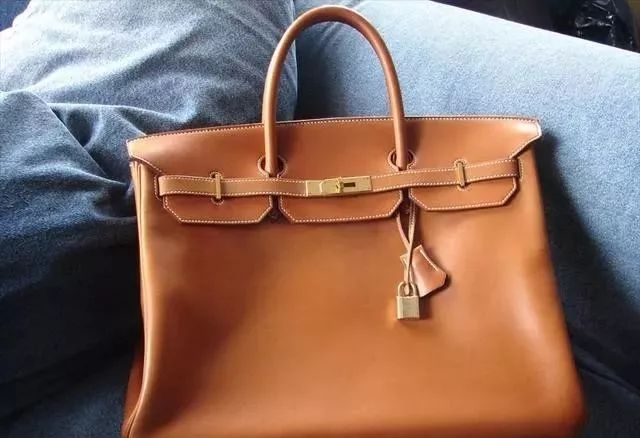
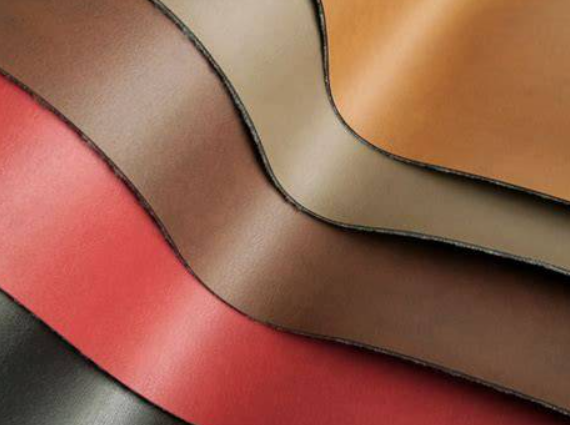
In this study, PVC leather, microfiber leather, and dermal antibacterial materials were used as research subjects (Figure 1). The types of related materials and antibacterial additives are shown in Table 1, with sample sizes ranging from 297 mm × 210 mm.
![Image [2]-Inside the car dressing leather Antibacterial durability research – Nleather-Nleather](https://www.nleather.com/wp-content/uploads/2026/08/20260802-053852-ZZWWv-nleather-silicone-leather.png "20260802-053852-ZZWWv-nleather-silicone-leather – Nleather")
Test Methods
Xenon lamp aging verification test
The A-1 test method from GB/T3208-2015 was used, with test conditions shown in Table 2, totaling 43 test periods and a total of 206.4 hours, with a cumulative irradiation amount of 706 kJ/m2. Before testing, the sample is cut into rectangles suitable for the sample rack measuring 65mm ×130mm, and the lab color and gloss values of the samples are measured. After the test, the lab color and gloss values of the samples were measured again to observe whether the sample surface was powdered, cracked, spotted, sticky, pinholes, mold, softened, hardened, brittle, precipitated, warped, or stratified. After the test, antibacterial performance was verified.
![Image [3]-Inside the car dressing leather Antibacterial durability research – Nleather-Nleather](https://www.nleather.com/wp-content/uploads/2026/08/20260802-053914-6NXMK-nleather-silicone-leather.png "20260802-053914-6NXMK-nleather-silicone-leather – Nleather")
Natural aging verification test
Test conditions selected IP/DP chambers under the hot and humid climate of Qionghai for indirect exposure: the chamber glass is transparent laminated glass with a 45° exposure angle, a maximum temperature of 102°C, and a test period of 6 months. Before the test, the test samples are cleaned and dried, then stored under conventional test conditions for 24 hours for sample conditioning. At the 2nd, 4th, and 6th months of aging, appearance performance evaluation and antibacterial performance testing were conducted respectively to investigate the degree to which the natural aging resistance and antibacterial performance degraded by natural aging.
Antibacterial Performance Verification Test
PVC leather, microfiber leather, and genuine leather are based on the industry standard QB/T4341-2012 ‘Antibacterial Polyurethane Polymer.’ finished leather ———Antibacterial Performance Test Methods and Antibacterial Effects” were conducted, as shown in Table 3. Before the test, the sample was cut into 50mm ×50mm sections, three parallel samples were taken, and the bacteria used were E. coli and Staphylococcus aureus. For comparison, sanitary grade high-density polyethylene is selected. The antibacterial testing process includes: 1) Preparing specified specifications of test samples, blank control samples, and coating films, and sterilizing them; 2) inoculate and cultivate the working strains, using a turbidity tube to adjust the bacterial solution to the specified concentration; 3) Evenly add bacterial solution dropwise to the test surface of the sample and press on the sterile coating film. Cover and cultivate at a relative humidity ≥90% RH and a temperature of (35±2)°C for 24 hours; 4) Elute in homogenized bags and perform live bacteria counting according to GB4789.2. Key operating steps are shown in Figure 2.
![Image [4]-Inside the car dressing leather Antibacterial durability research – Nleather-Nleather](https://www.nleather.com/wp-content/uploads/2026/08/20260802-053936-zi5kh-nleather-silicone-leather.png "20260802-053936-zi5kh-nleather-silicone-leather – Nleather")
Results and discussion
Verification of antibacterial performance under natural conditions
In their natural state, PVC leather and microfiber leather meet industry standards for antibacterial rates against E. coli, with antibacterial rates against SA exceeding 95% and slightly below the standard of 99%, while the antibacterial performance of genuine leather materials meets the requirements. This is because inorganic silver ions have both antibacterial and bactericidal effects, but their antibacterial activity is affected by release rate, particle size, and silver ion content. In contrast, the composite antibacterial technology used in genuine leather materials has better antibacterial effects and high stability. Therefore, it is necessary to improve the antibacterial treatment processes for both types of artificial leather, especially by controlling the total amount, particle size, uniformity of silver ion antimicrobial agents, and leaching rate during the impregnation and rolling stage to reduce antibacterial rate deviations.
Verification of natural aging antibacterial performance
In natural aging tests, PVC leather and microfiber leather had poorer antibacterial durability and were more sensitive——— dropping below 50% in the second month of the test and completely lost by the sixth month (Figures 3 and 4), but the gloss and color difference measurement results remained basically unchanged. This shows that there are two types artificial leather The slow-release rate or effective content of silver ions in the leather varies, suggesting that the silver ions in PVC leather are not firmly bound to the carrier and are easily released and reduced to elemental silver under the influence of light and heat. The antibacterial activity of silver elements is lower than that of silver ions [6-7], or it may react with leather additives/volatiles, causing the antibacterial effect to significantly decrease with natural aging. Considering that heavy metal silver ions have certain toxic effects on cells and have a long half-life after metabolism in the human body, silver should not be added unlimitedly in daily products. Therefore, focusing on improving the slow-release and stability of antimicrobial agents in leather post-treatment processes can achieve long-lasting antibacterial treatment in automotive cabins more economically.
On the other hand, in natural aging tests, the antibacterial performance of genuine leather materials always met standard requirements, but obvious wrinkles and hardening occurred, as shown in Figure 5. It is worth noting that during the test, the extreme temperature of the IP/DP box blackboard was 102°C (Figure 6), which is equivalent to the actual highest temperature at the steering wheel position in the vehicle’s humid and hot weather exposure test. Under these conditions, the oils inside the leather evaporate faster, the oil film is destroyed, causing the internal fibers to stick together and making the leather harder. Therefore, improving the aging resistance of genuine leather interior materials under high-temperature, alternating wet and dry environments remains a key focus at present.
Verification of xenon lamp aging antibacterial performance
![Image [5]-Inside the car dressing leather Antibacterial durability research – Nleather-Nleather](https://www.nleather.com/wp-content/uploads/2026/08/20260802-054001-PrWpx-nleather-silicone-leather.png "20260802-054001-PrWpx-nleather-silicone-leather – Nleather")
Antibacterial test results showed that after xenon lamp testing, the antibacterial rates of the three leather materials showed no significant change, all maintained above 99% (Table 4), except for genuine leather specimens showing warping, deformation, hardening, and very slight discoloration. Figure 7 shows the related appearance photo. Referring to the group standard T/CSAE105-2019A.3.2.1, analysis of color measurement results revealed that PVC leather and genuine leather exhibited very slight discoloration. Based on Appendix B of standard ISO16474-2-2013, the total ultraviolet radiation in the 300~400nm band during this xenon lamp test was converted. The irradiation intensity (1.20±0.02) W/m2 in the 420nm narrow band corresponds to 54.5W/m2 in the 300~400nm wide band yields a total UV irradiation of 32.1MJ/m2. Correspondingly, the cumulative total irradiation inside the outdoor IP/DP enclosure reaches 2330.3 MJ/m2 (as shown in Figure 8). Assuming the ultraviolet band accounts for 9%, the UV radiation amount can be calculated as 209.7 MJ/m2. In other words, the ultraviolet irradiation intensity in xenon lamp aging tests is only 15% of that outdoors, and the temperature alternation amplitude is also smaller than in outdoor environments. Therefore, xenon lamp tests have not effectively accelerated the antibacterial durability degradation of leather materials, and in-depth research on test time and methods is needed [8-10].
![Image [6]-Inside the car dressing leather Antibacterial durability research – Nleather-Nleather](https://www.nleather.com/wp-content/uploads/2026/08/20260802-054018-uZyL7-nleather-silicone-leather.png "20260802-054018-uZyL7-nleather-silicone-leather – Nleather")
This paper studies the antibacterial durability of automotive interior leather materials and their test methods. The main conclusions are:
![Image [7]-Inside the car dressing leather Antibacterial durability research – Nleather-Nleather](https://www.nleather.com/wp-content/uploads/2026/08/20260802-054034-JQjKZ-nleather-silicone-leather.png "20260802-054034-JQjKZ-nleather-silicone-leather – Nleather")
(1) The natural aging test of IP/DP chambers in hot and humid climates can effectively reflect the antibacterial durability of different materials.
(2) In natural aging tests, the antibacterial properties of PVC and microfiber leather significantly decreased; the genuine leather performed excellently but had insufficient resistance to light and heat aging.
(3) The xenon lamp aging test method based on A-1 in GB/T3208-2015 has limited acceleration and fails to reflect the antibacterial attenuation characteristics of artificial leather materials, requiring further optimization of the test method. In summary, attention should be paid to the antibacterial durability of functional materials and the development of accelerated testing methods; existing artificial accelerated aging test methods are insufficient to reflect the actual situation.
[1]夏金兰,王春,刘新星.抗菌剂及其抗菌机理[J].中南大学学报(自然科学版),2004(1):31-38.
[2]JiangHS,ZhangY,LuZW,etal.InteractionbetweenSilverNanoparticlesandTwoDehydrogenases:RoleofThiolGroups[J].Small,2019,15(27):1900860.
[3]InoueY,HoshinoM,TakahashiH,etal.BactericidalactivityofAg-zeolitemediatedbyreactiveoxygenspecesunderaer[1]atedcondi-tions[J].JInorgBiochem,2002,92(1):3742.
[4]吴赟炎,张莉莉,周亚洲,等.可持续释放银离子和活性氧的ZnO/Ag/rGO三元新型光催化抗菌剂(英文)[J].催化学报,2019,40(5):691-704.
[5]孙磊,刘爱心,黄红莹,等.水溶性银纳米颗粒的制备及抗菌性能[J].物理化学学报,2011,27(3):722.
[6]杨辉,王可,丁新更,等.无机抗菌粉体中银价态与抗菌性能研究[J].硅酸盐学报,2002(5):47-50+58.
[7]莫尊理,胡惹惹,王雅雯,等.抗菌材料及其抗菌机理[J].材料导报,2014,28(1):50-52.
[8]周瑾,李晶,吴燕芬.载银无机抗菌剂的制备及其性能研究[J].电子科技大学学报,2003(6):158-161.
[9]丁晓良,王帅,单志华.现代汽车内饰材料研究[J].皮革科学与工程,2017,27(6):36-39.
[10]陈磊,黄仁军.汽车内饰抗菌聚丙烯材料热老化行为研究[J].时代汽车,2020(24):137-139+170.
source:《皮革科学与工程》

No comments yet