

As a high-end luxury item, yachts’ interior decorations, especially leather goods, directly determine the overall sense of luxury, comfort, and durability. Compared to ordinary automotive or furniture leather, yacht leather faces more stringent environmental challenges, such as high salinity, high humidity, intense UV rays, and drastic temperature changes. Therefore, its production requirements and testing standards are much higher than those of conventional leather.
![Image [1]-Yacht-specific leather: production requirements and testing standards – Nleather-Nleather](https://www.nleather.com/wp-content/uploads/2026/07/20260726-172608-2KPV9-nleather-silicone-leather.png "20260726-172608-2KPV9-nleather-silicone-leather – Nleather")
The production of yacht leather must meet the following four core requirements to ensure outstanding performance.
1. Outstanding durability and physical strength
- Tensile strength: It must have extremely high tensile and tear strength to withstand long-term use, seat pressure, and friction.
- Wear resistance: Surface coatings must have extremely strong wear resistance, typically requiring over 100,000 Martindale wear tests to ensure no obvious wear after years of use.
- Scratch resistance: The surface should resist accidental scratches from hard objects like nails or keys, and even if marks remain, they should be able to recover through heat or slight friction (self-healing function).
2. Exceptional weather resistance and environmental stability
- UV Aging: Dyes and coatings with high sun fastness must be used to ensure they do not fade, discolor, or chalk under prolonged strong light. Typically, after passing a xenon lamp aging test lasting over 500 hours, the color difference change (ΔE) is less than 3-4.
- High and cold resistance: In the high temperatures of summer decks (up to 70-80°C) and low temperatures in winter, leather should not become sticky, hardened, cracked, or lose elasticity.
- Hydrolysis resistance: This is one of the most critical properties of yacht leather. Due to prolonged exposure to high humidity, the base fabric of the leather base layer and the polyurethane (PU) coating are prone to hydrolysis reactions, leading to bubbling and cracking. High-quality yacht leather must undergo rigorous hydrolysis testing (e.g., testing at 70°C and 95% relative humidity for more than 28 days with no abnormalities).
3. Excellent stain resistance and easy cleaning
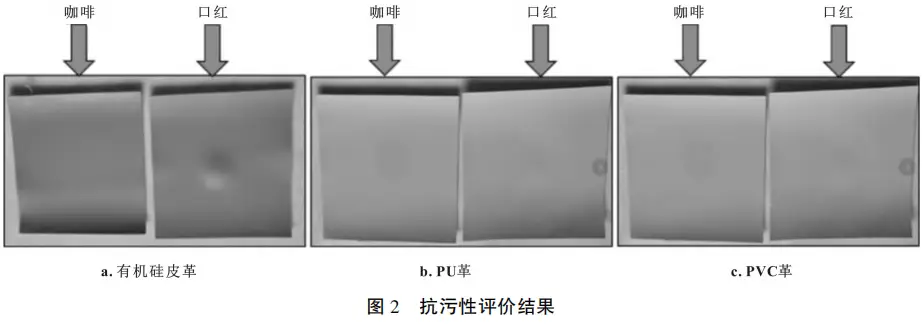
- Waterproof, oil-proof, and stain-resistant (triple-proof) treatment: The surface should be treated with highly efficient fluorocarbons to form a protective layer that effectively resists penetration from common liquids such as water, oil, alcohol, sunscreen, and coffee, achieving “wipe and clean” results.
- Anti-mold and antibacterial: In high-humidity environments, leather should have the ability to resist mold and bacterial growth, usually by adding antibacterial agents to ensure indoor air quality and leather appearance.
![Image [2]-Yacht-specific leather: production requirements and testing standards – Nleather-Nleather](https://www.nleather.com/wp-content/uploads/2026/07/20260726-172634-BwjbX-nleather-silicone-leather.png "20260726-172634-BwjbX-nleather-silicone-leather – Nleather")
4. Strict environmental protection and safety standards
- Low VOC (volatile organic compound) emissions: Ensure indoor air quality and avoid the release of harmful gases at high temperatures, meeting the environmental requirements of IMO, MED, or relevant classification societies.
- Flame retardancy: Depending on the application area (such as living room, bedroom, cockpit), leather may need to meet specific flame-retardant standards, such as IMO FTPC Code Part 8 (Requirements for Flame Retardant Materials in Cabins) to enhance ship safety.
- Environmental certification: Preferred leather certified internationally by OEKO-TEX Standard 100 (Confidence Textile Certification) ensures the product contains no harmful substances.
![Image [3]-Yacht-specific leather: production requirements and testing standards – Nleather-Nleather](https://www.nleather.com/wp-content/uploads/2026/07/20260726-172722-HzwfY-nleather-silicone-leather.png "20260726-172722-HzwfY-nleather-silicone-leather – Nleather")
To meet these production requirements, a series of rigorous laboratory tests must be conducted on yacht leather.
| Testing items | Testing Standards (Reference) | Methods and requirements |
|---|---|---|
| 1. Physical performance testing | ||
| Wear resistance | ISO 12947 / ASTM D4966 (Martindale Method) | ≥ 100,000 cycles, no yarn breakage or obvious wear on the surface. |
| Tear resistance | ISO 3377-2 / ASTM D624 | ≥ 40 N (Elmendorff method) ensures the leather is not easily torn. |
| Tensile strength & elongation | ISO 3376 / ASTM D2209 | It has high tensile strength and a certain elongation at break (such as 20-80%) to adapt to deformation. |
| Durability and durability | ISO 5402 (Deflection Test) | Bends repeatedly at room temperature or low temperature over 50,000 times, with no surface cracks or slurry shedding. |
| 2. Weather resistance testing | ||
| Photoaging test | ISO 105-B02 / AATCC TM16 (Xenon lamp) | After 500 hours of irradiation, the color fastness was evaluated with a grayscale card of ≥ 4, with color difference ΔE ≤ 4. |
| Hydrolysis stability | ISO 1419 / SATRA TM6 | Placed for more than 28 days in 70°C ±2°C and 95% ±5% RH environment, with no cracks, bubbles, discoloration, or loss of physical strength on the surface. |
| High and low temperature cycling tests | Custom or customer standards | After multiple cycles between -20°C and 80°C, the leather showed no physical or chemical degradation after testing. |
| 3. Chemical performance testing | ||
| Color fastness to abrasion | ISO 105-X12 | Dry/wet grinding ≥ 4.5 grades to ensure color does not transfer onto other objects. |
| Sweat stain resistance and color fastness | ISO 105-E04 | After contact with artificial sweat, the color changes and staining ≥ level 4. |
| Chemical resistance | Customizable | Tested with common chemicals (such as sunscreen, alcohol, neutral cleaners), showing no color changes or surface damage upon contact. |
| 4. Sensory and visual testing | ||
| Feel and smell | Subjective evaluation | The hand feel is full, soft, and elastic; No irritating chemical odors. |
| Color consistency | Visual comparison / colorimeter | Colors are uniform and consistent within the same batch and between batches, and the color difference ΔE should be controlled within 1.5. |
| Texture consistency | Visual comparison | The grain patterns are clear, natural, and overall consistent. |

No comments yet