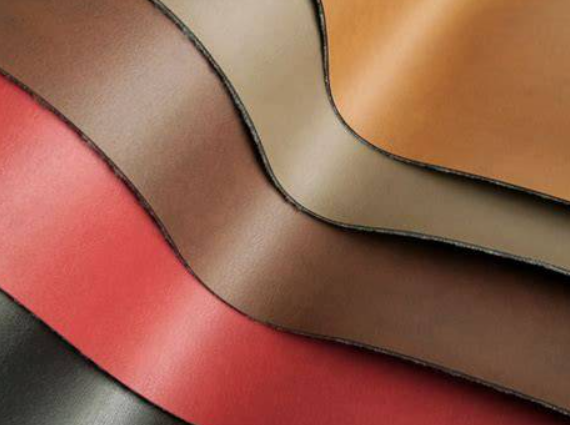
Within the leather family, Whole grain leather 、 Half-grain dough leather And and repaired the facial leather It’s not just about grade; they actually target different raw material defects and use three product routes with different treatment logics. Below, we’ll help you thoroughly clarify them from five dimensions: definition, process, performance, cost, and typical applications.
Essential Differences
Type
Essential definition
Processing logic
Whole grain leather
The natural grain surface layer is fully preserved, with only a transparent thin finish
“Display”—Accepting and presenting the leather’s natural imperfections and textures
Half-grain dough leather
Lightly sand to remove the most surface particles, then apply a light finish
“Modification” — fading blemishes while still preserving most of the natural features
and repaired the facial leather
Deep grinding removes the entire grain layer, then artificially dough is formed
“Covering” — completely removing the original surface and recrafting it
A direct analogy:
Whole grains = A natural beauty with no makeup
Half a grain of flour = Mild beauty filter
and repaired the facial leather = Plastic surgery + makeup
Comparison of Production Processes
Process steps
Whole grain leather
Half-grain dough leather
and repaired the facial leather
Surface treatment
Only use very light sanding or no abrasion at all
Minimal grinding (removal depth <0.1mm)
Deep grinding (removal depth 0.1~0.3mm)
Grain surface retained
100% preserves natural pores and texture
Retains about 70~80% of its natural characteristics
The natural grains completely disappear
Coating thickness
Ultra-thin (transparent or semi-transparent, <0.01mm)
Thin coating (0.01~0.02mm)
Impasto (0.02~0.05mm)
Embossing treatment
Usually not embossed or very shallowly embossed
You can opt for lightly embossed flowers to preserve a natural feel
Essential embossed patterns (such as lychee patterns, drop patterns, and other biomimetic patterns)
Main sources of raw materials
Premium Skin (1~5% premium raw materials)
Medium-high grade leather (leather with fewer blemishes)
Medium to low skin embryo (with more damage or double skin)
Physical Performance and User Experience Comparison
Performance indicators
Whole grain leather 👍
Half-grain dough leather
and repaired the facial leather
Breathability
Excellent(Pores are completely clear)
Good (some pores slightly clogged)
Poor(Coating layer is completely sealed)
Tactile Sensation
Delicate, warm, and naturally elastic
Almost whole grains, slightly firm
Relatively hard, somewhat plastic-like, and cold
Surface scratch-resistant
General (prone to leaving marks, but can be maintained)
Better
The best(Thick coating protection)
Water resistance
Poor (fast water absorption, requires waterproofing)
Average
Best(Coating blocks moisture)
Tear resistance
It depends on the skin blank itself
It depends on the skin embryo
Relatively high(Coating reinforcement)
Resistant to fracture surface risk
Extremely low
Lower
Higher (thick coating, prone to cracking when bent)
Aging characteristics
Forms a natural patina that becomes moister the more you use it
Relatively stable
After coating wear, the underlying fibers are exposed
Appearance and aesthetic features
Dimension
Whole grain leather
Half-grain dough leather
and repaired the facial leather
Natural texture
Clearly visible pores, vascular lines, and growth lines
Faintly visible, but rather vague
Fully artificial texture (embossed)
Defects appear
Preserves real traces such as insect bites and scars
Flaws are faded
The flaws are completely covered
Color uniformity
Natural uneven (with varying depth)
It is relatively uniform
Extremely even
Luster
Naturally gentle and reserved
Moderate
It can be made into high-gloss mirror or matte finishes, offering a variety of styles
Over time
Forms a patina, deepens color, and increases luster
Changes are slower
Minimal variation (stable coating)
Those who appreciate the leather appreciate the “imperfection” of whole grain hide—that is the mark of every cow’s true life.
Cost and Market Positioning
Type
Proportion of raw hides
Relative price (per breed)
Market positioning
Whole grain leather
Only 1~5% of the raw leather
Benchmark Price (1x)
High-end luxury goods, top-tier handmade shoes
Half-grain dough leather
Accounting for about 15~20%
Whole grain 0.6~0.8 times
Mid-to-high-end leather shoes and affordable luxury leather goods
and repaired the facial leather
Accounting for about 70~80%
Whole grain 0.3~0.5 times
Mid-range footwear, mass-market sofas, work shoes
Note: Two-layer surface-trimmed leather (removable leather) is even cheaper, only 0.1~0.2 times that of whole grain.
Typical Application Scenarios
Application areas
Whole grain leather
Half-grain dough leather
and repaired the facial leather
High-end formal shoes
✅ First choice
✅ That’s also possible
❌ Not suitable
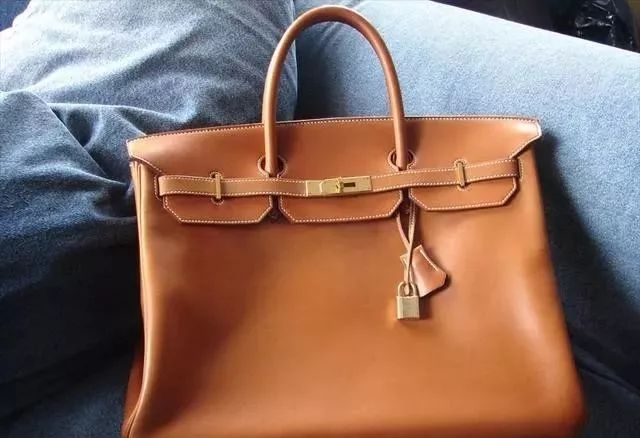
Luxury handbags/wallets
✅
✅
❌
Everyday leather shoes/loafers
✅ Optional
✅ Mainstream
✅ A cost-effective choice
Sofa (High-end)
✅
✅
❌
Sofa (Volkswagen)
❌
❌
✅ Mainstream
Automotive interiors
A very small number of top-tier cars
Some mid-to-high-end segments
✅ Mainstream (sun and water resistant)
Work shoes/safety shoes
❌
❌
✅ First choice (durable and easy to clean)
Belt
✅
✅
✅
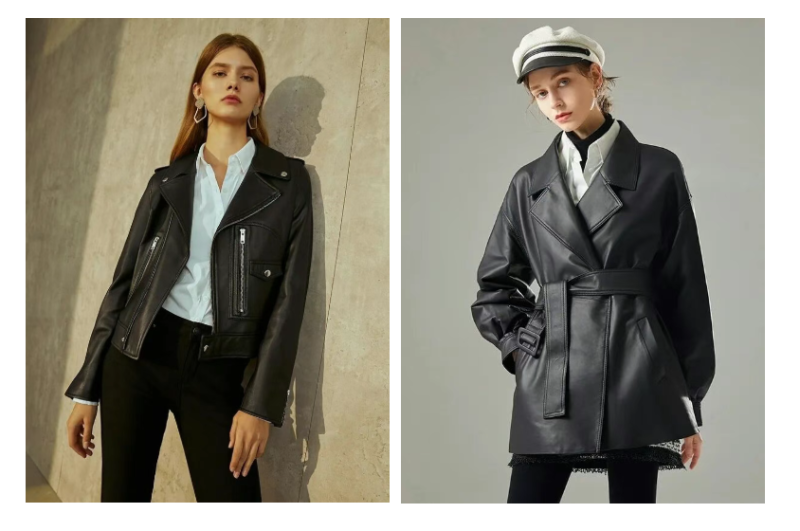
Leather jacket (fashionable style)
✅ High-end models
✅
✅ Entry mark
How to quickly identify
Features
Whole grain leather
Half-grain dough leather
and repaired the facial leather
Look at the pores
Clear, irregular, with varying depths
Faintly visible and relatively regular
Completely poreless or artificially regular
Feel the touch
Moist, elastic, and changes color when exposed to water
Slightly slippery, but decent elasticity
Cold, plastic, does not discolor when exposed to water
Smell the scent
Rich genuine leather flavor
Genuine leather scent
It may have a chemical resin smell
cross-section (edge)
The fibers are dense and natural
The fibers are relatively tight
Obvious coating layering is visible
Drip test
Quickly absorbs and darkens the color
Slow absorption, slight discoloration
Water droplets roll off or are not absorbed
⚠️ Note: Nowadays, some high-quality face-trimmed leather techniques have improved, and the difference in feel is narrowing. Identification requires a comprehensive judgment.


![Image [1]-A comprehensive comparative analysis of whole grain leather, semi-grain leather, and sleather – Nleather-Nleather](https://www.nleather.com/wp-content/uploads/2026/07/20260719-091452-zMLHZ-nleather-silicone-leather.png "20260719-091452-zMLHZ-nleather-silicone-leather – Nleather")
![Image [2]-A comprehensive comparative analysis of whole grain leather, semi-grain leather, and sleather – Nleather-Nleather](https://www.nleather.com/wp-content/uploads/2026/07/20260719-091516-M5QAn-nleather-silicone-leather.png "20260719-091516-M5QAn-nleather-silicone-leather – Nleather")
![Image [3]-A comprehensive comparative analysis of whole grain leather, semi-grain leather, and sleather – Nleather-Nleather](https://www.nleather.com/wp-content/uploads/2026/07/20260719-091555-fLUu7-nleather-silicone-leather.png "20260719-091555-fLUu7-nleather-silicone-leather – Nleather")

No comments yet