

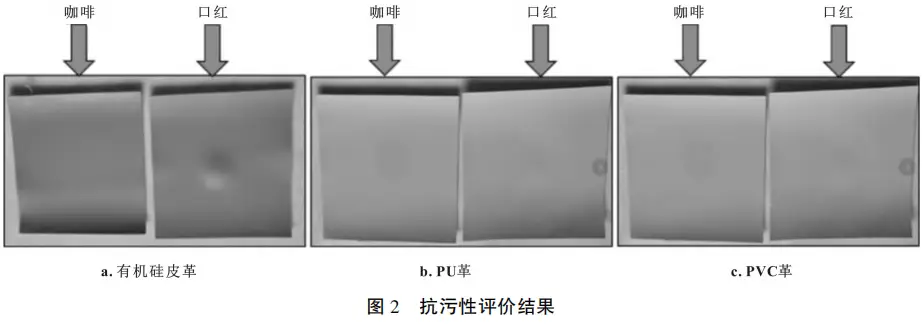
Give PVC artificial leather Color changes: Sometimes, after the coating cures, it not only fails to look fresh but actually appears in some areas If bitten into a pit, the surface becomes dark as if shrouded in mist, and the membrane wrinkles like old skin This phenomenon. This is usually not a problem of old bottoms, but rather Solvent loss Control Causing “chemical damage.”
![Image [1]-Why Your PVC Loses Its Shine: The Solvent Deception – Nleather-Nleather](https://www.nleather.com/wp-content/uploads/2026/07/20260712-145204-TDD5J-nleather-silicone-leather.png "20260712-145204-TDD5J-nleather-silicone-leather – Nleather")
The “Erosion Trilogy” of Solvents on PVC
Many people assume that since PVC is plastic, using strong solvents to “bite” the surface will improve adhesion. But the reality is quite the opposite—the solvent that is too strong does not “roughen” PVC leather, but rather “dissolves.”
Solvent dissolves PVC surface (the nature of peeling)
PVC is not “immune” to all solvents, Tetrahydrofuran, cyclohexanone, dioxacyclohexane and a few other solvents can completely dissolve PVC – 3 。 And MEK, Toluene (TOL) and other commonly used industrial solvents. Although they may not completely dissolve, they do It penetrates between PVC molecular chains to cause swelling.
If the color-changing paint or thinner you use contains large amounts of these strong solvents, they can directly corrode the surface of PVC leather, damaging the coating and texture, causing damage Skin breaks — At best, the surface shine is “eaten away,” while at worst, the coating peels and peels off –
In addition, soft PVC leather contains a large amount Plasticizers (such as DOP), these plasticizers are naturally easy to dissolve in Esters, ketones, aromatics and other solvents – When the strong solvent comes into contact with the leather, not only does the PVC resin swell, but it may also ‘extract’ the plasticizer from the surface, causing the surface to harden, become brittle, or even crack—a change that is often irreversible – The higher the plasticizer content in soft leather, the poorer its solvent tolerance.
Uneven swelling causes stress wrinkling
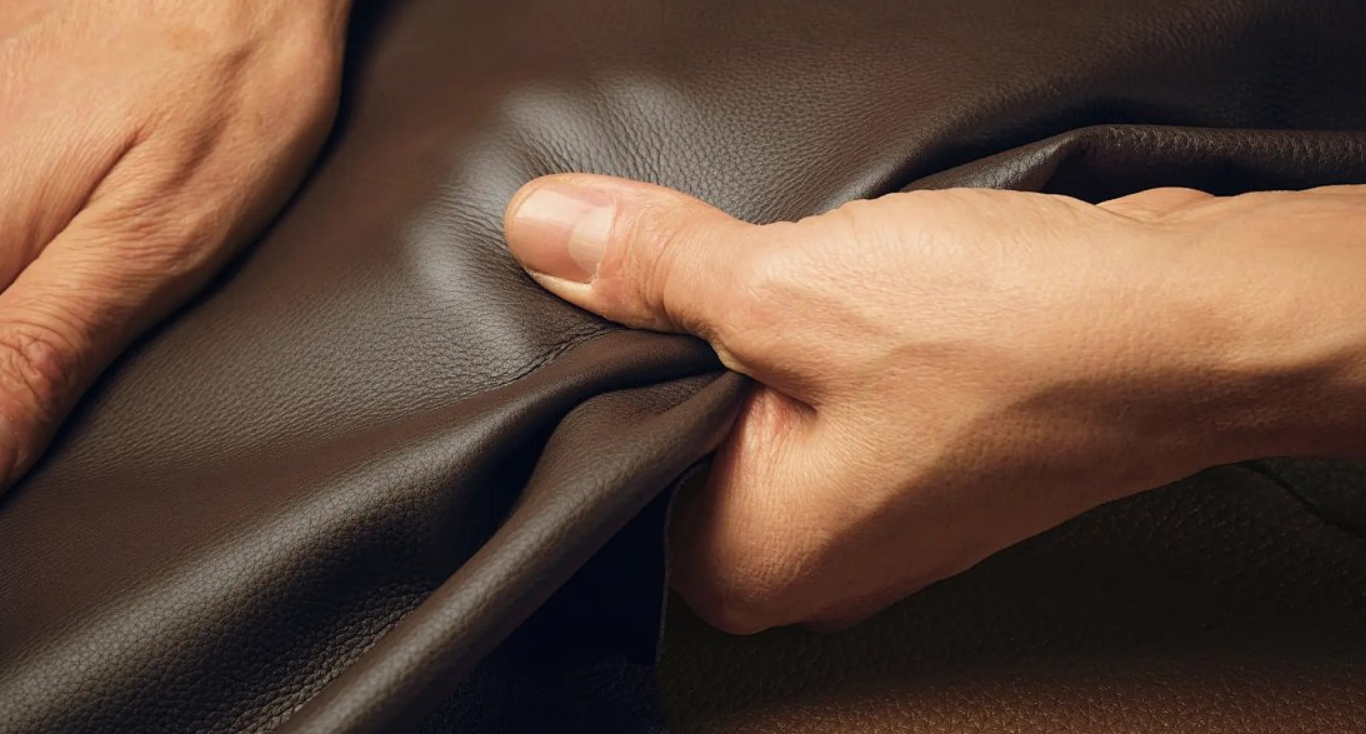
his is the direct cause of wrinkles. When color-changing paint or thinner is applied to the surface of PVC leather, the solvent will penetrates to the PVC surface layer, causing its volume to expand 。 If only one side of the film is swollen (the coating is the same—only the front contact with solvent) causes a huge gap between the expanded layer and the unexpanded bottom layer Internal stress , causing surface appearances Wrinkles。 This is a physical dimensional change, not a chemical reaction—swelling itself is reversible, but the resulting deformation and wrinkles are often permanent
Solvent residue causes the surface to darken
After the color-changing coating dries, if The bottom solvent has not fully evaporated The residual solvent will continue to interact with PVC and the coating, reducing gloss and causing the surface to appear Hair turns black, turns white, or loses its luster This phenomenon. At the same time, strong solvents may dissolve the PVC surface Glossy layer Or Matte treatment layer , which damages the original light-reflective structure and also causes the surface to be dull and lacking in light. Additionally, PVC itself has poor stability to light and heat, and under solvent exposure, the structure may be damaged and discolored
![Image [2]-Why Your PVC Loses Its Shine: The Solvent Deception – Nleather-Nleather](https://www.nleather.com/wp-content/uploads/2026/07/20260712-145218-H2WAg-nleather-silicone-leather.png "20260712-145218-H2WAg-nleather-silicone-leather – Nleather")
Solution: Start with “solvent control.”
| Problem manifestations | The core reason | Solution direction |
|---|---|---|
| Surface is cracked and pitted | Strong solvents dissolve PVC surfaces | Switch to a weak solvent system to avoid high-dissolving solvents such as MEK and toluene |
| The membrane surface wrinkles | Uneven solvent swelling generates internal stress | Apply multiple layers of thin coating to control solvent penetration in a single application |
| The surface darkened and lost its luster | Solvent dissolves the glossy layer or leaves residue | Use a special primer to isolate and ensure thorough drying |
Choose a “mild” solvent/diluent system
When changing the color during construction, The most critical point is to avoid coatings and thinner agents containing high solubility solvents such as MEK, toluene (TOL), cyclohexanone, and tetrahydrofuran – 。 These solvents have a very strong swelling and dissolving effect on PVC.
Priority should be given to solvent systems that have a weaker swelling effect on PVC. Although PVC leather treatment agents (such as glossy finishers, matte finishers, etc.) often contain solvents like MEK/TOL in their formulations, -, but these are for unfinished leather Industrial production processes , used under high-temperature drying and short-term contact conditions. Color renovation (applying at room temperature, with coatings requiring long-term adhesion) is a completely different scenario from industrial surface treatment , cannot be applied directly.
The correct approach is:
Water-based or mild solvent coatings specially designed for PVC color alteration are selected They use solvent systems that have weaker PVC swelling effects (such as blended systems of alcohols, esters, and hydrocarbons), which can dissolve resins without damaging the substrate.
If you need to mix it yourself, avoid using a single strong solvent; prioritize using solvent combinations with low PVC swelling capacity.
Before use Be sure to conduct small-area tests , observe whether the coating appears darkened, wrinkled, or sedented after drying.
![Image [3]-Why Your PVC Loses Its Shine: The Solvent Deception – Nleather-Nleather](https://www.nleather.com/wp-content/uploads/2026/07/20260712-145249-zgfiX-nleather-silicone-leather.png "20260712-145249-zgfiX-nleather-silicone-leather – Nleather")
Apply a specialized sealing primer to establish a separation layer
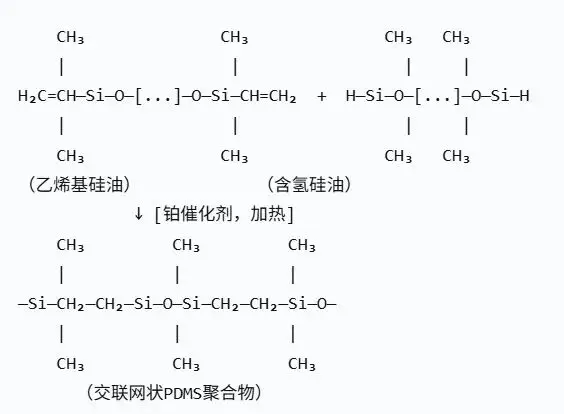
This is the most effective means to prevent solvent corrosion. Before changing the color, apply a layer first Specialized PVC adhesion primer/sealing primer (such as chloroacetic resin primers and oleophilic modified polyurethane primers), after this primer dries completely, Prevents solvents in topcoat from directly contacting the PVC substrate This not only protects the substrate from swelling but also provides a good adhesion base for the topcoat.
The key lies here The primer must be thoroughly dried and cured Otherwise, solvents in the primer could also harm the PVC—many cases of “problems still happening after primer” are because the primer is applied before it is fully dry.
Apply thinly multiple times to control the dosage per application
Applying too thick at once means a large amount of solvent seeps into the PVC surface at once, concentrating swelling stress and greatly increasing the risk of wrinkling. The correct approach is:
Adopt “ Apply multiple layers of light spray/thin application ” Each coating layer is thin, allowing solvents to fully evaporate between passes.
Avoid layering on top of an under-dried coating, as the underlying solvent will remain trapped inside and act continuously, causing greater harm.
Strictly control ambient temperature to avoid “thermal solubilization”
Temperatures rise This intensifies the swelling and dissolution effects of solvents on PVC 。 During construction:
1. Ambient temperature is controlled at 15-35℃ Avoid construction in high temperatures.
2. If you use a hot air gun to speed up drying, Temperature should not exceed 130°C Otherwise, the PVC itself will begin to soften or even decompose
3. Avoid exposing the recolored product to direct sunlight or placing it near heat sources; otherwise, the combined effect of residual solvents and high temperatures will accelerate surface darkening and discoloration.
![Image [4]-Why Your PVC Loses Its Shine: The Solvent Deception – Nleather-Nleather](https://www.nleather.com/wp-content/uploads/2026/07/20260712-145311-Yn8Vn-nleather-silicone-leather.png "20260712-145311-Yn8Vn-nleather-silicone-leather – Nleather")
Severe aging or ultra-soft leather—abandon the coating plan altogether
If PVC leather is severely aged, its surface chalking, or if it is ultra-soft leather with a very high plasticizer content, solvent-based color-changing paint carries a very high risk—even with careful handling, swelling or plasticizer extraction is hard to avoid. The safest approach at this time is: Abandoning paint and switching to physical coverage (Such as self-adhesive leather patches, custom sofa covers, etc.).
VC leather color modification appears Skin breakage, wrinkles, blackening , the core points to the same issue— Incorrect solvent selection 。 PVC is not an “indestructible” plastic; it swells and dissolves when exposed to strong solvents. The key to color-changing construction is not to use strong solvents to “bite” it, but to Choose a mild solvent system, use primer for isolation and protection, and apply multiple thin coats to control penetration — Allowing coatings to coexist peacefully with substrates, rather than chemical attacks.

No comments yet