

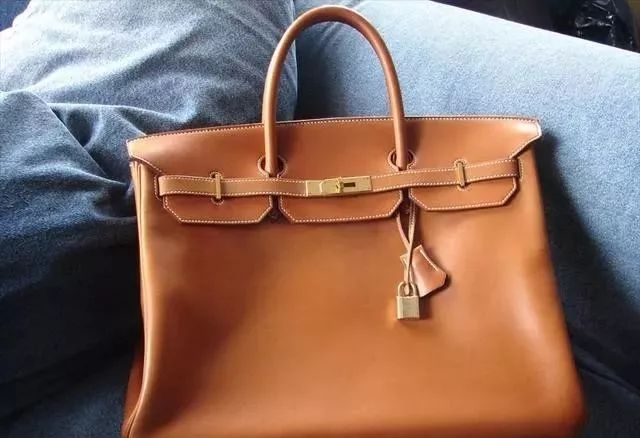
Target Bending cracks And The edges and corners are peeling The problem is, this is PU artificial leather After color change, the second most common failure scenario is bubbling. Unlike the main “chemical/solvent” causes of heat-induced bubbling, bending cracks and peeling are more commonly caused by bending cracks Mechanical performance mismatch And Stress concentration Problem.Below is an in-depth root cause analysis and systematic solutions to this issue.
![Image [1]-Recolored PU Leather Failures: Root Causes of Cracking and Peeling – Nleather-Nleather](https://www.nleather.com/wp-content/uploads/2026/07/20260712-132814-kREwn-nleather-silicone-leather.png "20260712-132814-kREwn-nleather-silicone-leather – Nleather")
Cause analysis
Severe mismatch between coating hardness and substrate flexibility (main cause)
Principle : PU leather sofas require frequent bending and stretching (elastic deformation can reach 20%-30%), and when bending the corners of the luggage, the outer layer is stretched and the inner layer is compressed. Color-changing paint films are usually used Hard and brittle (high Tg value, i.e., high glass transition temperature), while the underlying PU is Soft yet tough (low Tg value). Mechanism : When bent, the soft base undergoes significant deformation, and the hard paint film cannot stretch accordingly, resulting in microcracks inside the film. As the number of bends increases, microcracks expand and penetrate, eventually appearing Crack patterns (Similar to a cracked riverbed.) The bending at the corners is the most magnitive, with the most concentrated stress, so it is the first to occur Skin is exposed — The paint film cracks and lifts at the bend line.
Internal stress buildup caused by excessive paint film
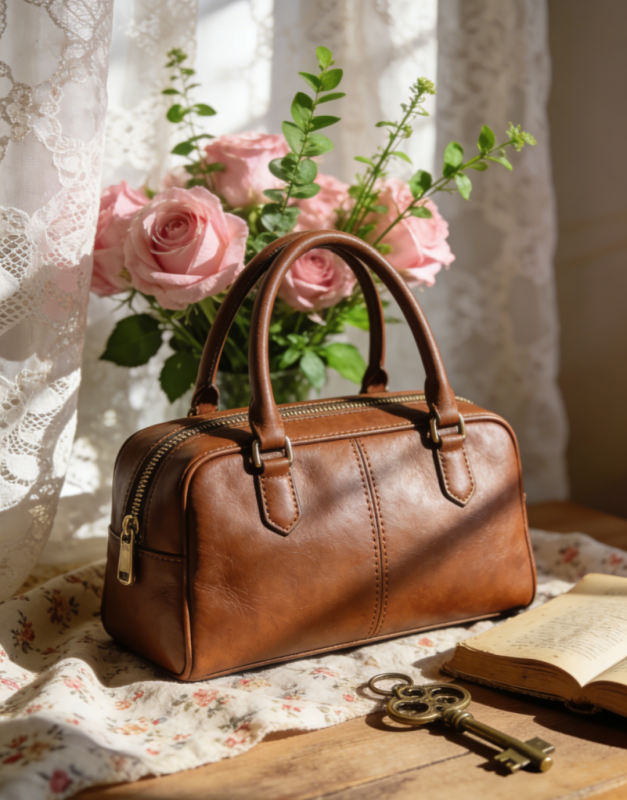
Principle : When changing colors, to cover the base color or achieve fullness, it is common to spray too thick in one coat or stack too thick in multiple layers. Mechanism : During curing, the paint film undergoes volumetric shrinkage (solvent evaporation or crosslinking shrinkage). The thicker the thickness, Internal stress The bigger it gets. This internal stress is usually suppressed by the film’s own strength, but once bent, external stress combined with internal stress instantly exceeds the film’s fracture strength, causing cracks to penetrate along the thickness direction. The edges and corners have the highest internal stress due to paint flow and thickening, making them hotspots for peeling.
![Image [2]-Recolored PU Leather Failures: Root Causes of Cracking and Peeling – Nleather-Nleather](https://www.nleather.com/wp-content/uploads/2026/07/20260712-132838-yjDHz-nleather-silicone-leather.png "20260712-132838-yjDHz-nleather-silicone-leather – Nleather")
Structural differences between dry and wet PU lead to different failure modes
| Type | Structural features | Special causes of bending cracks or peeling |
|---|---|---|
| Dry method PU | There is a layer on the surface Dense surface layer (20-50μm), similar to plastic film | The surface is naturally smooth and low in permeability; the color-changing paint can only adhere to the very surface. When bent, the dense surface layer itself will develop microcracks, causing the color-changing paint layer to break down. Cracks appeared Linear type , cracking neatly along the bend line. |
| Wet method PU | On the surface, yes Porous layer (Includes bubble cells, thickness can reach 0.5-2mm), similar to a sponge-like structure | Color-changing paint penetrates the bubbles to form an “anchor” structure, which usually adheres well. But the cell structure also means the substrate It is softer and more compressible 。 When bending, the bubbles are compressed and rebounded. If the color-changing paint lacks elasticity, the paint film will be repeatedly stretched and compressed Fatigue and rupture 。 Cracks appeared It has a fine mesh pattern 。 |
Insufficient sanding of corners or lack of edge banding
Mechanism : The edges of luggage and the corners of sofa armrests have the greatest deformation when bent (up to 90°-180°). If these areas were not done before the color change, Chamfer sanding (Sharpen the edges into a rounded arc), and the paint film forms at the sharp corners Stress singularity — Theoretical stress values tend to infinity. Any slight bending can cause the paint film to crack first, then the cracks extend to both sides, eventually peeling off the entire sheet (peeling).
The operating ambient temperature is too low
Principle : Most PU color-changing paints become more brittle at low temperatures (below Tg they appear glassy). Mechanism : In winter or cold environments, the flexibility of the paint film decreases. At this point, bending (such as opening and closing a bag in winter or sitting on a cold sofa) causes the paint film to break brittle like glass. Once initial cracks appear, repeated subsequent bending accelerates propagation.
Incomplete curing or use of inferior curing agents
Mechanism : Two-component PU paint requires precise curing agent ratios. Insufficient curing agent→ paint film is too soft and sticky; Excessive curing agent → the paint film becomes hard and brittle. Inferior curing agents cause uneven crosslinking density, resulting in “weak points” where cracks first occur during bending.
![Image [3]-Recolored PU Leather Failures: Root Causes of Cracking and Peeling – Nleather-Nleather](https://www.nleather.com/wp-content/uploads/2026/07/20260712-132906-emHJp-nleather-silicone-leather.png "20260712-132906-emHJp-nleather-silicone-leather – Nleather")
Solution
Core idea: softening paint film + thinning coating + optimizing corners
Step 1: Substrate pretreatment—stress release and corner rounding
| Operation | Specific methods | What problem is being solved? |
|---|---|---|
| Round the edges and corner by polishing | Use 240-grit → 400-grit sandpaper to grind the corners of the luggage and the edge of the sofa R≥ 2mm arc , do not leave sharp edges. | Eliminate stress singularities and prevent stress concentration that can cause skin cracking. |
| Overall polishing | Lightly sand the entire surface with fine sandpaper of 800-1000 grit to remove the surface release agent while Do not wear through the surface layer (Especially for dry PU, the fiber underlayer will be exposed through abrasion.) | Provides physical anchoring points while thinning the original hardened surface. |
| Pre-bending treatment | Manually bend the corners 10-20 times to release the original PU leather’s “memory stress” earlier. | This avoids excessive deformation of the substrate during the first large-angle bend after color change, which could tear the paint film. |
Step 2: Formula adjustment—the core is “toughening”This is the solution for bending cracks Key technologies 。
| Adjustment items | Operating Method | Expected results |
|---|---|---|
| Soft PU resin is selected | Do not use hard/high-gloss resins. Choice Tg value≤-20°C aliphatic PU resin (soft to the touch, good resilience). | The paint film itself bends with the substrate without cracking. |
| Plasticizer/toughening agent added | Added to color-changing paints 5%-15% polyester or polyether-type plasticizers (such as DINP, adipate) or Elastomer modifiers 。 | Greatly enhances the flexibility of the paint film, stretching over 200% during bending without cracking. |
| Adjust the curing agent ratio | If using a two-component PU, the NCO/OH ratio ranges from the standard 1.0 to 1.1 Reduced to 0.9-0.95 (Slightly under-cured). | Reducing cross-linking density allows the film to retain some plasticity, sacrificing hardness for flexibility. |
| Special treatment of water-based paint | Water-based PU forms a relatively soft film but has poor cohesion. Add-on 2%-5% aqueous crosslinking agents (such as azimodyridine, diamidide). | Increases cohesive strength to prevent the paint film from tearing. |
Step 3: Spraying process—the principle of thin and soft
| Principle | Key points of operation | Why it matters |
|---|---|---|
| Ultra-thin spraying | The thickness of a single dry film is controlled within 10-15μm (Equivalent to 1/5 the thickness of ordinary A4 paper). Total thickness should not exceed 50μm. | The thinner the paint film, the lower the internal stress, and the less stretching required during bending. |
| Mist spray as the base layer | The first step uses an ultra-thin paint solution diluted by 30%-50%, Long-range mist spray (30-40cm), forming semi-transparent “dot-like” attachments. | No sealing continuous film is used, leaving a stress buffer space between the substrate and the paint film. |
| The edges and corners are thinner | During spraying Spray the surface first, then sweep the edges and corners with the remaining mist , preventing paint buildup at the edges. | The edges and corners are the most stressed areas; the thinner the paint film, the less likely it is to peel. |
| Apply it thinly multiple times | Spray in 3-4 batches, with 10-15 minutes intervals each time. Don’t try to cover the base color all at once 。 | Release shrinkage stress layer by layer, avoiding a one-time thick coat. |
Step 4: Post-softening treatment—bending strengthening
| Method | Operation | Applicable scenarios |
|---|---|---|
| Spray a flexible topcoat | After the colored paint is completely dry, a thin coat is sprayed High-elasticity PU varnish (Elongation at break ≥300%), thickness 5-10μm. | All scenarios, especially high-frequency bent parts like sofas and soft panels. |
| Hot air softening treatment | Used as a whole Hot air at 60-70°C Purge evenly for 3-5 minutes, then let it cool naturally immediately. | Helps redistribute stress within the paint film and reduces residual stress from curing. |
| Mechanical pre-bending | After the paint has fully cured, the corners of the luggage and the armrests of the sofa are redone Gently bend 50-100 times 。 | This allows the paint film to “adapt” to deformation, exposing weak points in advance for repair. |
Step 5: Specialized repair for peeling at the edgesIf peeling has already appeared at the edges (paint film lifted or peeling):
| Repair steps | Operating Method |
|---|---|
| Clean the peeling areas | Gently scrape off the peeled paint film with a blade, and trim the edges Inclined plane (Do not go straight to the edge of the wall.) |
| Polish the transition zone | Use 600-grit sandpaper to sand the edges of the restoration area 2-3cm gradient transition band 。 |
| Patch up the area | Use Soft PU paint + Plasticizers Mix and apply 2-3 thin layers in the repair area with a small brush or airbrush, with each layer between them Extend 1-2cm outward Perform stacking transitions. |
| Edge fusion | Finally, use a hot air gun to blow on the edges and gently press with a cotton swab or finger to remove any repair marks. |
Targeted solutions for different products
| Product types | Bending frequency | Core Measures | Taboos |
|---|---|---|---|
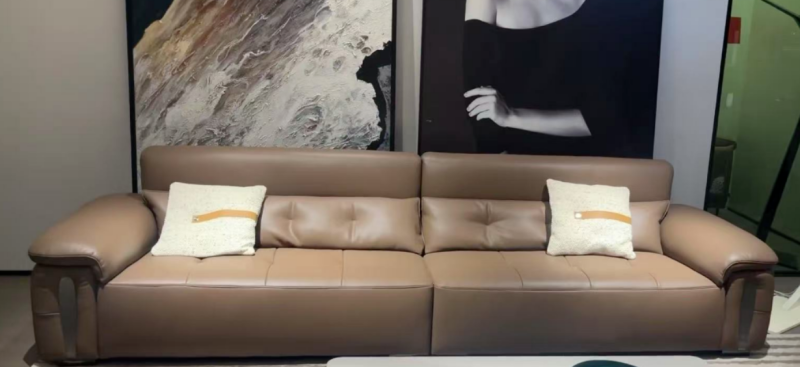
| Sofa PU (High elastic demand) | Extremely high (seat pressure, repeated bending) | It must be used Soft PU resin + Tg ≤-20°C Add 10%-15% plasticizer, and keep the total paint film thickness below 30μm. | Do not use high-gloss hard paint; The use of thick coating is prohibited. |
| Bags PU (Stress concentration at edges and corners) | Medium to High (Opening, Extrusion) | Corner chamfering and grinding It is a must-have. Changed to use Elastomer-modified PU paint , used at the corners Transition spraying (Gradually thinning from the plane to the edges). | Do not spray varnish to harden it; Do not add thick lacquer at the edges and corners. |
| Dry method PU (Dense surface) | Middle | Absolutely Polishing Remove the surface release layer. Selection Penetrating primer (Low viscosity, high permeability) First apply a layer of “flexible anchor nails,” then coat with topcoat. | Do not spray ordinary colored paint directly. |
| Wet method PU (Cell structure) | Medium to high | Utilizing its porous properties, Low-viscosity primer Seepage The bubble hole forms a “spring anchoring.” Topcoat is a must Thin , avoiding clogging of the bubble holes, the rebound function of breathing. | Do not use thick coatings of high-viscosity paint for sealing. |
Quick Self-Checklist
| Problem manifestations | Most likely, that’s the reason | The fastest solution |
|---|---|---|
| Appears after bending Fine crack patterns (Like cracked soil) | The paint film is too hard/too brittle and lacks flexibility | Switch to soft resin + add plasticizer |
| Appears after bending Single straight crack (Cracks along the folded line) | The dry PU dense layer itself cracks, causing the paint film to crack | The original dense layer must first be ground and destroyed |
| Corner With one bend, The whole area exploded (Delamination, not cracking) | Insufficient adhesion + concentrated stress at the edges and corners | Rounded corners and sanding + spraying flexible primer |
| After using it for a while, Cracks appeared | Fatigue aging of the paint film | Pre-bending treatment + spraying elastic topcoat |
| Winter The cracks were severe, Summer Normal | The Tg value of the paint film is relatively high, causing it to become brittle at low temperatures | Switch to low-Tg resin (below -30°C) |
The essence of bending cracks and edge peeling is that “a hard paint film covers the soft substrate.” ”。 The key to solving this problem is not improving adhesion (which is the solution to the foaming problem), but rather This makes the paint film softer, thinner, and softer 。 Remember three numbers : Paint film thickness ≤ 50μm, resin Tg value ≤-20°C, plasticizer dosage 5%-15%. Remember three movements : Corners must be rounded; dry PU must be sanded, wet PU must not be sealed. If you already have a large area of peeling, : This indicates that the overall mechanical properties of the paint film do not match, and local repairs cannot solve the problem. It is recommended to completely remove the paint and redo it according to the above plan.
![Image [4]-Recolored PU Leather Failures: Root Causes of Cracking and Peeling – Nleather-Nleather](https://www.nleather.com/wp-content/uploads/2026/07/20260712-132938-3BxZL-nleather-silicone-leather.png "20260712-132938-3BxZL-nleather-silicone-leather – Nleather")

No comments yet