

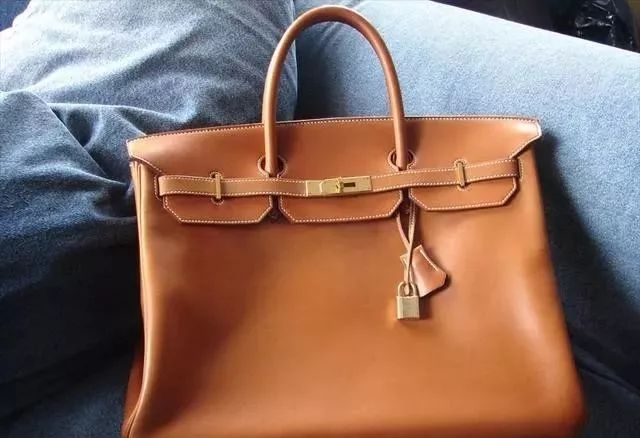
Veg-tan Hide There is a fundamental difference in the color change logic of other leathers— It is like a natural canvas, where color needs to “eat” into the fibers rather than floating on the surface 。 Give me oil wax leather “Supplementary wax” and suede leather “penetrating dyes” are different, Veg-tan The color change of leather is a “dual penetration project of physics and chemistry.”
![Image [1]-Veg-Tan Leather Color Modification: Understanding the Dual Penetration Process – Nleather-Nleather](https://www.nleather.com/wp-content/uploads/2026/07/20260712-105811-WrBmx-nleather-silicone-leather.png "20260712-105811-WrBmx-nleather-silicone-leather – Nleather")
Understand it. Veg-tan: The “Character” of Leather.
Before discussing the color-changing process, it is essential to understand this Veg-tan What is leather, and this determines why its color-changing method is so unique:
| Dimension | Veg-tan Hide | chrome tanned leather (Regular smooth leather) | oil wax leather/oil Impregnated Leathers |
|---|---|---|---|
| Tanning method | Vegetable tannins (kao gum) tanning | Chrome-salt tanning | Veg-tan Or after chrome tanning, add fat and wax |
| Surface features | without a coating, Original skin and original color (Off-white/meat pink), naturally changing color over time (“Raising Cattle) | Covered by a coating layer | Contains oil and wax, and has a color-changing effect |
| Charge characteristics | Carried a negative charge | It carries a positive charge | It depends on the underlying process |
| Color sources | Dyes Penetration Fiber | Pigment paste Coverage Surface | Oil wax + dye penetration |
| Core charm | “Cultivation Series”—the more you use it, the more moisturizing it gets, and the color gradually deepens to honey or reddish-brown | The color remains stable and unchanged | Scratches can be erased, giving it a vintage feel |
| The core logic behind the color change | Penetration dyeing + color fixation , retaining its natural texture | Cover with the original coating | Oil and wax replenishment + dyeing |
Key points : Veg-tan Hide No coating layer This means the color can directly contact the fibers, but it also means it It cannot be “covered” or changed color like smooth leather does —You can only change from light to dark, not from dark to light.
Industrial Mass Production Grade Process Flow (Tannery)
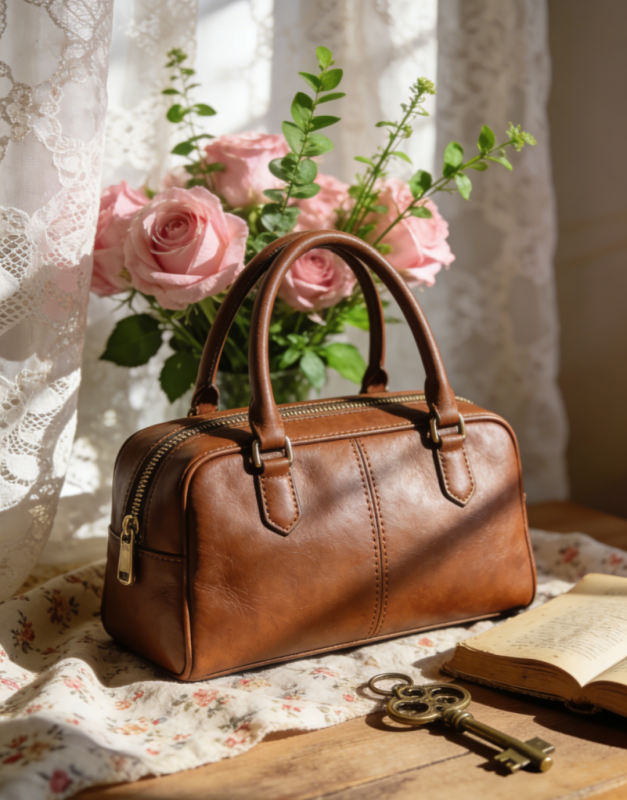
Veg-tan industrial dyeing of leather is a highly specialized “water field” technique. Give me cow leather, the coating and color changes of sheepskin — the color of veg-tan leather is here, inside the drum, where chemical reactions are “embedded” within the fibers.
Principles of dyeing chemistry
Veg-tan The biggest challenge in leather dyeing is:
Veg-tan Leather carries negative charge, while ordinary leather dyes (acid dyes, direct dyes) are also anionic types; the two repel each other, resulting in a very low dyeing rate 。
Solution :
It must be used Cationic dyes (such as alkaline dyes) or Metal complexation dyes 。 The chromic groups of cationic dyes carry a positive charge, while those with a negative charge are Veg-tan Leather fibers are formed Ionic bond bonding , extremely approachable.
A double-edged sword of strong affinity :
Strong affinity means the dye “clings” to the fibers and won’t let go, but it also causes the dye to be “tightened.” Quickly adsorbed on surfaces , before it can penetrate inside, it gets fixed, causing Colored flowers And Uneven dyeing
![Image [2]-Veg-Tan Leather Color Modification: Understanding the Dual Penetration Process – Nleather-Nleather](https://www.nleather.com/wp-content/uploads/2026/07/20260712-105836-Ze59D-nleather-silicone-leather.png "20260712-105836-Ze59D-nleather-silicone-leather – Nleather")
Core Process Flow:
Pretreatment of bare hide (acid soaking–acid removal→ tanning of kalan glue (drum rolling) → dyeing (adding alkaline dye in batches) → Soaking overnight → Subsequent finishing
| Process | Key parameters | Functions and Key Points |
|---|---|---|
| 1. Bare leather pretreatment | Acid extraction – acid removal | Adjust the pH of the leather board to prepare for tanning and dyeing |
| 2. Glue tanning | Amount of kao glue used: 20-40% of bare skin weight; Recommended tao glue: bayberry, thorn bark, horse zhan acacia (Zhan Xiangsi), hard wood, chestnut wood, oak bowl | Plant tannins combined with leather collagen fibers give leather firmness and a natural texture; The higher the amount of kaolin glue, the tighter the leather, but it also makes it less conducive to dye penetration |
| 3. Staining (core) | Alkaline dye dosage: bare hide weight 0.005-0.02%; Organic solvent dilution: 100-300 times; Add in 2-5 installments; After each addition, rotate for 20-60 minutes | Key technologies : Use organic solvents (formic acid, ethanol, acetone, etc.) to apply alkaline dyes High dilute it thoroughly Afterwards Added in stages , preventing dye from rapidly accumulating on the surface; Give the dye enough time Spread inward |
| 4. Soak overnight | ≥ 8 hours | Allows the dye to fully penetrate and bond with the fibers |
| 5. Follow-up Organization | Routine Veg-tan Leather treatment process | Fatting, drying, and softening the texture |
Key points of industrial dyeing technology
According to the patent document “A Common Veg-tan The leather is tanned with glue and tanned imitation of larch oak Veg-tan The core of industrial dyeing is the method of leather “Slow work yields fine work.” ” :
High dilution : Alkaline dyes are diluted 100-300 times with organic solvents at extremely low concentrations
Added in stages : Insert the drum shaft in 2-5 steps, rotating for 20-60 minutes after each addition
Slow penetration : Let the dye run from the surface to the inside Spread layer by layer , rather than rushing in all at once
After handling it this way, Veg-tan Ge means color Uniform and penetrating , rather than just a “surface layer of skin.”
Handmade / D-Frame Y-level Process Flow (Individual/Studio)
If you do it yourself, Veg-tan Leather and leather can be changed in color (e.g., Veg-tan leather wallets, belts, and bags), Work Turning the karma drum dyes is unrealistic , the following methods are needed:
Dyeing method selection
| Method | Operation | Applicable scenarios | Advantages and disadvantages |
|---|---|---|---|
| Spraying | Use a spray gun to evenly spray the diluted alcohol dye onto the leather surface | Large areas, finished leather goods refurbished | ✅ Uniform, ❌ requires equipment |
| Wipe/brush | Use a sponge, soft cloth, or brush to apply dye to the leather surface | Small area, handmade leather goods production | ✅ Simple operation, ❌ prone to unevenness |
| Bubble dye | The leather is completely immersed in the dyeing liquid | Leather dyeing requires coloring on both sides | ✅ Thorough dyeing requires ❌ a large amount of dye solution |
![Image [3]-Veg-Tan Leather Color Modification: Understanding the Dual Penetration Process – Nleather-Nleather](https://www.nleather.com/wp-content/uploads/2026/07/20260712-105907-Tbenk-nleather-silicone-leather.png "20260712-105907-Tbenk-nleather-silicone-leather – Nleather")
Standard manual dyeing process (7-step method)
Step 1: Preparation
Veg-tan The leather must be the same Natural-color leather that has not been oiled or waxed (Or light-colored leather), because dyes can only be used Light colors are replaced with dark ones , cannot change dark colors to light colors
Materials needed: alcohol dye, thinner (industrial alcohol/special thinner), sponge/soft cloth/spray gun, fixing agent, maintenance oil
Step 2: Clean the leather surface
Wipe the leather surface with a clean, soft cloth to remove dust and oil
For deep cleaning, a small amount is needed Horse Saddle black Or Leather cleaner Wipe lightly and let dry
Step 3: Dilute the dye (key!) )
Alcohol dyes are high-concentration concentrates, It must be diluted before use
- Recommended Ratio (from Specialized Material Factory):
- Scheme A: Anhydrous industrial alcohol: butyl ester = 1:1, then mix with dye water
- Scheme B: Dye water : diluent = 1:4
- Scheme C (Osmosis Enhancement): Thinner: Penetrant : Dye Water = 2:2:1
⚠️ Direct use of the undiluted solution is prohibited : This can cause colors to be too dark, uneven, and waste dye
Step 4: Moisten the leather surface (optional, but recommended)
Use water or diluent Slightly moist Leather surface, opening fiber pores
Wet leather absorbs dyes more easily and dyes more evenly
Note : Do not be too wet, or the dye will smudge
Step 5: Dyeing operation
Small amounts, many times Principle: Apply a thin layer of coating on each layer, then apply the next layer once it is completely dry
The direction is consistent : Apply in the same direction to avoid repeated swiping that could cause color marks
Usually, yes 2-4 floors Only then can the ideal color depth be achieved
The depth of color is influenced by factors such as degree of dye dilution, number of applications, type of leather, and leather base color
Step 6: Color fixation (essential!) )
After dyeing is completely dry, apply it Fixing agent Or Anti-stain lotion
Functions of fixatives:
- Fixes color to prevent fading or fading
- Enhances gloss
- Provides waterproof and stain-resistant protection
⚠️ This step cannot be skipped : Non-fixable Veg-tan Leather will suffer severe color loss when exposed to water or friction
Step 7: Fat-Adding Maintenance
Once the fixing agent is completely dry, apply it evenly Horse oil 、 Ox trotter fat Or Mink oil
Functions of fats and oils:
Restores the oil lost during the dyeing process
Increases the softness and toughness of the leather
Gives it a gentle sheen
This restores the leather with the qualities of “raising cattle.” — Oils oxidize and change color over time, making the colors richer
Creative Dyeing Craft (Advanced Gameplay)
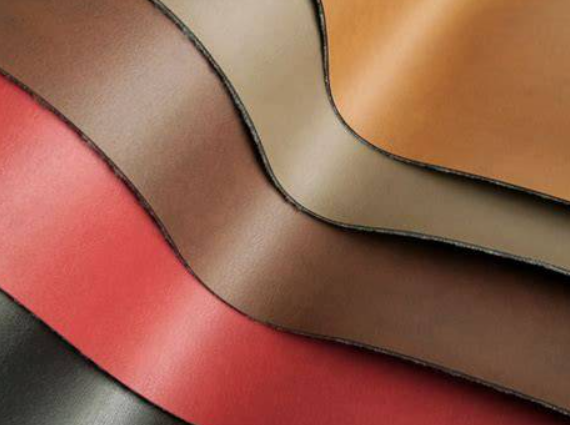
Veg-tan Leather’s “plasticity” is also reflected in its ability to accommodate various creative dyeing techniques, which is completely different from other leathers:
Batik Technique
Applying traditional batik techniques to… Veg-tan Leather: Uses melted wax to draw patterns on the leather surface, covering the areas covered with wax Stain resistant After dyeing, wash off the wax to reveal the base color.
Effect : The contrast effect of blue and dark flowers on a white background can create special textures such as crack patterns
Applicable to the system : Handmade leather goods and artwork creation
Anti-stain Bullet Color (Starry Sky Effect)
Use a toothbrush to apply the anti-stain lotion Ejection Random spots form on the leather surface, then dye the entire area with alcohol dye, and finally wipe off the anti-stain spots to reveal the star base color.
Effect : Artistic effects such as starry sky, snowflakes, and polka dots
Applicable to the system : Personalized leather goods and cultural creative products
Cyanotype process
Mix ammonium ferric citrate and potassium ferrocyanide to make a blue blazing solution, which is applied on Veg-tan The leather surface is covered with a cover and exposed under ultraviolet light; the unshielded areas undergo photochemical reactions that produce a Prussian blue color.
Effect : Blue-toned patterns, which can be used to create gradients or paper-cutting effects through obstructions
Applicable to the system : Artistic creation, limited edition leather goods
These three types of creative crafts share common characteristics : to use Veg-tan Hide No coating, strong water absorption allowing dyes or photosensitive materials to act directly on the fibers, creating unique artistic effects that other types of leather cannot achieve.
Veg-tan Leather Alteration vs. Other Leather Color-Change: The Essential Difference
| Dimension | Veg-tan Hide | Smooth surface cow leather | Matte/Suede leather | oil wax leather |
|---|---|---|---|---|
| Coloring logic | Permeability (combination of cationic dye and anionic fiber) | Cover (coated paint coverage) | Osmosis (water-based dye) | Replacement (waxing + color bleeding + wax touch-up) |
| Core materials | Alcohol dyes / alkaline dyes | Water-based polyurethane coatings | Water-based suede dye | Oil-based dye + wax |
| Color fastness sources | Ionic bond bonding | Physical adhesion of the coating | Fiber adsorption | Seal with wax to secure it |
| Whether one can change the depth into the shallow | ❌ You can only change shallow to deep | ✅ Yes (thick coating covers) | ❌ Only dark or monochromatic tones are allowed | ⚠️ Limited |
| Color fixation requirements | Extremely high (Must fix the color) | Average | Relatively high | General (wax fixation) |
| “Raising cattle” characteristics | ✅ Retain and reinforce it | ❌ Coating coverage | ❌ None | ✅ Reserve |
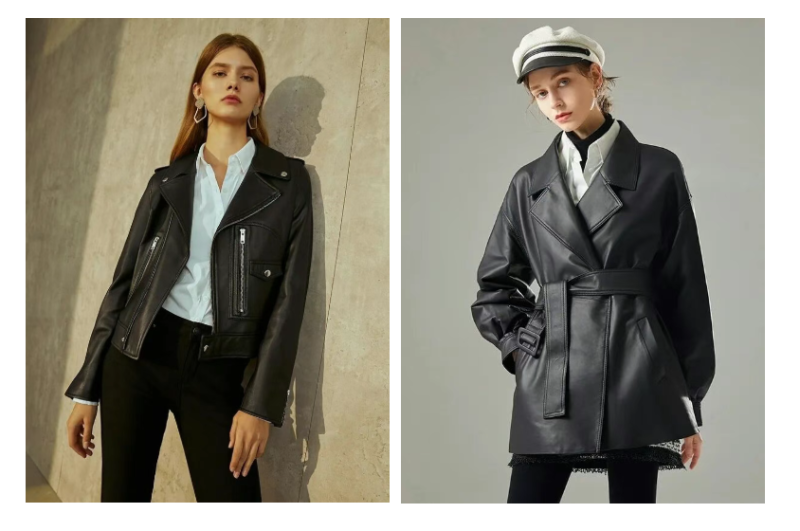
Change Veg-tan The core of the leather is the “balance between penetration and fixation.” 。
Unlike other leathers’ color-changing logic, Veg-tan The change of color in leather is a real event A game of chemistry :
Industrial mass production : Utilizes cationic dyes and anions Veg-tan Leather Ionic bond bonding , through a process of high dilution + partial addition, it achieves “through-center” dyeing
Handmade DIY : Uses a four-step method: “diluted dye→ layered dyeing→ color fixation and locking→ and fat curing,” changing colors while preserving the natural texture
The essential difference from other leathers :
Unable to change the shallow from the deep : Because color penetrates into the fibers and cannot “mask” the original color
Fixed color is the line of life and death : Non-fixable Veg-tan Leather is ‘disfigured’ when exposed to water.
Adding fat is the finishing touch : The oil not only restores the feel but also extends the vitality of the leather’s “cattle feeding”.

No comments yet