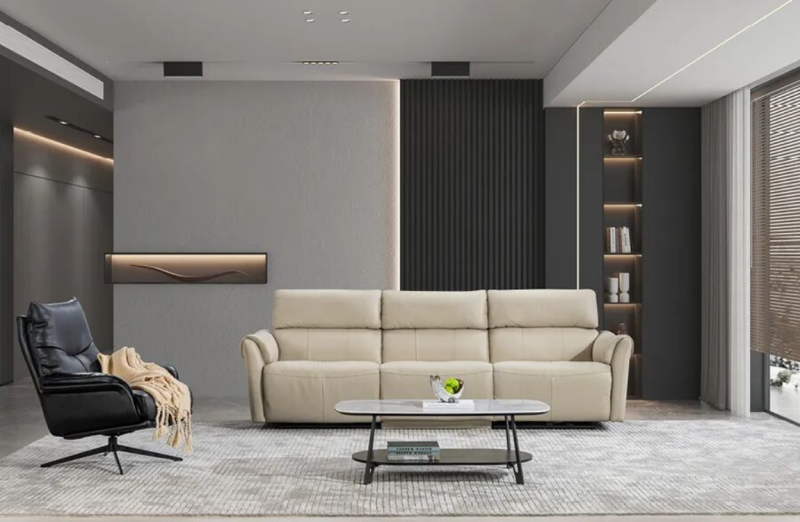


With increased rainfall in summer, the humidity in the air also rises, making the indoor environment damp. Under these conditions, leather sofas are most prone to moisture, mold, aging, and wrinkling. How should you protect and maintain them?
![Image [1]-Rainy Season Leather Sofa Care: Affordable Mold-Free Tips – Nleather-Nleather](https://www.nleather.com/wp-content/uploads/2026/07/image-79-1024x668.png "image – Nleather")
Manufacturers & Merchants
Moisture remains
— During transportation, sofas become hot after exposure to sunlight, absorbing moisture from the air.
✅ Solution: Upon receiving the goods, immediately open the package, and immediately clean off any moisture absorbed by heat! Store dry and flat in a cool place, never in basements!
⚠️ Special Attention: Eco-friendly genuine leather (containing natural fibers and proteins) is more prone to mold than ordinary leather and deserves extra attention!
![Image [2]-Rainy Season Leather Sofa Care: Affordable Mold-Free Tips – Nleather-Nleather](https://www.nleather.com/wp-content/uploads/2026/07/image-80.png "image – Nleather")
Care methods
Warehouse environment control
— Keep the warehouse dry and well-ventilated, with humidity controlled below 50%. Use a dehumidifier if necessary.
— Regularly check inventory, especially products located near walls and floors.
— For warehouses on the first floor, place moisture-proof mats on the floor; for sofas with two floors, try to place them on the second floor, and pack them when shipping.
Transport protection
— During rainy season transportation, install moisture-proof mats inside the vehicle to prevent rainwater from seeping into the packaging.
— After long-distance transport, it is recommended to unpack and inspect the package and air it out in the air for airing.
—It’s recommended to open the package immediately upon arrival, don’t keep it bottled!
Regular check-ups
— Eco leather and genuine leather should not be covered with cloth covers for long periods; dryness must be checked regularly! It should not be overheated, nor excessively damp.
![Image [3]-Rainy Season Leather Sofa Care: Affordable Mold-Free Tips – Nleather-Nleather](https://www.nleather.com/wp-content/uploads/2026/07/image-81-1024x583.png "image – Nleather")
Users
Humid environment
Leather sofas are kept in a damp state for long periods, easily absorbing moisture and expanding. The surface leather hardens and loses elasticity, and may even develop mold or fade, affecting the sofa’s lifespan.
Care methods
✔ To dry the leather, you can move the leather sofa to a well-ventilated area or turn on the air conditioner to dry.
✔ Once the leather is dry, sweep off the mold dust, then gently wipe clean with a dry, discolored soft cloth. Use a soft brush to lightly clean the mold dust from pores and crevices, and finally wipe with a soft cloth. Be sure not to let mold enter pores or crevices.
✔ For sofas with mild mold, wiping with anti-mold and antibacterial paste not only cleans the mold but also provides care for the leather.
If mold is severe, the surface of the sofa surface will be corroded. In fact, nothing can remove it. In such cases, you must seek a professional sofa maintenance team to save your beloved sofa.
![Image [4]-Rainy Season Leather Sofa Care: Affordable Mold-Free Tips – Nleather-Nleather](https://www.nleather.com/wp-content/uploads/2026/07/image-82-1024x598.png "image – Nleather")
Notes
Avoid direct sunlight
Prolonged exposure of sunlight to the sofa can cause the leather fabric to deform, lose elasticity, and fade. Use curtains to block sunlight and maintain proper humidity. Periodically, swap the positions of several sofas to prevent obvious color differences.
Avoid moisture
If windows are left unclosed, exposing the sofa to rain or excessive moisture can cause the leather surface to swell, sagg, lose elasticity, or the leather to fade, discolor, or become moldy. Do not use overly wet cloths or clean leather furniture directly with water; if accidentally wet, dry immediately; Dehumidifiers, air conditioning, or fresh air systems can be used to intervene in air humidity.
Avoid high-temperature drying
If leather gets wet by accident, avoid drying it with fire, exposing it to direct sunlight, ironing at high temperatures, or blow-drying with a hairdryer. Immediately wipe off the water droplets with a dry cloth and let them dry naturally; If the stains are colored liquids or oil, a secondary cleaning with leather care agents should be done at the end.
Keep the area ventilated
To prevent dampness and mold growth, you can open windows or use an air purifier. However, be aware that morning and evening are when humidity is relatively high during the day, so you should reasonably plan the ventilation times to prevent outdoor moisture from entering.

No comments yet