

Printing and jacquard differ by just one character, but the method, texture, and durability are completely different. Most of the patterns on the clothes in your wardrobe are printed on them. Many people say, “I want jacquard,” but when they touch it, it’s actually a print.
![Image [1]-Printing and Jacquard: Uncover Stunning Fabric Secrets – Nleather-Nleather](https://www.nleather.com/wp-content/uploads/2026/07/image-57.png "image – Nleather")
The concept of printing
Printing is the process of transferring pigments/dyes onto the fabric surface according to the pattern.
Cloth is fabric, but the patterns are added later. It’s like printing on white paper—paper is paper, ink is ink, and the two are separate. Jacquard, on the other hand, weaves colors and structure directly into the fabric and cannot be separated.
Types of prints
Flat Screen Printing (Traditional Screen Printing)
Each color is made on a separate screen, and the dye is leaked from the screen onto the fabric, printing as many colors as there are. The number of colors is limited, and the precision is not as high as digital printing, but the color density is high and the tactile feel is saturated. A large number of low-cost clothing in China uses this process, and the colors generally do not exceed 6-8 colors.
Rotary screen printing
Replacing the flat mesh with a drum allows continuous operation and much higher efficiency. Industrial clothing fabrics are widely used, and bedding fabrics are very common. Identification method: There may be slight “circular seams” in the color patterns, and horizontal stitching marks can be seen under high magnification
Digital Printing (Inkjet Printing)
It’s like turning the inkjet printer to industrial level, spraying patterns directly onto the fabric. Colors can reach tens of millions of levels, with gradient and realistic photographic prints all printed with extremely high precision. In recent years, high-end original design clothing and small-order customization have been widely used. It feels smooth to the touch and has rich colors, but the pigment layer tends to fade easily after washing and sun exposure.
Transfer Printing (Sublimation Printing)
First, the pattern is printed onto transfer paper, then the pigment is transferred to the synthetic fiber fabric (mainly polyester) under high temperature and pressure. Bright colors with no color difference, widely used in sportswear, flags, and similar items. However, it can only be used for chemical fibers; pure cotton and pure silk are not suitable for this process.
![Image [2]-Printing and Jacquard: Uncover Stunning Fabric Secrets – Nleather-Nleather](https://www.nleather.com/wp-content/uploads/2026/07/image-58.png "image – Nleather")
How to identify which clothes use printing techniques?
Touch with your hand
Jacquard: Fingers gently glide over the patterns, allowing subtle undulations to be noticed, with clear texture levels on the fabric’s surface. When the side light shines, the pattern outlines cast shadows.
Print: Fingers glide over the patterned area, and the touch is exactly the same as the blank area, because the pattern is just a layer of paint on the fabric surface and does not alter the fabric’s structure. It feels as smooth as the white area.
![Image [3]-Printing and Jacquard: Uncover Stunning Fabric Secrets – Nleather-Nleather](https://www.nleather.com/wp-content/uploads/2026/07/image-59.png "image – Nleather")
Flip it over
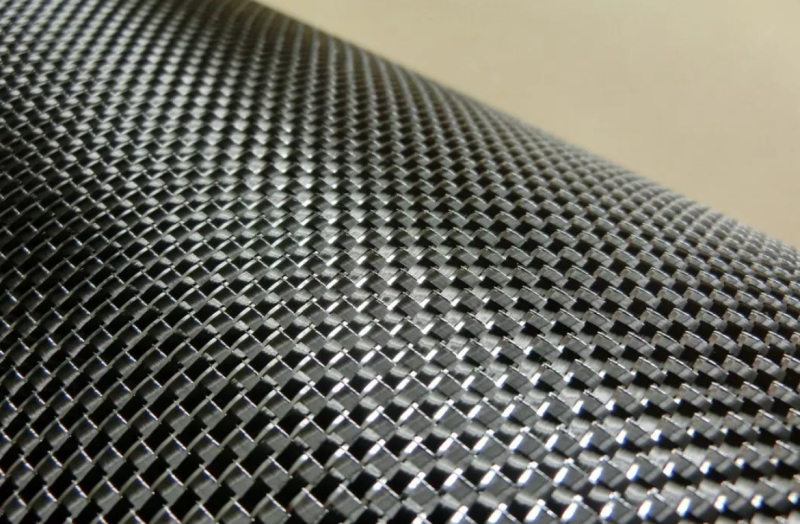
Back of the jacquard: There are obvious floating long threads, which are yarns that do not show the front pattern, spanning a distance and stopping on the back. The more complex the jacquard, the more and denser the floating long lines on the back.
Back of the print: Usually, the pattern is not visible, or the pattern color is noticeably lighter than the front. The back is neat, with no floating lines, and the fabric structure is the same as plain plain fabric without patterns.
![Image [4]-Printing and Jacquard: Uncover Stunning Fabric Secrets – Nleather-Nleather](https://www.nleather.com/wp-content/uploads/2026/07/image-60-1024x745.png "image – Nleather")
Look at the edge
Bring the fabric to a bright spot, hold it to light or side light, and carefully observe the edges of the pattern.
Jacquard edges: The pattern is woven from warp and weft threads, with edges determined by the yarn direction, giving a slight “stepped feel.” Overall, the edges have a “fabric feel,” with a grainy yarn texture.
Printed edges : The color can be very smooth, without a fabric-like feel, because it’s pigment, not yarn. Digital prints can achieve infinitely delicate gradients, smooth from dark to light like a photograph—jacquard cannot achieve this effect.
This is useful for judging “especially complex large patterned fabrics”: If the pattern contains realistic gradients or photographic textures, it’s almost always digital prints and can’t be jacquard.
Jacquard vs. Print
| Contrast dimensions | Jacquard | |
| Source of the pattern | The warp and weft threads are interwoven and integrally formed | The dye transfers onto the fabric surface |
| Rear features | There is a floating long line | No patterns or slight discoloration |
| Tactile sensation | The pattern has a slight three-dimensional effect | The pattern is the same as plain cloth, smooth and smooth |
| Number of colors | Limited | It can create countless colors |
| Washable and sun-resistant | Excellent | Weaker |
Jacquard and printing are just two types of patterns, each with its own strengths, with no superiority or inferiority
Jacquard is suitable for: Durable and fading patterns, three-dimensional tactile feel, and simple and subtle patterns.
Printing is suitable for: scenarios with complex and rich colors, detailed and realistic patterns, and small orders with many orders.


No comments yet