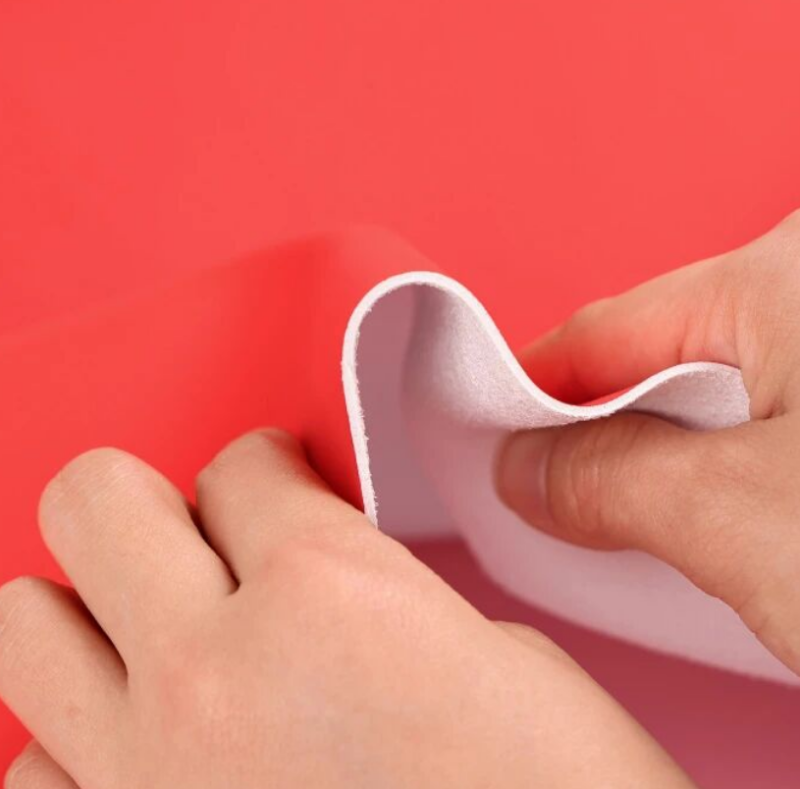


Leather tensile strength testing is mainly used to evaluate the maximum resistance and durability of leather under tensile forces, ensuring that leather products do not easily crack during actual use. Through this test, the physical properties of leather can be understood, providing important references for quality control, material selection, product design, and performance evaluation.
![Image [1]-Leather Tensile Strength Testing: Essential Durability Guide – Nleather-Nleather](https://www.nleather.com/wp-content/uploads/2026/06/image-282.png "image – Nleather")
Relevant international standards
ISO 3376:2020 IULTCS/IUP 6 Leather — Determination of tensile strength and elongation
ISO3377-2 IULTCS/IUP 8 Leather-Physical and mechanicaltests-Determination of tear load Part 2:Double edge tear
ISO 2418 Leather – Chemical, physical and mechanical and fastness tests -Sampling location
ISO 2419 Leather – Physical and mechanical tests-Sample preparation and conditioning
ISO 2589 Leather-Physical and mechanical tests-Determination of thickness
ISO 7500-1 Metallic materials- Verification of static uniaxial testing machines- Part 1.Tension/compression testing machines – Verification and calibration ofthe force-measuring system
Instruments and reagents
The instruments and consumables used are shown in the table below:
| 1.Tensile testing machine with an accuracy of 1.0 (maximum error less than or equal to ±1%); The fixture moves at a constant speed of (100 ±20) mm/min; During the test, the sliding distance between the fixtures should not exceed 1% of the initial distance of the fixture |
| 2.Elongation measurement device: Measure the distance between two fixed points on the specimen by monitoring the separation of the fixture or by monitoring the sensor on the specimen.Displacement changes between fixtures are used directly, and the testing machine is usually built-in |
| 3.Thickness gauge: complies with QB/T 2709; 3.1 Scale Table: The minimum scale is 0.01mm, with an accuracy of ±0.02mm across the entire range. 3.2 Test Bench: A cylindrical body with a horizontal surface, diameter (10.00±0.05) mm, height (3.0±0.1) mm, mounted on a coaxial circular platform surface with a diameter of (50.0±0.2) mm. 3.3 Presser Foot A circular plane with a diameter of (10.00±0.05) mm, coaxial with the test bench, capable of vertical vertical movement. The load generated when the outlet contacts the test bench plane is (393±10)8. The distance traveled by the presser foot can be read directly on the scale (3.1). Note: The load and size of the presser foot generate a pressure of 49.1 kPa (500 g/cm). 3.4 Rigid Frame Used to support the scale gauge (3.1), test bench (3.2), and presser foot (3.3). |
| 4.Die cutter: Complies with the requirements of QB/T 2707, capable of cutting specimens into shapes as shown in Figure 1 and dimensions specified in Table 1. The die tool legend is shown in Figure 1. The inner surface should be perpendicular to the surface of the object to be cut, and a 20° angle is formed between the inner and outer surfaces at the blade edge. The depth (d) of the wedge edge of this angle should exceed the thickness of the leather. Note: The hardness grade of die tool materials should be suitable for making die cutters. |
| 5.Vernier caliper accuracy 0.1mm |
Testing principle
Measures the force and stretching at a certain rate when a specimen is stretched to a predetermined value or until the specimen breaks.
Sampling
1. Sampling
Conducted in accordance with the provisions of QB/T 2706.
2. Preparation of the sample
According to QB/T2707, use a die knife to cut six samples from the grain surface. The long sides of three samples are parallel to the spine line (longitudinal samples), and the long sides of the three samples are perpendicular to the spine (transverse samples). If the previous test shows sliding between the specimen and the fixture, use a larger mold to cut a new specimen.
3. Air conditioning of the sample
Conducted in accordance with QB/T 2707.
Testing
1. Measurement of dimensions
1.1. Select three positions each on the grain and meat surfaces of each sample, and measure the sample width with a vernier caliper (accurate to 0.1mm).
For each group of three positions, one midpoint E is taken (see Figure 1), and the other two points are located between point E and lines AB and CD. The arithmetic mean of six measurements is used as the width w of each sample.
Note: For soft leather, the width of the mold knife can be used as the sample width
1.2 Measure the thickness of each specimen according to the requirements of QB/T2709.
Measure three points: the middle point E, and the other two points at point E, which are located midway between the lines AB and CD. The arithmetic mean of three measurements was used as the thickness of each sample.
2. Measurement of tensile strength
2.1. Adjust the distance between the upper and lower fixtures of the tensile testing machine to (50±1) mm (standard sample) or (100±2) mm (large sample), clamp the specimen with the clamp so that its edges align with the AB and CD lines, and ensure the sample particle surface is on the same plane. The long axis direction of the specimen should be parallel to the traction direction.
2.2. Start the tensile testing machine until the specimen breaks, and record the maximum force at fracture as the breaking force F.
3. Determination of elongation under specified loads
3.1. Clamp the specimen according to 2.1, measure the distance between the upper and lower fixtures, and record it as L (accurate to 0.5mm) as the initial length for the test.
3.2. Start the tensile testing machine; as the force value increases, monitor the distance between fixtures, or use sensors or the machine can automatically record and plot the force-elongation curve.
3.3 Record the distance L between fixtures when the specified load value is reached for the first time, as the length the specimen can be stretched under this force. Do not stop the testing machine before completing tests 2 or 4.
4. Determination of elongation at break
4.1 Perform operations according to 3.1.
4.2. Run the tensile testing machine until the specimen breaks.
4.3. Record the distance between fixtures or sensor readings when the specimen breaks, and use it as the length at the time of the specimen break.
5. Sliding deviation
When operating according to steps 2-4, if the sample slides relative to the fixture and the sliding distance exceeds 1% of the initial distance, the test result is invalid. Use a large mold cutter to cut a new sample and re-measure.
Results
Tensile strength
Calculate the tensile strength T of the specimen according to the following formulan:
Tn=F/(w*t)
Where:
Tn: Tensile strength, measured in megapascals (MPa) or Newtons per square millimeter (N/mm). 2 );
F: The maximum force value during the test, measured in newtons (N);
w: Average width of the sample, unit: millimeters (mm);
t: The average thickness of the specimen, measured in millimeters (mm).
The calculation results are expressed as the arithmetic mean of the tensile strengths of the three transverse samples and the arithmetic mean of the tensile strengths of the three longitudinal samples, accurate to 0.1MPa. Note: The conversion between MPa and N/mm² is: 1 N/mm 2 =1 MPa
Specify load elongation
Calculate the specified load elongation E of the sample according to the following formula1:
E1=(L1-L0)/L0*100
Where:
E1Specified load elongation, %;
L1The distance between fixtures or sensors under specified load, measured in millimeters (mm)
L0The initial distance of the fixture or sensor, measured in millimeters (mm)
The calculation results are expressed as the arithmetic mean of the load elongation specified for the three transverse samples and the arithmetic mean of the load elongation specified for the three longitudinal samples, accurate to 1%.
Elongation at Break
EbElongation at break, %;
L2 The distance between the fixture or sensor at the moment the specimen breaks, measured in millimeters (mm); L0The initial distance of the fixture or sensor, measured in millimeters (mm).
The calculation results are expressed as the arithmetic mean of the elongation at break of three transverse samples and the arithmetic mean of elongation at break of the three longitudinal samples, accurate to 1%.
Regarding the applicable scope of tensile strength
Testing the tensile strength of leather is an important method for physical property assessment, widely used in quality control and performance evaluation of various leather products. Below are some common leather products and their application scenarios for tensile strength testing:
Shoe manufacturing industry
- Leather upper : The upper leather must withstand tensile forces generated during walking and exercise. Tensile strength testing ensures that the upper leather does not crack due to stretching during use, thereby guaranteeing the shoe’s durability and appearance integrity.
- Leather soles : Especially leather soles, which need sufficient tensile strength to withstand bending and stretching forces while walking, preventing sole cracking or deformation.
- Leather insoles : The leather used to make insoles also needs to undergo tensile strength testing to ensure it does not lose elasticity or become damaged due to repeated compression and stretching after prolonged use.
The apparel industry
- Leather jackets and leather pants These leather garments experience various stretches, bendings, and friction during wear. Tensile strength testing can assess whether leather will crack or deform under these forces, ensuring the garment’s lifespan and aesthetics.
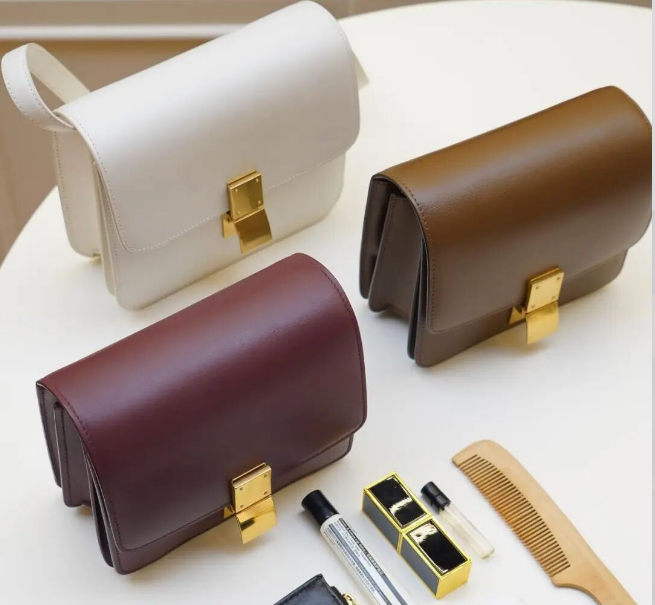
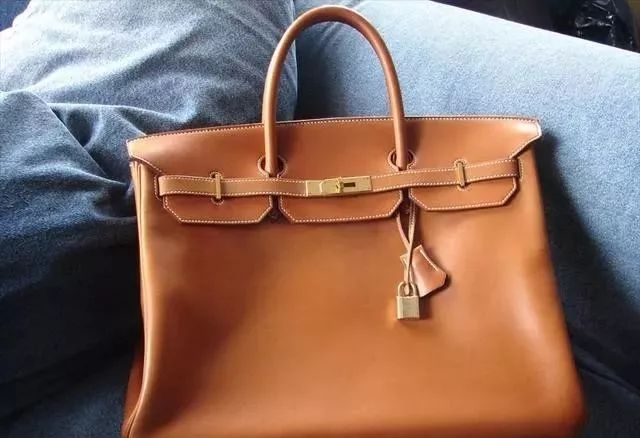
- Leather accessories : Such as belts, leather bags, leather gloves, etc. These products need to have sufficient tensile strength to prevent damage from stretching or tearing during use. For example, belts need to withstand the tensile force of human activity, while the handle of a leather bag needs to withstand the pulling force of heavy objects.
Furniture industry
- Sofa leather : Sofa leather needs to withstand stretching and pressure when sitting or lying down. Tensile strength testing ensures that leather does not crack or become damaged due to repeated stretching during long-term use.
- Leather seats : For example, car seats, office chairs, etc., the leather surface of these seats needs sufficient tensile strength to prevent damage caused by friction and stretching during use.
Luggage industry
- Suitcases and handbags : The leather material of these bags needs to have high tensile strength to withstand the weight of the luggage and the pulling forces it may experience during transportation. Tensile strength testing can assess whether leather will be damaged or deformed under these forces.
- Wallet, key pouch Although these small leather products have relatively low usage strength, tensile strength testing can still ensure their durability and reliability in daily use.
Sporting goods industry
- Sports gloves : For example, baseball gloves, boxing gloves, etc., require sufficient tensile strength to prevent damage from intense stretching and friction during exercise.
- Sneakers : Especially for professional sports shoes, such as soccer boots and basketball shoes, the leather uppers need to have high tensile strength to withstand intense stretching and friction during exercise.
Automotive interior industry
- Car seat leather : Automotive seat leather needs to withstand frequent human activity and vibrations during vehicle operation. Tensile strength testing ensures that leather does not crack or damage under these forces.
- The door interiors are leather : The leather for the door interior must have sufficient tensile strength to prevent damage caused by stretching when opening and closing the door.


No comments yet