

When you go to a shoe store to pick out a pair of boots, the salesperson often points to the shelf and says, “These are suede leather.” But if you ask whether it’s top-grain or split, they’ll probably get vague. It’s not entirely their fault—the terminology for this material is a mess. Suede, nubuck-style split, rough leather, reverse suede, velour leather—different regions and tanneries use different names. If you ask ten people in the leather goods industry what the difference is between “reverse suede” and “cow nubuck,” you might get seven or eight different answers. But these names all refer to the same kind of thing: a genuine leather material with a napped, velvety surface. The only question that really matters is this: is that nap made from the underside of a top-grain hide, or is it ground from a split layer?
![Image [1]-Top-Grain vs. Split Suede Leather: What’s the Real Difference? A Practical Guide for Buyers – Nleather-Nleather](https://www.nleather.com/wp-content/uploads/2026/08/20260816-140557-Rc363-nleather-silicone-leather.png "20260816-140557-Rc363-nleather-silicone-leather – Nleather")
What’s the Difference Between Top-Grain and Split? And How Is Suede Made?
A cowhide, when stripped from the animal, is usually three to five millimeters thick. That’s too thick for most leather goods, so it’s split horizontally using a splitting machine, much like slicing a loaf of bread. The top layer, which retains the natural grain surface—the side with pores and texture—is called top-grain leather. The remaining bottom portion is called the split (or sometimes second-grade split). Top-grain is the prime part of the hide; it’s exposed to the external environment and serves to protect the animal’s body, so its fibre structure is the densest and strongest. The split, on the other hand, is what’s left after the top-grain is removed. It has no natural grain layer, its fibres are coarser and looser, and its strength is inherently weaker. To use a rough analogy, top-grain is like solid wood; split is like medium-density fibreboard. Both can be made into furniture, but their fundamental nature is completely different.
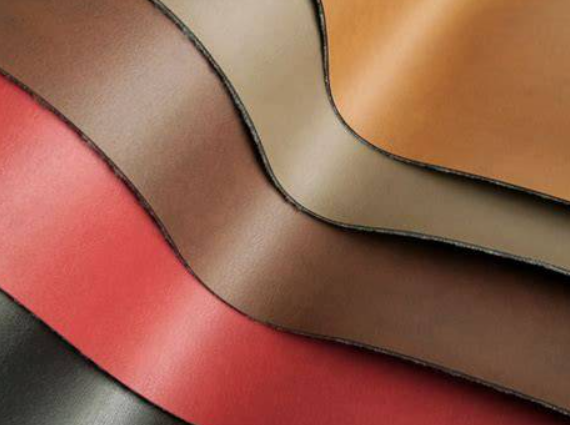
Top-grain suede is made by turning a top-grain hide over and using the natural fibre layer on the underside as the surface, then buffing it to raise a nap. That underside fibre layer is itself part of the cow’s skin structure; it was just hidden inside and is now brought to the outside. After buffing, it presents a natural fibre nap of varying length and thickness. When you rub your hand over it, you get a distinct colour change with the nap—lighter when brushed one way, darker when brushed the other—and under light, there’s a subtle sheen. All of these are inherent to the material, not artificially added. Split suede is made in a similar way, by buffing the split layer to raise a nap. But because the split never had a compact grain layer to begin with—only a loose, net-like fibre structure—the nap it produces is inherently inferior.
Many people new to top-grain suede ask: why can’t I see any pores on this leather? On regular top-grain cowhide, you can clearly see the pores on the grain side—that’s a natural characteristic of animal skin. But top-grain suede uses the underside of the hide, not the grain side. It’s like turning the leather inside out: what was once the inside is now the outside. So the surface of top-grain suede is a natural fibre layer with no visible pores—only fibre texture and nap. This is precisely the mark of genuine, unadulterated material: it’s not flocked, not synthetic, but real leather turned inside out.
How Big Is the Performance Gap in Real-World Use?
When they’re brand new, top-grain suede and split suede can be hard to tell apart without close inspection. Both are fuzzy, both change colour with the nap direction, and the visual difference is minimal. But suede leather has a peculiar trait: the difference in material performance isn’t apparent when it’s new—it emerges gradually with use.
Top-grain suede has fine, dense, tight fibres that retain the natural toughness of cowhide. When bent, the fibres slide past each other without breaking; when rubbed, the surface nap may change slightly, but the underlying structure remains solid. A pair of top-grain suede combat boots worn normally will still have excellent surface condition after two or three years—just slightly polished in high-wear areas, which is normal patina, not damage.
Split suede, by contrast, has coarse, loose, weak fibres with poor cohesion. In areas subjected to repeated bending, the fibres gradually break and loosen, leaving the material looking “tired” and saggy. In frequently rubbed areas, the nap wears off unevenly, exposing a whitish base layer underneath that can’t be repaired.
Here’s a real case. A client produced a batch of suede boots using split suede to cut costs. The initial price was certainly cheaper, and they were happy with it at first. But within three months, the return rate spiked—the toe creases were fraying and cracking, and the side panels were slack and deformed. When they ran the numbers, the material savings had been entirely eaten up by after-sales costs, and then some. This isn’t to say split suede is useless—it was simply used in the wrong place.
Which Scenarios Suit Each Type? What About Pricing and Procurement Considerations?
Top-grain suede and split suede each have their place; it’s not a matter of one being universally better, but of using the right material for the right application.
Top-grain suede is better suited for: footwear uppers—combat boots, work boots, casual shoes—which are bent, rubbed, and weighted every day, and where tear resistance and flex endurance directly determine how long the shoes last; bags and leather goods that need to hold their shape while offering a napped texture; and automotive interior headliners and seat covers, where temperature and humidity fluctuate greatly and surfaces are frequently touched and rubbed, requiring high material stability—top-grain is the safer choice.
Split suede also has its place: decorative cushions and throw pillows that aren’t stressed, bent, or frequently rubbed, mainly for visual texture; certain lightweight lining materials hidden inside where strength demands are low; and small accessories and low-stress fittings, where split suede’s visual effect and cost advantage can be combined.
On pricing, top-grain suede is generally more expensive than split, because the raw hide cost is higher. But sometimes the price gap quoted by different suppliers isn’t that large, and occasionally split suede may even be priced higher. Many factors influence price—origin, processing, specifications, dyeing batches—so price alone is only a reference, not a definitive way to determine the grade.
![Image [2]-Top-Grain vs. Split Suede Leather: What’s the Real Difference? A Practical Guide for Buyers – Nleather-Nleather](https://www.nleather.com/wp-content/uploads/2026/08/20260816-140528-gbyUz-nleather-silicone-leather.png "20260816-140528-gbyUz-nleather-silicone-leather – Nleather")
If you’re procuring suede materials, make sure to clarify at least these points during communication: specify the grade—top-grain or split—without ambiguity; confirm thickness—for footwear uppers, 1.2–1.4 mm is common, and 1.6–1.8 mm for higher abrasion resistance; discuss nap requirements—short or long, fineness, the degree of colour change with nap direction—all need to be set before sampling; confirm colour consistency and tolerance range—suede dyeing is more prone to batch-to-batch variation than smooth leather, so the tolerance standard must be agreed upon at the sampling stage; and ask about finishing treatments—whether water-repellent or stain-resistant finishes have been applied.
How Can Consumers Tell the Difference? And What Subtle Details Are Often Overlooked?
Regular consumers don’t have access to laboratory equipment, but there are a few practical hands-on methods for initial assessment.
Check the price: anything well below the market average is likely not top-grain. Examine the edges and back of the leather: top-grain has a denser, tighter cross-section, while split appears looser with coarser, more prominent fibres. Press firmly with a fingernail: top-grain will spring back naturally and the mark will disappear quickly; split will show a more pronounced indentation and slower recovery. Perform a flex test: bend the leather back and forth a few times; top-grain will lighten and change colour at the crease but won’t crack; split may show slight fibre cracking at the same crease after repeated bending. These methods are no substitute for professional testing, but they’re good enough for initial screening.
There’s also an easily overlooked detail: nap direction. Both top-grain and split suede share the characteristic that the colour appears lighter when viewed with the nap and darker when viewed against it. If the cutting direction is not standardised, you can run into problems. For footwear, if the left and right shoes have different nap directions, they’ll look mismatched in colour side by side. For bags, if the flap and body have different nap directions, they’ll appear to be made from two different leathers. Good leather workshops mark the nap direction with arrows when cutting suede, ensuring all pieces are cut in the same orientation. Procurement and quality control staff should pay attention to this when placing orders and inspecting finished goods.
Suede leather is a highly distinctive material, combining the natural texture of genuine leather with the soft, fabric-like feel of a napped surface—it stands alone in the leather world. Top-grain suede is denser, tougher, and more durable, making it suitable for products that endure daily flexing and abrasion. Split suede is more affordable and still looks great, making it a good choice for decorative or low-stress applications. If you get the match wrong, it’s not a material flaw—it’s a specification error. Just ask yourself three questions before you select: where will it be used, how will it be used, and how long should it last? The right answer will become clear.

No comments yet