

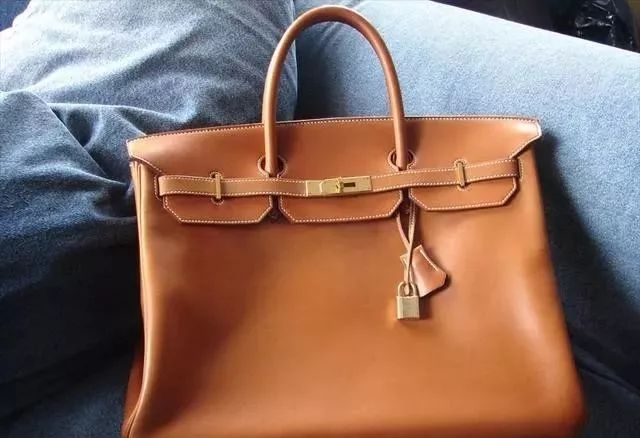
oil wax leatherGive me oil Impregnated Leathers Color changes cannot be simply applied to ordinary glossy surfaces cow leather The “coverage” logic cannot simply replicate the “penetration” approach of suede leather. The soul of this type of leather lies within its interior Oil and wax —— It is precisely these ingredients that give leather its unique charm of “stretch discoloration” and “scorched retro.” The core challenge of changing the color lies in :How to change the color while preserving or even enhancing this “living” texture .
![Image [1]-Preserving the Retro Patina During Oil Wax Leather Color Migration – Nleather-Nleather](https://www.nleather.com/wp-content/uploads/2026/07/20260712-101314-u4J8p-nleather-silicone-leather.png "20260712-101314-u4J8p-nleather-silicone-leather – Nleather")
Understand first oil wax leather The “gene”
Before discussing the color-changing process, one concept must be clarified— oil wax leather It’s a general term, with internal subdivisions 。 Depending on the materials used, they can be divided into three types:
| Type | Core materials | Characteristics of the color-changing effect |
|---|---|---|
| Oily skin | 100% color-changing oil | The color lightens during stretching or bending, and returns once the external force disappears |
| Wax skin | 100% color-changing wax | After polishing, it produces a burnt effect with a strong scorched feel |
| oil wax leather | Mix color-changing oil + color-changing wax | It combines the characteristics of both, offering the richest color-changing effects |
These three types are collectively referred to as ” oil wax leather But each style has its own focus. Understanding this is crucial for choosing the color change process—the type of leather goods you have directly determines whether to focus on oil or wax.Core Source of Charm : oil wax leather The discoloration effect is not caused by the coating, but by the physical distribution of the wax material within the leather fibers. When leather is stretched by external force, the oil and wax layer between fibers shifts, altering the light refraction path and resulting in variations in color depth. This characteristic of “living” is exactly that oil wax leather This is what sets it apart from ordinary smooth facial skin.
Industrial Mass Production Grade Process Flow (Tannery)
At the leather workshop, oil wax leather The “color change” is actually a systematic finishing process starting from the leather base stage, rather than a post-refurbishment. The following process flow is represented oil wax leather The industry standard for production.
Complete Process Flow
oil wax leather The production process is as follows: Leather Grading → Return Water → Cooling → Softening → Softening → Stretching Board → Grading → Leather Grinding → Dust Removal → Trimming → Grading → Roller Wax Application → Aging (≥8h) → High-temperature Ironing → Adhesive Layer Spraying → Effect Layer Spraying → Varnish → Aging → Ironing → Softening → Storage
![Image [2]-Preserving the Retro Patina During Oil Wax Leather Color Migration – Nleather-Nleather](https://www.nleather.com/wp-content/uploads/2026/07/20260712-101342-8XXQX-nleather-silicone-leather.png "20260712-101342-8XXQX-nleather-silicone-leather – Nleather")
In-depth Analysis of Core Processes
(1) Leather Grading — The first critical point of success or failure
oil wax leather The coating is extremely thin and often uses dye water or a small amount of transparent pigment paste, which hardly covers the grain surface. This means any flaws on the leather blank cannot be covered up by subsequent finishing. Therefore, skin and embryos with lice bites, acne scars, open wounds, healing wounds, or blood vessels are not suitable for use oil wax leather production.Key points : oil wax leather Production uses whole grain or lightly trimmed dough bases, with grade requirements far higher than ordinary coatings dressing leather 。 This explains why the quality is high oil wax leather High price—the raw leather itself has a high obsolescence rate.
(2) Leather grinding treatment—opens channels for oil and wax penetration
For whole grain dough blanks, direct spraying/roller waxing can be done or a single polishing process to make the grain surface smooth; For light finishes, use 400 — 2 times, then completely dust.⚠️ Taboos : oil wax leather Injury repair is not allowed 。 This is because the patch does not absorb oil and wax materials and is not conducive to the penetration and bonding of oil and wax materials. This is completely different from the process logic of ordinary glossy skin.
(3) Oil and wax coating—the core of the core
This is the most crucial step in determining the effect of the color change. There are two finishing options:
| Method | Amount of a single coat | Advantages | Disadvantages |
|---|---|---|---|
| Spraying | 3-5g/SF·dose, 2-3 times as needed | The overall uniformity is good | Small amount of coating per application |
| Roller coating | 10-20g/SF·dose, one dose is sufficient | Large coating volume for more thorough penetration | Dark stripes tend to accumulate at the folds |
Reference Formula (Taking Spraying Method as an Example) :
| Name of chemical material | Function | Ratio |
|---|---|---|
| H₂O | Adjust the consistency | 100 |
| FI-18-167 | Stahl (Color-changing oil) | 100 |
| FI-58 | Stahl (Color-Changing Wax) | 100 |
| 0426-WA | Color-Changing Wax (PielColor) | 200 |
| Driver TI | Penetrant (Dawei) | 50 |
Oily skin : All are made with color-changing oilWax skin : All use color-changing waxoil wax leather: Adjust the oil-wax ratio according to your desired style After finishing the coating, the leather blank needs to be aged No less than 8 hours (or overnight) to allow the wax and oil material to fully penetrate. Next, high-temperature ironing is performed, with parameters generally as follows Temperature 120°C, pressure 10-30kgf/cm² , promoting even distribution and fixation of the wax and oil.
![Image [3]-Preserving the Retro Patina During Oil Wax Leather Color Migration – Nleather-Nleather](https://www.nleather.com/wp-content/uploads/2026/07/20260712-101452-q9XHR-nleather-silicone-leather.png "20260712-101452-q9XHR-nleather-silicone-leather – Nleather")
(4) Adjunct layer—the key to solving delamination issues
oil wax leather The most common problem is: Then it becomes insecure and causes delamination 。 Because oil wax materials are inherently hydrophobic, subsequent coatings are difficult to adhere. Therefore, it is especially important to spray a bonding layer between the oil-wax layer and the effect layer.Next, refer to the formula :
| Name of chemical material | Function | Ratio |
|---|---|---|
| H₂O | Solvent | 200 |
| Driver TI | Penetrants | 50 |
| U-010 | Next, resin (polyurethane) | 200 |
| ECS | Water-oil amphoteric solvent | 150 |
| LAB-SM | Acrylic resin | 50 |
The adhesive layer is sprayed, with a typical coating amount of 1.4-1.6g/SF·time, sprayed 1-2 times.
(5) Effect layer—the final color presentation
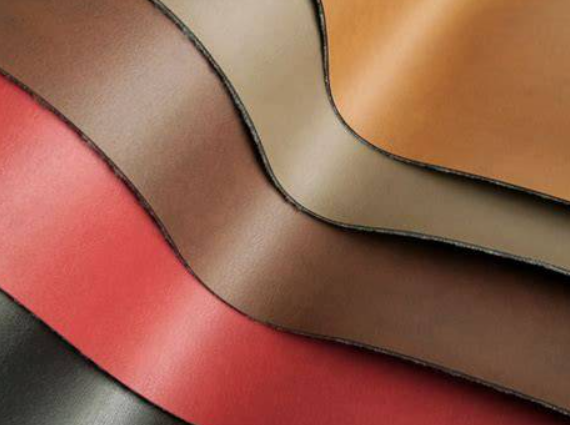
Effect layer color grading Priority is given to using dye water , because dye water has more vivid and transparent colors, almost no coverage, and does not affect the color-changing effect.Effect layer reference formula :
| Name of chemical material | Formula 1 (Dye Water Color Adjustment) | Formula 2 (Transparent Pigment Paste for Color Mixing) |
|---|---|---|
| H₂O | 200 | 200 |
| RC-2349 | 150 | 150 |
| RA-2356 | 100 | 100 |
| B 1401 | 100 | 100 |
| FL-50 | 50 | 50 |
| Dye water | 30-70 | / |
| Transparent pigment paste | / | ≤20 |
⚠️ Note : The effect layer should not be sprayed more than three times, as too many times will weaken the sense of layering and color change, lowering the quality of the finished product. Very few factories use ordinary pigment paste because its coverage-making is too strong and can damage the discoloration properties.
![Image [4]-Preserving the Retro Patina During Oil Wax Leather Color Migration – Nleather-Nleather](https://www.nleather.com/wp-content/uploads/2026/07/20260712-101526-HEQPL-nleather-silicone-leather.png "20260712-101526-HEQPL-nleather-silicone-leather – Nleather")
Description of industrial-grade chemical materials
There are various types on the market specifically designed for oil wax leather/oil Impregnated Leathers Chemical products, understanding their characteristics helps deepen the process insight:
| Product types | Characteristics | Application scenarios |
|---|---|---|
| Color-changing wax lotion (such as HF-140N) | It has discoloration and scorching effects, and the polishing effect is even better | Oil revolution, wax revolution, oil Impregnated Leathers Decoration |
| Water-based color-changing wax (such as BN-03) | Solvent-free, soft color-changing wax, drying temperature 60-100°C | Wax transformation, Crazy Horse leather, waxed polished leather |
| Color-changing wax powder (such as ITALP WAX 626) | Carefully selected oil-wax blend for strong stretching and color change, ironed at 120°C | oil Impregnated Leathers 、 oil wax leather |
| Brazilian palm wax lotion | Nano-level, making the leather fuller and softer, with the color-changing effect related to the total penetration of the wax | Various oily and waxy leathers |
Handmade/D-Frame Y-level Color Change Process (Individual/Studio)
If you have it on hand oil wax leather Bags and shoes need to be recolored, Ordinary leather paint cannot be used directly —That would form a plastic film that seals the “breathing holes” of the wax and oil, completely destroying the leather’s discoloration properties.
Core Principles
“ Go with the flow “ —— oil wax leather Since it contains wax and oil, the goal of changing the color isn’t to remove them, but to do so Supplement, adjust, and reinforce .
Standard Manual Color Change Process (3-Step Method)
Cleaning and waxing (the most critical!) )
Use Remove the wax water Or 75% alcohol Gently wipe the leather surface to remove surface aging/excess wax and dirt Control with proper proportion :Don’t wipe too hard! The oil and wax that have already penetrated the skin is a valuable “color-changing gene” and should be preserved Judgment criteria : Drop a drop of water on the leather—if it can slowly seep in, it means you can apply color; If it completely falls into water droplets, it means there is too much wax on the surface and needs to be removed further
![Image [5]-Preserving the Retro Patina During Oil Wax Leather Color Migration – Nleather-Nleather](https://www.nleather.com/wp-content/uploads/2026/07/20260712-101551-fbYJ6-nleather-silicone-leather.png "20260712-101551-fbYJ6-nleather-silicone-leather – Nleather")
Step 2: Penetration coloring
Material selection : Must be selected Oil-based dye water Or Specialized oil wax color changer (Not water-based! Not ordinary coated paint! ) Operating methods : Use a sponge or soft cloth Apply thinly , letting the color “eat” into the skin rather than floating on the surface Small amounts, many times : After each layer is completely dry, wipe the next layer; usually, 2-3 layers are sufficient to reach the ideal depth Spraying is prohibited : Spraying tends to coat the surface material, which cracks after drying; Moreover, oil-based dye water is not suitable for spraying operations
Step 3: Oil and wax (restore texture)
Once the color has dried completely, use it Colorless mink oil Or Specialized leather wax Apply evenlyUse a soft cloth Fast polishing , restoring luster and luster💡 Secret manual : After waxing, use a hair dryer Low temperature setting Blow once (to let the wax melt and penetrate), then polish again; the effect doubles
4. Core Issue Analysis: Why? oil wax leather Is changing the color too easy to “mess up”?
| Problematic phenomena | Cause analysis | Solution |
|---|---|---|
| The color doesn’t come off or comes off with just a wipe | The original wax layer on the leather surface is too thick, blocking absorption | It must come first Remove the wax Gently wipe with alcohol/wax remover |
| Hardening after drying/worsening texture | They used water-based coatings to seal pores | It must be used Oil-based penetrating type Dye, not coated paint |
| There is no longer any color change effect | The coating is too thick, covering the underlying discoloration wax | The effect layer must be used Dye water , do not add pigment paste |
| Color fading/color transfer | If the fixation is not done well, or the dye solution is of poor quality | Finally, you must do it Replenish oil and wax Fixed color |
| Delamination/peeling | Improper treatment of the adhesion layer (common in industrial mass production) | Special adhesive resin must be used |
5. oil wax leather Color change vs. other leather color changes: the essential difference
| Dimension | oil wax leather/oil Impregnated Leathers | Smooth surface cow leather | Matte/Suede leather | Veg-tan Hide |
|---|---|---|---|---|
| Core charm | Stretch and color change, scorch and vintage style | Color stability | Suede texture | “Raising cattle” changes color |
| Color sources | Oil wax material + dye water permeability | Paint paste coverage | Dye penetrates fibers | Dye penetration |
| Color change logic | Swap — Remove old wax + apply new color + add new wax | Coverage — Coated paint covers the original color | Seepage Through — Dye water seeps into the fibers | Penetration + color fixation |
| Core materials | Oil-based dye water + color-changing wax | Water-based polyurethane coatings | Water-based suede dye | Alcohol dyes |
| Can the color-changing effect be preserved? | ✅ Can (even be enhanced) | ❌ Completely gone | ❌ Not applicable | ❌ Not applicable |
| Color fixation method | Seal with wax to secure it | Coating curing | Fixing agent | Fixing agent + oil |
| DIY difficulty | ⭐⭐⭐ (Experience required) | ⭐⭐ | ⭐⭐ | ⭐⭐ |
Summary
Change oil wax leather/oil Impregnated Leathers The core is “going with the flow.” “ —This type of leather is inherently oily and waxy, so the goal of coloring isn’t to remove them, but to do so Supplement, adjust, and reinforce 。From a process perspective:
\Industrial mass production : By precisely controlling the oil-wax ratio (oil-wax skin/wax skin/ oil wax leather ) and finishing techniques, producing leather with different color-changing effects from the source. Key technical points include: high-grade leather blank sorting, prohibition of damage repair, thorough aging and penetration of oil and wax (≥8 hours), anti-delamination layer in the adhesive layer, and dye water color adjustment to maintain transparency.DIY renovation : Uses a three-step method of “wax removal→ penetration dyeing→ wax retouching” to change the color while preserving the tactile feel. The key is Do not use ordinary coated paints , oil-based osmetic dyes must be used.
💡 Important reminder :
Do not use ordinary leather lacquer : that would form a plastic film, oil wax leather The color-changing function and the “respiration” properties will disappear
The color-changing effect may be diminished :After DIY color changes, the original “stretch lightening” effect may be weaker than before, which is normal. Professional-grade effects require industrial equipment (high-temperature ironing, roll coating, etc.) to achieve perfection
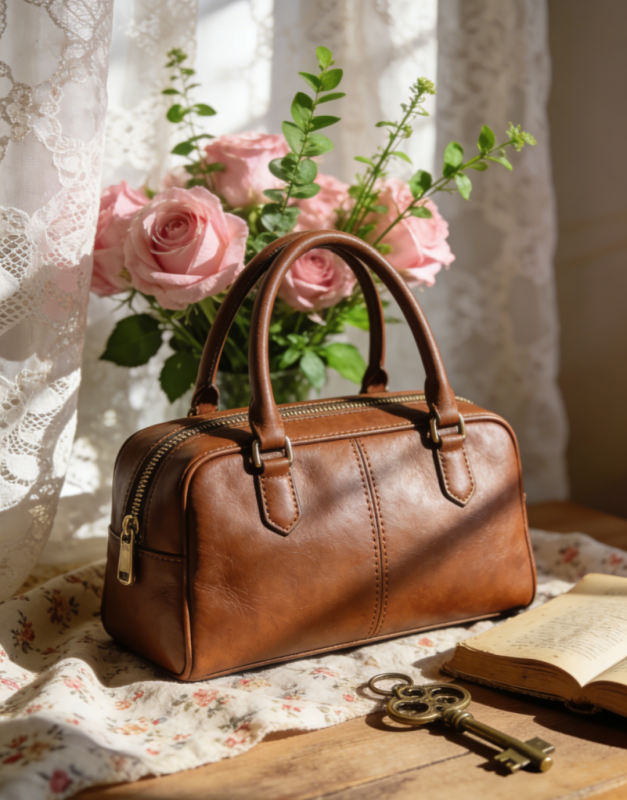
Professional advice : If it is a valuable item (such as something worth several thousand yuan). oil Impregnated Leathers bags), it is recommended to entrust them to professional leather care shops, which have industrial-grade hot roller coating equipment and specialized adhesive resins to maximize the preservation of the original leather texture.

No comments yet