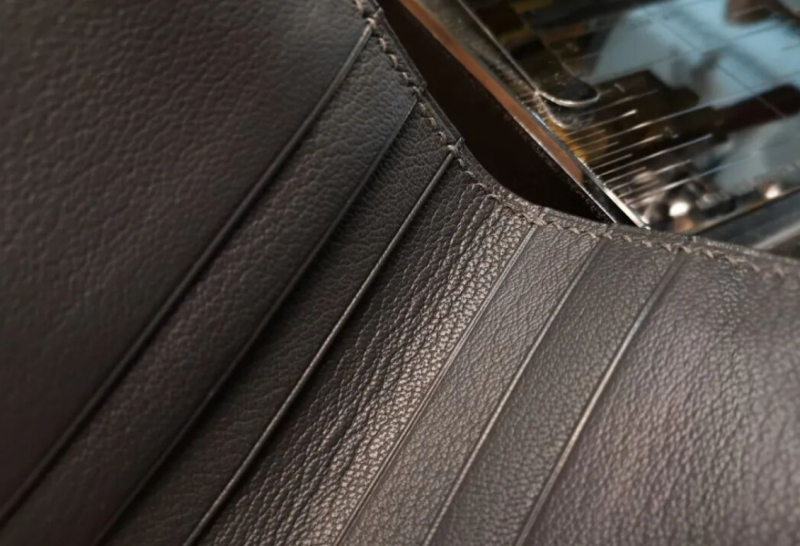


Chrome tanning is a commonly used tanning method in fur production.
Tannable chromium salts are trivalent basic chromium salts. The hides made from tanned salt are washable, storeable, and have the best stability against humidity and heat. The commonly used chrome tanning agent is commercial chromium salt extract, with basic chromium sulfate as the active ingredient, containing 20%~25% chromium trioxide.
![Image [1]-Chrome Tanning Process in Leather and Fur Production: Types of Chrome Tanned Leather and Their Characteristics Including Goatskin, Cowhide, Sheepskin, and Exotic Skins-Nleather](https://www.nleather.com/wp-content/uploads/2026/07/image-6-1024x699.png "image – Nleather")
Increasing the concentration of chromium salts in the cake liquid within a certain range will raise the chromium binding content in the fur, but once the chromium salt concentration reaches a certain level, further increase will not increase the chromium binding content in the skin. The method used during tanning and the type of tanning agent applied should depend on the type and characteristics of the raw leather.
Tanning agents should include two main categories: inorganic softeners and organic softeners. Inorganic tanning agents include basic salts of trivalent chromium, aluminum, and iron, as well as basic salts of tetravalent oxyphenol and cinnabar; Organic tanning agents mainly include plant tanning agents (kao glue), formaldehyde, synthetic tanning agents, fish oil, and others. The use of new synthetic tanning agents is also becoming increasingly widespread.
![Image [2]-Chrome Tanning Process in Leather and Fur Production: Types of Chrome Tanned Leather and Their Characteristics Including Goatskin, Cowhide, Sheepskin, and Exotic Skins-Nleather](https://www.nleather.com/wp-content/uploads/2026/07/image-7.png "image – Nleather")
Tanning is an important step in leather making and fur processing. Using different tanning agents to tan leather resulted in different tanning methods. Just like now light leather The most commonly used chrome tanning method is called chrome tanning.
chrome tanned leather It holds a major position in the tannery industry, chrome tanned leather It has a light blue-green color, feels full, flexible, elastic, has good physical and mechanical strength, and is heat-resistant, wear-resistant, water-resistant, and extensive. Suitable for making various types light leather , such as leather uppers, clothing leather , glove leather, furniture leather and more. However chrome tanned leather It has low plasticity and is difficult to process and mold.
1. French Sully Goatskin Leather
The texture is a bit stiff, high-end leather, mostly used for outer leather
Sully is a brand of the French company ALRAN.
![Image [3]-Chrome Tanning Process in Leather and Fur Production: Types of Chrome Tanned Leather and Their Characteristics Including Goatskin, Cowhide, Sheepskin, and Exotic Skins-Nleather](https://www.nleather.com/wp-content/uploads/2026/07/image-5.png "image – Nleather")
ALRAN is Hermès’ leather supplier and belongs to the category of high-end integrated tanning.
Sully is a goat leather characterized by dense texture, soft texture, and rich colors that do not change over time. Goat leather is not as delicate as sheep leather and is relatively more wear-resistant. The surface has texture and is not easily scratched.
![Image [4]-Chrome Tanning Process in Leather and Fur Production: Types of Chrome Tanned Leather and Their Characteristics Including Goatskin, Cowhide, Sheepskin, and Exotic Skins-Nleather](https://www.nleather.com/wp-content/uploads/2026/07/image-8.png "image – Nleather")
2. Lychee pattern cow leather
The feel is relatively soft, with differences between domestic and imported versions;
Lychee pattern cow leather It must be divided into lychee patterns and genuine patterns cow leather and lychee grain film transfer cow leather Two types.
The lychee pattern is real cow leather , with a surface that retains original skin features, clear pores and skin texture, composed of a dense yet thin fibrous layer and a slightly loose transition layer tightly connected to it, offering excellent strength, elasticity, and process plasticity.
![Image [5]-Chrome Tanning Process in Leather and Fur Production: Types of Chrome Tanned Leather and Their Characteristics Including Goatskin, Cowhide, Sheepskin, and Exotic Skins-Nleather](https://www.nleather.com/wp-content/uploads/2026/07/image-9.png "image – Nleather")
The lychee pattern is real cow leather Feature: When gently pressed by hand, wrinkles appear.
Lychee grain removal cow leather , using two layers cow leather For the base base, polyethylene material is added to the surface layer, which is poured into a mold with lychee patterns and subjected to high temperature and pressing, followed by a spraying process, resulting in the release of the lychee-patterned film cow leather.
Lychee grain removal cow leather Features: The leather is very thick, pressed down by hand, without wrinkles
![Image [6]-Chrome Tanning Process in Leather and Fur Production: Types of Chrome Tanned Leather and Their Characteristics Including Goatskin, Cowhide, Sheepskin, and Exotic Skins-Nleather](https://www.nleather.com/wp-content/uploads/2026/07/image-10.png "image – Nleather")
3. Shrunken Grain Goatskin Leather
There are differences between imported and domestic products; the feel is moderate, and both inner and outer skins are acceptable
![Image [7]-Chrome Tanning Process in Leather and Fur Production: Types of Chrome Tanned Leather and Their Characteristics Including Goatskin, Cowhide, Sheepskin, and Exotic Skins-Nleather](https://www.nleather.com/wp-content/uploads/2026/07/image-12.png "image – Nleather")
![Image [8]-Chrome Tanning Process in Leather and Fur Production: Types of Chrome Tanned Leather and Their Characteristics Including Goatskin, Cowhide, Sheepskin, and Exotic Skins-Nleather](https://www.nleather.com/wp-content/uploads/2026/07/image-11-1024x667.png "image – Nleather")
4: Palm Grain Cattle Leather
There are differences between domestic and imported products; they feel harder and are mostly used for the outer surfaces of bags
![Image [9]-Chrome Tanning Process in Leather and Fur Production: Types of Chrome Tanned Leather and Their Characteristics Including Goatskin, Cowhide, Sheepskin, and Exotic Skins-Nleather](https://www.nleather.com/wp-content/uploads/2026/07/image-13.png "image – Nleather")
![Image [10]-Chrome Tanning Process in Leather and Fur Production: Types of Chrome Tanned Leather and Their Characteristics Including Goatskin, Cowhide, Sheepskin, and Exotic Skins-Nleather](https://www.nleather.com/wp-content/uploads/2026/07/image-14.png "image – Nleather")
5: Sheepskin Leather
It feels soft and glutinous, lightweight and soft, with a delicate and glossy leather surface, commonly used as an inner lining
![Image [11]-Chrome Tanning Process in Leather and Fur Production: Types of Chrome Tanned Leather and Their Characteristics Including Goatskin, Cowhide, Sheepskin, and Exotic Skins-Nleather](https://www.nleather.com/wp-content/uploads/2026/07/image-16.png "image – Nleather")
![Image [12]-Chrome Tanning Process in Leather and Fur Production: Types of Chrome Tanned Leather and Their Characteristics Including Goatskin, Cowhide, Sheepskin, and Exotic Skins-Nleather](https://www.nleather.com/wp-content/uploads/2026/07/image-15.png "image – Nleather")
6: Smooth Grain Calf Leather
The leather surface is fine, smooth, and has a high gloss; There are differences between domestic and imported products; both inner and outer skin are acceptable
![Image [13]-Chrome Tanning Process in Leather and Fur Production: Types of Chrome Tanned Leather and Their Characteristics Including Goatskin, Cowhide, Sheepskin, and Exotic Skins-Nleather](https://www.nleather.com/wp-content/uploads/2026/07/image-18-1024x487.png "image – Nleather")
![Image [14]-Chrome Tanning Process in Leather and Fur Production: Types of Chrome Tanned Leather and Their Characteristics Including Goatskin, Cowhide, Sheepskin, and Exotic Skins-Nleather](https://www.nleather.com/wp-content/uploads/2026/07/image-17.png "image – Nleather")
7: Sheepskin Suede
Soft and glutinous suede, rich colors, soft texture, comfortable feel (both outer and inner skins are fine)
![Image [15]-Chrome Tanning Process in Leather and Fur Production: Types of Chrome Tanned Leather and Their Characteristics Including Goatskin, Cowhide, Sheepskin, and Exotic Skins-Nleather](https://www.nleather.com/wp-content/uploads/2026/07/image-19.png "image – Nleather")
8: Napa Calf Leather
Medium soft (slightly firm) to the touch, commonly used outer skin, with differences between domestic and imported products
Glossy finish, fine texture, highly fleshy texture, silky surface; Suitable for various luggage styles, frequently used for automotive interior leather and sofa leather.
![Image [16]-Chrome Tanning Process in Leather and Fur Production: Types of Chrome Tanned Leather and Their Characteristics Including Goatskin, Cowhide, Sheepskin, and Exotic Skins-Nleather](https://www.nleather.com/wp-content/uploads/2026/07/image-21-1024x722.png "image – Nleather")
![Image [17]-Chrome Tanning Process in Leather and Fur Production: Types of Chrome Tanned Leather and Their Characteristics Including Goatskin, Cowhide, Sheepskin, and Exotic Skins-Nleather](https://www.nleather.com/wp-content/uploads/2026/07/image-20.png "image – Nleather")
9.Lambskin Leather
Soft and glutinous to the touch, natural and delicate texture, and relatively thin coating
Both inner and outer skin are fine
![Image [18]-Chrome Tanning Process in Leather and Fur Production: Types of Chrome Tanned Leather and Their Characteristics Including Goatskin, Cowhide, Sheepskin, and Exotic Skins-Nleather](https://www.nleather.com/wp-content/uploads/2026/07/image-22-1024x707.png "image – Nleather")
Rare Skin:
10.Crocodile Leather
Crocodile leather, currently the most expensive and most representative crocodile leather, comes from the bay crocodile. Bay crocodile leather can display a perfect combination of bamboo and jade grouper patterns. Additionally, Nile crocodiles, Siamese crocodiles, and short-tailed crocodiles also have some representative high-quality crocodile skins.
![Image [19]-Chrome Tanning Process in Leather and Fur Production: Types of Chrome Tanned Leather and Their Characteristics Including Goatskin, Cowhide, Sheepskin, and Exotic Skins-Nleather](https://www.nleather.com/wp-content/uploads/2026/07/image-23-1024x725.png "image – Nleather")
11.Ostrich Leather
High-end leather is commonly used for the outer leather
![Image [20]-Chrome Tanning Process in Leather and Fur Production: Types of Chrome Tanned Leather and Their Characteristics Including Goatskin, Cowhide, Sheepskin, and Exotic Skins-Nleather](https://www.nleather.com/wp-content/uploads/2026/07/image-24.png "image – Nleather")
12.Snake Leather
![Image [21]-Chrome Tanning Process in Leather and Fur Production: Types of Chrome Tanned Leather and Their Characteristics Including Goatskin, Cowhide, Sheepskin, and Exotic Skins-Nleather](https://www.nleather.com/wp-content/uploads/2026/07/image-25.png "image – Nleather")
![Image [22]-Chrome Tanning Process in Leather and Fur Production: Types of Chrome Tanned Leather and Their Characteristics Including Goatskin, Cowhide, Sheepskin, and Exotic Skins-Nleather](https://www.nleather.com/wp-content/uploads/2026/07/image-26.png "image – Nleather")


No comments yet