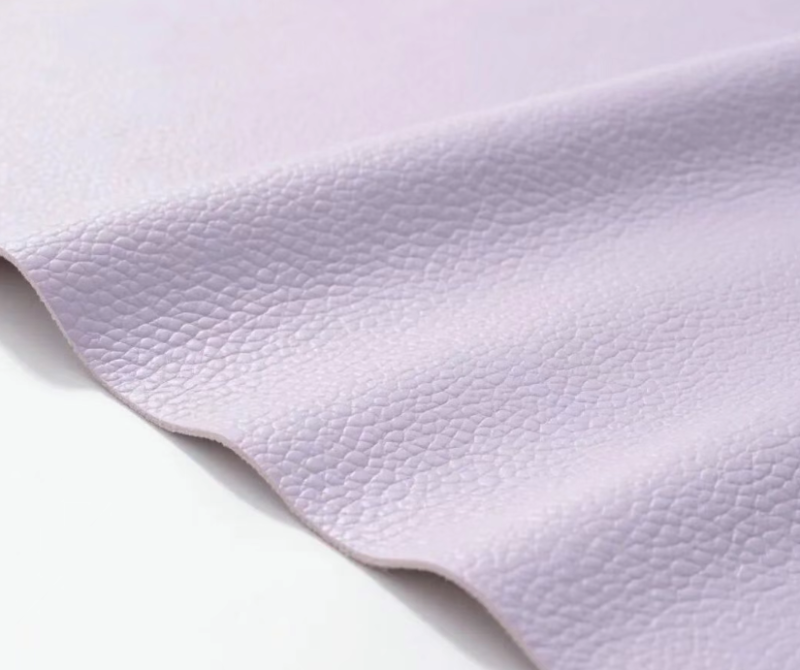


milled leather
Countless uneven folds on the leather surface are called milled leather. It’s called milled leather because of the folding technique—it’s the texture created by dropping.
![Image [1]-Milled Leather vs Lychee Pattern: Comprehensive Comparison of Drop Grain and Embossed Cowhide in Manufacturing, Quality, Feel, and Price-Nleather](https://www.nleather.com/wp-content/uploads/2026/07/image-2.png "image – Nleather")
This process involves simply placing the leather into this huge, drum-like machine (milling machine ) and continuously spinning it. As the leather rotates, it stretches and collides, eventually producing a natural drop texture. This principle is similar to that of a household washing machine. This process produces drop-grain leather with just the right softness and a very natural, non-dull drop grain. The drop pattern of this technique is not rigid because the wrinkle shape and size are not uniform but vary everywhere. This technique is the most favored drop pattern in vintage leather jackets.
Moreover, the difference in drop texture is not determined solely by the craftsmanship. Well cow leather the fiber density and thickness of the leather also determine subtle differences in the size of the drop grain. Basically, leather fibers with low fiber density tend to develop larger drop marks from the neck to shoulders, while the back and waist tend to show fine drop marks. The image above shows the different drop patterns at different positions under the milling process.
The second type of dry milling technique uses a special chemical to shrink the leather. The biggest difference between the drop texture and drum process is that the texture formed by the chemical shrinkage is relatively uniform and uniform, providing a unified visual effect. However, it is also a type of drop texture and is quite different from embossed leather. Due to differences in the strength and type of shrink agents, the resulting textures also vary to some extent. However, overall, the drop pattern processed with chemicals is more plain compared to traditional drum drops, and the edges of the leather also show a drop texture, whereas the edges of leather dropped from traditional drums may not have this effect.
Lychee patterns
Lychee patterns are a type of embossed leather. As the name suggests, the lychee pattern is similar to the surface pattern of lychees.
![Image [2]-Milled Leather vs Lychee Pattern: Comprehensive Comparison of Drop Grain and Embossed Cowhide in Manufacturing, Quality, Feel, and Price-Nleather](https://www.nleather.com/wp-content/uploads/2026/07/image-3.png "image – Nleather")
Embossed lychee pattern: This is a finished product made by pressing a steel lychee pattern embossing plate to produce a lychee pattern effect.
It is now widely used in the genuine leather products industry such as bags, footwear, and belts.
![Image [3]-Milled Leather vs Lychee Pattern: Comprehensive Comparison of Drop Grain and Embossed Cowhide in Manufacturing, Quality, Feel, and Price-Nleather](https://www.nleather.com/wp-content/uploads/2026/07/image.png "image – Nleather")
Lychee Pattern Leather: As the name suggests, lychee grain is similar to the surface texture of lychee shells, but the texture is different. It feels full, has a natural leather-like texture, is durable, wear-resistant, and offers high cost performance. It can be either a split leather layer or lychee leather.
![Image [4]-Milled Leather vs Lychee Pattern: Comprehensive Comparison of Drop Grain and Embossed Cowhide in Manufacturing, Quality, Feel, and Price-Nleather](https://www.nleather.com/wp-content/uploads/2026/07/image-4.png "image – Nleather")
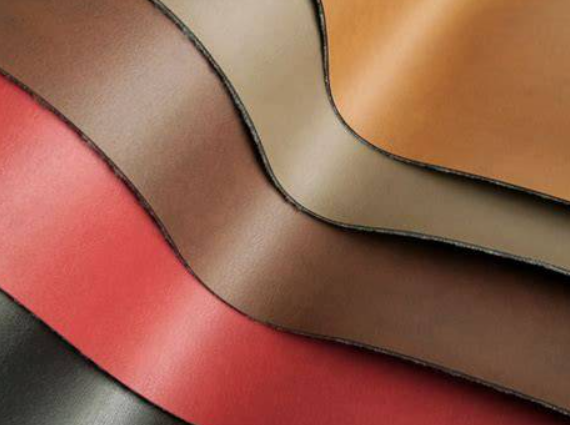
The lychee pattern is real cow leather , is the skin on beef tripe, with a surface that retains the original skin features, with clear pores and skin texture. It consists of a dense yet thin fibrous layer and a slightly loose transitional layer tightly connected to it, offering excellent strength, elasticity, and craftsmanship.
![Image [5]-Milled Leather vs Lychee Pattern: Comprehensive Comparison of Drop Grain and Embossed Cowhide in Manufacturing, Quality, Feel, and Price-Nleather](https://www.nleather.com/wp-content/uploads/2026/07/image-1.png "image – Nleather")
Milled leather vs Lychee pattern
Manufacturing Process
Milled leather This is the general cow leather The dough is evenly pounded in a rotary drum to naturally form a lychee-like pattern on the surface, without mechanical engraving; Lychee pattern cow leather Usually used is a two-layer leather or a defective top layer cow leather After a thick surface repair and coating, the flower board with lychee patterns is pressed by heating.
Leather Quality
Milled leather Generally, the top layer is chosen cow leather , which requires high flexibility, gloss, and thickness of the leather blank, and to some extent represents medium to upper grade genuine leather; Lychee pattern cow leather Mostly two-layer skin or a residual top layer cow leather Of course, you can also customize the leather blank as the top layer cow leather lychee patterns cow leather.
Feel and Texture
Milled leather The texture is naturally formed, irregular and of varying thickness, and each piece of leather has a unique texture; Lychee pattern cow leather It is machine-pressed, with uniform and regular patterns, appearing quite mechanical. Drop marks cow leather Soft and delicate texture, comfortable to the touch; Lychee pattern cow leather Due to extensive post-processing, the texture is relatively firm and less skin-friendly.
Price Differences
Usually, milled leather The price is higher than the lychee pattern cow leather Expensive. Milled leather Generally, the top layer is chosen cow leather The manufacturing process is relatively complex, requiring high quality from the leather blank. Its texture is naturally unique, soft and delicate to the touch, and durable, with a lychee pattern cow leather Most are two-layer leather, with relatively lower quality and cheaper prices. Of course, the top tier of customization cow leather Embryo base with lychee patterns cow leather The price is also quite high.


No comments yet