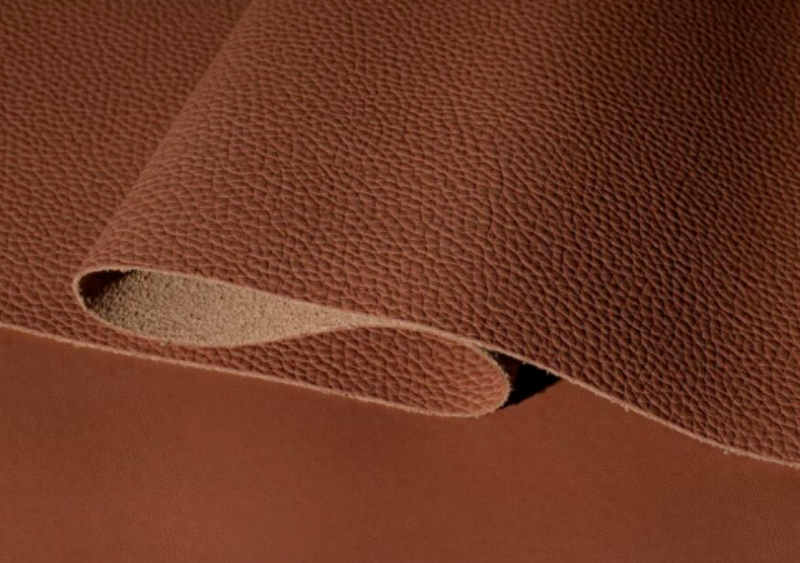


Microfiber leather is made from ultra-fine nonwoven fabric as the base material, through polyurethane slurry impregnation, solidification, and fiber splitting. Its fiber diameter is extremely small (up to 0.001 millimeters), forming a three-dimensional mesh structure that mimics the collagen fiber network of the dermis. The substrate is typically a composite fiber of polyester (PET) and polyamide (PA), coated with polyurethane resin on the surface to enhance wear resistance and texture simulation.
![Image [1]-Microfiber Leather Performance and Anti-Aging Properties: Wear Resistance, Breathability, Water-Based vs Oil-Based Types, and Additive Solutions for Enhanced Durability-Nleather](https://www.nleather.com/wp-content/uploads/2026/06/image-273-1024x721.png "image – Nleather")
Performance characteristics
1. Strong wear resistance: tear and tensile strength can reach natural levels cow leather Three times the durability of ordinary leather.
2. Good breathability: The internal microporous structure allows air to circulate, reducing stuffiness and making it suitable for long-term use.
3. Aging and cold resistance: Unaffected by sunlight and temperature changes, it is not easily fading or becoming brittle, with outstanding cold resistance.
4. Environmental Friendliness: No animal leather is required during production, reducing resource consumption; some products use eco-friendly processes to reduce pollution.
5. Easy to clean and maintain: Surface stains can be wiped with a damp cloth, and some products also have water-repellent functions.
Classification
- Water-based microfiber: soft to the touch, excellent breathability and moisture permeability, and good hydrolysis resistance. Water-based resin contains little or no organic solvents, resulting in low VOC emissions.
- Oil-based microfiber: dense coating, superior wear resistance, scratch resistance, and waterproof performance, with outstanding resistance to UV aging. Depends on organic solvents such as dimethylformamide (DMF), with solvents accounting for 40%-60%.
Anti-aging solution
- Post-finishing coating/finish: A coating or finisher containing UV absorbers/antioxidants is applied to the surface of microfiber leather. This coating can be a specialized anti-aging coating or combined with other functional finishes (such as waterproofing and stain resistance). In this way, anti-aging agents are evenly distributed on the surface of the leather, forming a barrier that effectively prevents leather aging.
- Mixing with base fabric or impregnated sizing agents: In some processes, to achieve longer-lasting UV resistance, anti-aging agents may be directly added to fiber raw materials during the “base fabric preparation” stage, or mixed with polyurethane (PU) sizing during the “impregnation and solidification” stage. The anti-aging agent is distributed throughout the base of the leather, providing internal and external protection, with durability generally superior to surface treatment alone.
![Image [2]-Microfiber Leather Performance and Anti-Aging Properties: Wear Resistance, Breathability, Water-Based vs Oil-Based Types, and Additive Solutions for Enhanced Durability-Nleather](https://www.nleather.com/wp-content/uploads/2026/06/image-274-1024x733.png "image – Nleather")
Water-based anti-aging additives
Delay or inhibit aging and degradation caused by environmental factors (such as light, heat, oxygen, ultraviolet light, etc.) during use, thereby extending its service life and maintaining stable performance.
Recommended steps to add:
Add an anti-aging additive (dosage: 3-5%) to the water-based polyurethane slurry with three steps and four taps (three impregnations, four squeezing) with a liquid retention rate of 40%-60%, and a time of 3-8 minutes to ensure uniform resin penetration.

No comments yet