

Fur making is an ancient and complex craft that combines traditional techniques with modern techniques.
The entire process can be roughly divided into four main stages: raw material preparation (tanning), design and layout, sewing and processing, and finished product finishing.
Raw material preparation – fur tanning
Fresh hides taken from animals cannot be used directly; they must undergo a series of chemical and physical treatments to become soft, durable, and resistant to decay. This process is called tanning.
Pretreatment (Preparation Stage):
· Soak to soften again: Soak the dry, hard raw hides in clean water to restore their softness and moisture.
· Scraping fat and flesh: scraping fat and residual meat off the leather board by machine or hand.
· Degreasing: Use solvents or detergents to remove natural oils from the fur.
Tanning (Core Stage):
· Acid soaking: Place the skin in an acidic solution to open up the collagen fibers and prepare for the tanning agent’s intake.
· Tanning: The leather is immersed in tanning agents (such as chromium salts, aluminum salts, formaldehyde, or popular modern vegetable tanning agents or oil tanning agents). The tanning molecules bind with the collagen fibers of the skin, stabilizing it so it is no longer prone to rot, hardening, or shrinkage. This is a key step in transforming “raw hide” into “cooked hide.”
Sorting Stage:
· Fatting: Adding oil to keep the leather board soft and tough.
· Drying: Slowly dry under controlled conditions.
· Softening the Stretch: The leather sheet becomes very soft through machine stretching and friction.
· Finishing: Sanding the back of the leather board to make it smooth and flat.
After tanning, the resulting material is what we commonly call “fur” or “fur coat,” which can be used for the next step of production.
Design and layout
This is the core creative link that determines the value and aesthetics of the finished product.
Design:
Designers sketch garments based on market demand, fashion trends, and the characteristics of the leather. Design requires careful consideration of fur direction, color, and texture.
Material selection:
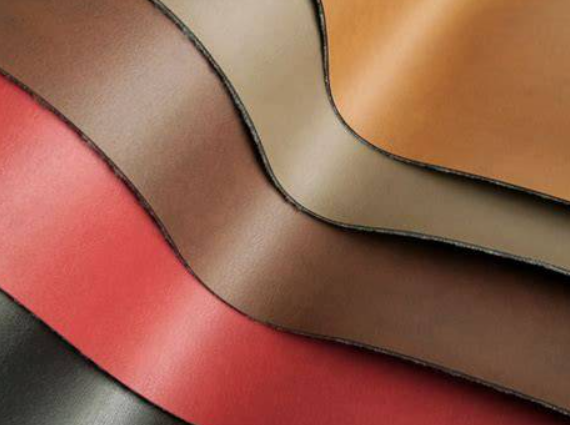
Based on the design draft, choose leather sheets that match the color, bristle length, density, and feel. A high-end fur coat usually requires multiple layers of pelts to make, so ensuring uniform color and texture is crucial.
![Image [1]-Leather Craftsmanship: The Complete Journey from Raw Hides Through Tanning, Design Layout, Sewing, and Finishing to Luxury Fur Products-Nleather](https://www.nleather.com/wp-content/uploads/2026/06/image-48.png "image – Nleather")
Layout:
This is a unique and highly technical step in fur craftsmanship.
· Lay the designed paper pattern flat on the board.
· The typesetting artist must arrange each piece of paper with extreme precision, just like playing with Tetris, following the direction of the hair, while skillfully avoiding existing damage, scars, or weak spots on the board, maximizing the use of every inch of leather and reducing waste.
· Use chalk to draw contour lines along the paper pattern on the board.
Sewing processing
This is the process of transforming leather into finished products and involves multiple meticulous crafts.
Cutting:
Workers use very sharp specialized cutters to carefully cut the leather board along the drawn lines. The incision should be smooth and neat, without damaging the hair roots.
Sewing:
There are special methods for fur sewing:
· Patchwork: Sewing small pieces of leather together to form a larger fabric. The joints must be tight and smooth.
· Inlay: An advanced technique where leather of different colors is cut into patterns and then joined together to create exquisite patterns.
· Drawing the knife: another distinctive craft. One piece of leather is cut diagonally into strips of a certain width (e.g., 0.5-1 cm), then stretched and sewn like an accordion. This increases the length and flexibility of the garment pieces, making the garment softer, draping better, and creating a unique color gradient effect.
Lining:
Sew inner layers (such as silk, acetate fiber, etc.) for fur garments, covering the internal stitching for a more comfortable and smooth fit. It also includes sewing pockets, buttons, and other accessories.
![Image [2]-Leather Craftsmanship: The Complete Journey from Raw Hides Through Tanning, Design Layout, Sewing, and Finishing to Luxury Fur Products-Nleather](https://www.nleather.com/wp-content/uploads/2026/06/image-47.png "image – Nleather")
Finished product sorting
Final beautification and quality inspection steps.
Final inspection:
Check for defects and ensure the stitches are secure.
Combing:
Use high-pressure airflow and a special comb to comb the blanket to make it fluffy, smooth, and glossy.
Ironing:
Use a steam iron to gently iron one side of the leather board, ensuring it sets and smooths out the final shape.
Packaging:
Place in dust bags, hang or box, ready for sale.

No comments yet