

Why is “softness” so important?
Have you ever encountered these situations?
- Newly bought leather jacket Stiff Is it uncomfortable to wear?
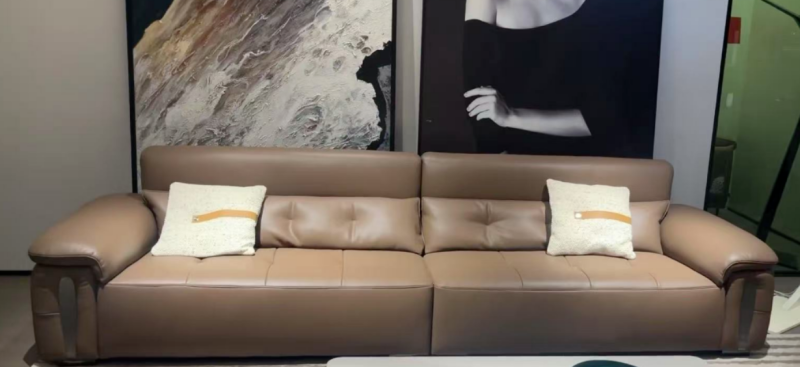
- Genuine leather sofa Poor resilience , Sitting for too long leads to collapse?
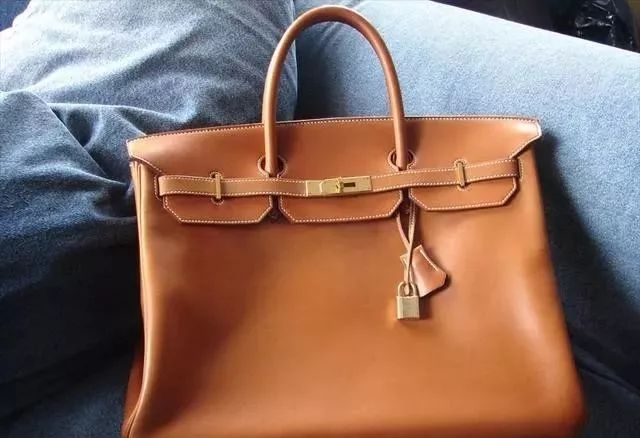
- Leather bags and shoes at the folded area Cracks are more likely to appear ?
These issues are largely related to improper control of the leather’s softness. Proper softness means:
- Ultimate comfort experience
- Excellent durability and deformation recovery capability
- Higher product added value and customer satisfaction
![Image [1]-Leather softness testing – Nleather-Nleather](https://www.nleather.com/wp-content/uploads/2026/08/20260802-145708-BtefA-nleather-silicone-leather.png "20260802-145708-BtefA-nleather-silicone-leather – Nleather")
Who decides whether the hand feels “soft” or not?
When evaluating softness, there are usually two main “judges”:
1. Sensory Assessment—The “Hands” of the “Veteran.”
Experienced professionals evaluate it through “one touch, two pinching, three bending,” and provide descriptions such as “soft,” “plump,” and “elastic.” This method is intuitive and is a traditional craft within the industry.
2. Instrument Detection—Data from the “Eye of Science.”
To be more objective, precise, and comparable, we need instruments to speak. The main methods include:
- Bending stiffness test : Measures the degree of curvature of leather under force; the smaller the value, the softer the leather.
- Compression and rebound testing : Assesses the leather’s ability to return to its original shape after compression, reflecting its elasticity.
- Comprehensive tactile test : Advanced instruments can simulate human touch and quantitatively analyze multiple tactile parameters.
What factors affect the “softness” of leather?
From raw leather to exquisite leather products, softness can change at every step of the process:
- Source : The species, age, and location of the animal are the innate foundation.
- Tanning and making : chrome tanning, Veg-tan and tanning and other process choices are crucial.
- Post-release summary : Pull soft, drop soft, stretch the board, add fat These processes are key steps in adjusting softness.
- Environment : Temperature and humidity affect the moisture content of the leather, thereby altering the tactile feel.
![Image [2]-Leather softness testing – Nleather-Nleather](https://www.nleather.com/wp-content/uploads/2026/08/20260802-145758-zLABC-nleather-silicone-leather.png "20260802-145758-zLABC-nleather-silicone-leather – Nleather")
ISO 17235-2015 Leather – Physical and chemical tests – Determination of softness
This international standard specifies a non-destructive method for determining leather softness. It is suitable for all non-hard leathers, such as upper leather, furniture leather , leather goods, and leather goods clothing leather.
Principle: A cylindrical pressure rod of specified mass descends at a specified speed onto the securely clamped leather area. The depth of the leather indentation caused by the pressure bar is recorded as the softness value.
Experimental methods
1. Preliminary preparation
- Sample Calibration: Leather samples are standardized according to ISO 2419.
- Sampling requirements: The test area must comply with ISO 2418 requirements. There is no need to cut samples from the leather sheet; nondestructive measurements can be performed directly on the raw hide.
2. Selection of Apertures
Choose the annular aperture of the testing instrument based on the hardness of the leather:
- 35 mm: Suitable for harder leathers (such as upper).
- 25 mm: Suitable for medium-soft leather (such as furniture leather and soft leather uppers).
- 20 mm: Suitable for very soft leather (such as clothing leather )。
3. Instrument zeroing
- Open the instrument and place a standard metal disc (diameter ≥60 mm) on the lower gripper surface, covering the test hole.
- Close the instrument and clamp the disc.
- Release the load pressure rod, and once the reading on the test meter stabilizes, reset it to zero.
- Open the instrument and remove the metal disc.
4. Sample measurement
- Place the leather test area flat on the lower gripper surface, ensuring full coverage of the test hole with no visible defects above the hole.
- Close the instrument to firmly hold the leather.
- Release the load pressure rod, causing it to drop vertically by 11.5 mm in 1.5 seconds ± 0.5 seconds.
- After the reading on the test table stabilizes, record the reading (accurate to 0.1 mm), which is the softness value (indentation depth) of the leather at that point.
- Open the instrument and remove the leather.
5. Repeated measurements
- Select at least three independent and non-overlapping areas on the leather (the spacing between zone centers should be greater than the gripper diameter), and repeat the measurement process in step 4.
6. Results Report
- Softness readings for all individual measurement points are reported, and their arithmetic mean is calculated as the final result.


No comments yet