

Due to the significant differences in fiber structure and surface charge between leather tanning processes, each leather has its own focus on dyeing and fixing methods. I divided it up Veg-tan Hide 、chrome tanned leather、 Oil-tanned leather and Machinery tanned leather Four major categories, with dedicated methods and comprehensive comparative analysis.
Detailed explanation of dyeing and fixation methods exclusive to core categories
Veg-tan Leather (Vegetable-Tanned Leather)
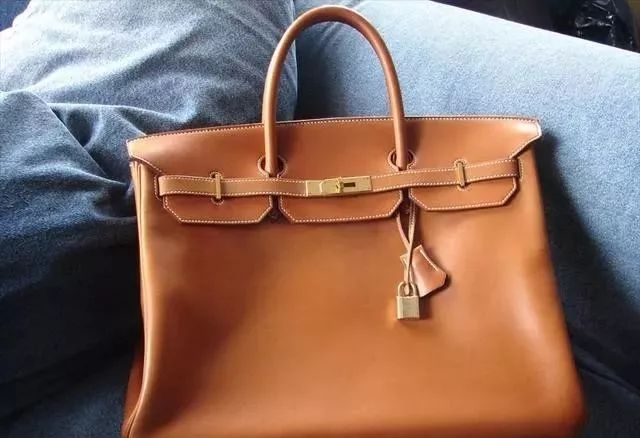
Veg-tan The leather fibers have a tightly knit structure, with plant tannins (negatively charged) on the surface, and are inherently oil-free, Extremely strong water absorption 。 The biggest challenge in dyeing is: Uneven dyeing And The leather surface is dry and hard 。
![Image [1]-Dyeing and Fixing Veg-Tan, Chrome, Oil-Tanned, and Machinery Leathers – Nleather-Nleather](https://www.nleather.com/wp-content/uploads/2026/07/20260712-063211-Jv9XZ-nleather-silicone-leather.png "20260712-063211-Jv9XZ-nleather-silicone-leather – Nleather")
Exclusive dye selection :
- Alcohol Dye : Extremely strong penetration, high color saturation, and the most vivid colors, but it greatly damages leather oils, causing the leather to harden and crack.
- Water-based/Aniline Dye ) : Water as the solvent, slightly slower penetration, semi-transparent color (similar to watercolor), minimal oil damage, and good tactile feel.
- Acrylic Paint : Extremely strong coverage (similar to paint), can create special effects like starry skies, but covers pores and is prone to cracking at bends.
Exclusive Color Fixing Process (Key Steps) :
- Conditioning : Before dyeing, the leather surface must be evenly moistened with clean water (in a sponge state). This step is crucial, using moisture to fill the gaps in the fibers and preventing the dye from seeping in instantly, causing uneven dyeing.
- Dyeing : Use a “small amount multiple times, apply in circular layers” to avoid pigmentation.
- Oil Feed : This is it Veg-tan The soul steps of Gegu Se 。 Because dyes (especially alcohol dyes) carry away grease, they must be dyed while half-dried Immediately apply horse oil or cow’s foot oil 。 This not only restores the leather’s toughness but also makes the color more vibrant and translucent
- Top Coat :
- Traditional law : to use Water wax , which both fixes color and forms a waxy polished layer, and the color deepens (patina) over time.
- Modern law : to use Anti-stain lotion , forming a transparent “plastic film” on the surface, which is effective against dirt but prevents discoloration and patina effects in the leather later.
Special Tips : If necessary Veg-tan and the reform proceeds Dyed through (Dye the entire skin), must be used before dyeing Soak in warm water , using saturation to ensure even dye penetration.
chrome tanned leather (Chrome-Tanned Leather)
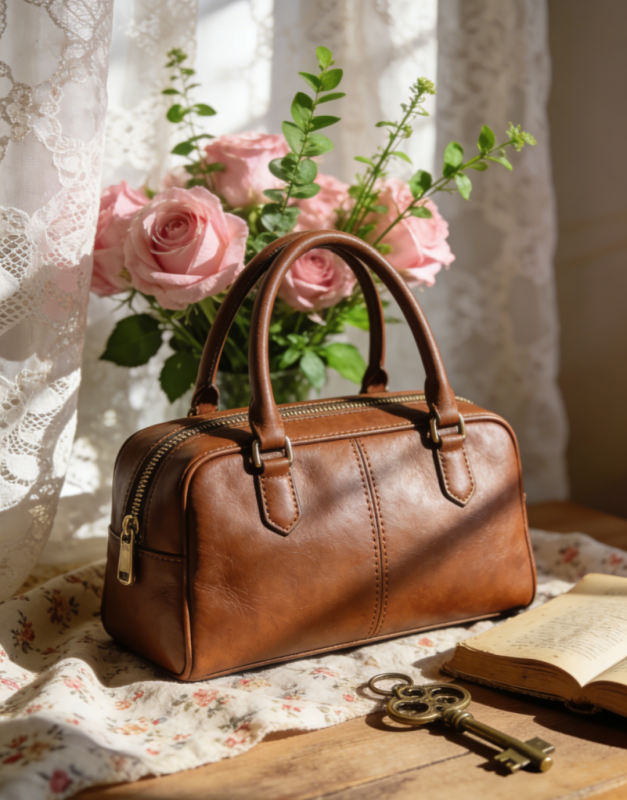
chrome tanned leather The fibers are soft and have strong properties Cationic (positive) charge 。 Since industrial dyeing is usually done inside a drum, the core of fixation lies in solving the problem The surface charge is too strong This leads to issues such as “dyeing the flowers” or “the core not coloring.”
![Image [2]-Dyeing and Fixing Veg-Tan, Chrome, Oil-Tanned, and Machinery Leathers – Nleather-Nleather](https://www.nleather.com/wp-content/uploads/2026/07/20260712-063241-PKgNK-nleather-silicone-leather.png "20260712-063241-PKgNK-nleather-silicone-leather – Nleather")
Exclusive color fixation principle :
- chrome tanned leather It has good affinity for anionic dyes but requires extremely high dyeing processes.
- Neutralization : Before dyeing, careful neutralization is required to reduce excessive positive charges on the surface, ensuring uniform distribution and preventing dye from remaining on the surface and forming color patterns。
- Retanning : to use Acrylic resin retanning agent is key. Amphoteric acrylic resin modified by the Mannich reaction can introduce amino cation groups to serve as bridge connections chrome tanned leather Compared to dyes, it can increase dye uptake by about 18% and significantly enhance moisture rub adhesion。
Drum dyeing process parameters :
- pH value : Keep it between 4.0 and 5.0, and the temperature be 45 – 55°C。
- Enzyme-assisted osmosis : Before dyeing, acidic protease softens the blue-wet leather, dispersing fibers and increasing the dye rate from 84.2% to 98.4%, achieving “low-temperature dyeing” and reducing energy consumption
Oil-Tanned Leather
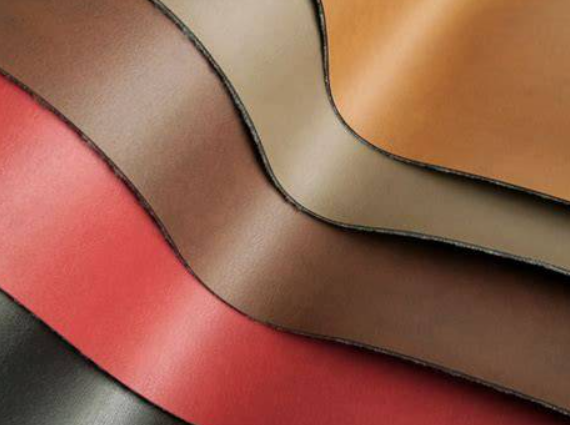
The inside of oil-tanned leather is full of oil, giving it a strong and strong coating Hydrophobicity 。 Ordinary water-soluble dyes are difficult to penetrate.
![Image [3]-Dyeing and Fixing Veg-Tan, Chrome, Oil-Tanned, and Machinery Leathers – Nleather-Nleather](https://www.nleather.com/wp-content/uploads/2026/07/20260712-063305-GPHuq-nleather-silicone-leather.png "20260712-063305-GPHuq-nleather-silicone-leather – Nleather")
Exclusive dyeing characteristics :
- Stain resistance and color-changing effects : After dyeing oil-tanned leather, when you press the leather surface with your finger, the color lightens (oil particles are squeezed out), but it returns when released—this is a typical identification feature。
- Not suitable for bright colors : Due to oil infiltration, the dye usually produces a different color Muted , it’s hard to do it like chrome tanning or Veg-tan This achieves a high-gloss mirror finish
Key points for color retention :
- Sulfur dye (Sulfur Dyes) : The most commonly used oil-tanned leather (especially oil-tanned glove leather) is: Sulfide dyes 。 This dye needs to be dissolved in a strongly alkaline environment (pH 11-12), then treated with air oxidation or weak oxidizers (such as hydrogen peroxide) to make the dye insoluble inside the fiber, thereby achieving color fixation.
- Add oil : Once oil-tanned leather is dehydrated after dyeing, waterproof grease must be replenished; otherwise, it will lose its “dirt resistance” and “waterproof” properties。
- Bleaching pretreatment : If you want to dye light or light colors, chemical bleaching must first remove the base color of the original leather; otherwise, the oil will turn yellow and affect the color accuracy.
Organic/Aldehyde/Alum Tanned Leather
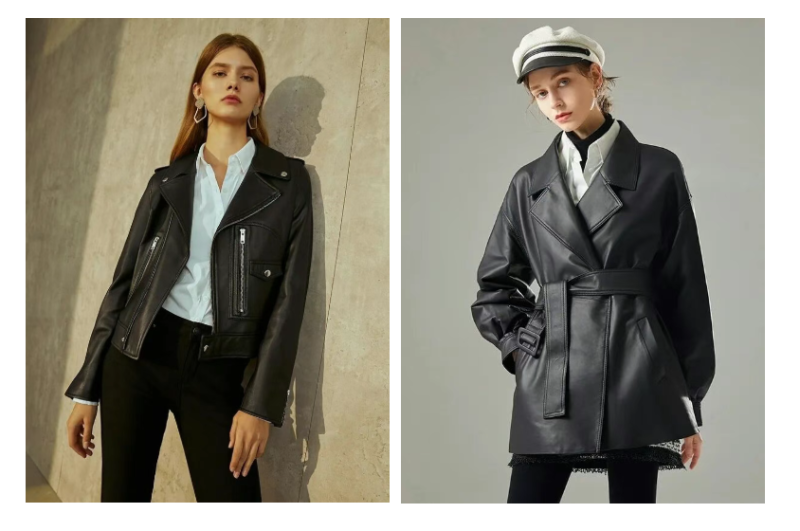
This type of leather (such as baby shoes and gloves commonly used) contains no chromium, and the fiber surface lacks the requirements needed to bind with anion dyes Positive charge groups , leading to making it extremely difficult to color 。
Exclusive dyeing dilemmas : Conventional anionic dyes (acidic and direct dyes) almost cannot dye organic tanned leather.
Solution :
- Cationic dye (Basic Dyes) : This is the only dye that can be dyed well. However, the dyeing process is extremely fast and it is very easy to dye flowers. You must first operate it Scrub the leather surface with hot water , and extremely thin dye solutions are used, applied multiple times in thin layers (modern processes are less commonly used due to low efficiency and the tendency to produce bronze spots).
- Oxidized starch fixation technology : The latest patented technology is incorporated into the dyeing bath Oxidized starch additives 。 The carboxyl and aldehyde groups produced by oxidized starch can bind with dyes and leather fibers at multiple points, enabling organically tanned leather that was originally difficult to fix with a “uniform, rich color tone and good wash resistance.”
Comprehensive Comparative Analysis Table
| Dimension | Veg-tan Veg-Tan | chrome tanned leather (Chrome-Tan) | Oil-Tanned Leather (Oil-Tan) | Organically tanned leather (Aldehyde) |
|---|---|---|---|---|
| Fiber characteristics | It is firm, highly absorbent, and softens when exposed to water | Soft, highly elastic, and moderately absorbent | Strong oily feel, water-repellent, and water-repellent | Similar to that chamois leather Texture, soft fibers |
| Surface charge | Negative charge/neutral | Strong positive charge (requires neutralization) | Neutral/hydrophobic layer | Weak negative charge/neutral |
| The best dye | Alcohol dyes, base dyes , oil dye | Acid dyes, direct dyes , reactive dyes | Sulfide dyes , oil-soluble dyes | Cationic dyes (Special additives required) |
| Color performance | The colors are rich, suitable for leather carving, and have a strong sense of transparency | The richest and most vivid colors, with the highest color fastness | The color is somewhat matte, retro, wear-resistant, and stain-resistant | Light colors tend to turn yellow and have limited color choices |
| Core pain points | Hardening and cracking, uneven dyeing | Dyeing the flowers and core should not be colored | Dye cannot be absorbed, resulting in light colors | It simply can’t dye the color and fades badly |
| Core method for color fixation | Lubrication (horse oil) + sealing (wax/resin) | Neutralization + amphoteric tanning agent (bridging effect) | Oxidized color development + deep oil replenishment | Cationic additives + starch oxide crosslinking |
| Color fastness (wear resistance) | Medium (requires coating protection) | High (Mature industrial production) | Very high (surface wear but internal color) | Lower (prone to shedding) |
| Environmental friendliness | The highest (Natural ingredients) | Medium (trivalent chromium itself is safe, but requires protection against hexavalent chromium, making wastewater treatment difficult) | High (traditional techniques cause heavy pollution, but have been improved in modern times) | High (metal-free) |
| Main application scenarios | Leather carving, belts, high-end leather goods, shoe soles | Accounting for over 90% of the market: sofas, bags, and shoe uppers | Work boots, outdoor gloves, scratch-resistant products | Baby products, special gloves, and those in contact with the skin |
Summary: How to choose based on product needs?
If you want to do “cattle raising” or leather sculpture, : Choose Veg-tan Hide 。 Strictly follow the four-step method of “hydration → dyeing → oiling → applying wax,” with the core of color fixation being Subsequent grease filling Otherwise, the skin will crack and become brittle.
If it is for industrial production bags/sofas, : Choosechrome tanned leather。 The core of color fixation lies in: The tanning process is resumed Relying on acrylic resin and other retanning agents as “double-sided tape” to lock in the dye, the process is the most mature and has the best color fastness.
If you’re making work boots and aiming for dirt resistance, : Choose Oil-tanned leather 。 Minor surface scratches can be smoothed out by hand, and color fixation mainly relies on this Sulfide dyes Oxidation reaction. Note that this type of leather shoe emulsion tends to discolor.
If it is for special purposes (such as baby shoes), : Choose Machinery tanned leather 。 Specialized ones must be used Cationic dyes Or Starch oxidation method Fixing the color is almost ineffective with conventional dyeing methods. (The above content is for reference only)

No comments yet