

Note: To avoid misunderstandings caused by inaccurate translations, the relevant standard Chinese is specially retained; please refer to the Chinese version.
![Image [1]-GB/T 38412-2019: Essential Leather Quality Guide – Nleather-Nleather](https://www.nleather.com/wp-content/uploads/2026/07/image-12.png "image – Nleather")
Interpretation of the Products Standard
Regarding appearance quality, GB/T 38412-2019 clearly specifies nine aspects, including overall appearance, surface material, lining, seams, and stitching marks. Among these, the highly regarded surface material is more finely divided into leather, recycled leather, fur, artificial leather /Together finished leather textile fabrics and other materials.
1. Leather (genuine leather, natural leather)
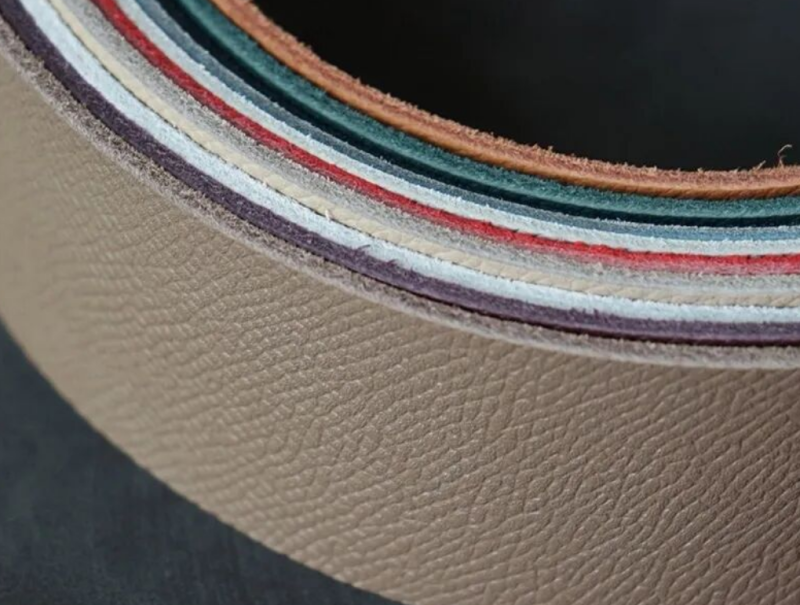
It is the raw hides peeled from cattle, sheep, pigs, horses, deer, or certain other animals, processed by tanneries to produce leather goods with various properties, strengths, textures, colors, and patterns. It is an essential material for modern genuine leather products.
2. Regenerated leather
It is made by crushing various animal hides and genuine leather scraps, then blending chemical raw materials for processing. Its surface processing is similar to genuine leather’s trimmed and embossed leather, characterized by neat edges, high utilization, and low cost, but the leather body is generally thicker and less strong.
3. artificial leather
On textile or non-woven fabric bases, it is made by processing various PVC and PU foaming or laminated materials with different formulas. It can be processed according to requirements such as strength, abrasion resistance, cold resistance, color, gloss, and patterns. It features a wide variety of patterns, good waterproof performance, uniform edges, high utilization rate, and is relatively cheaper than genuine leather.
4. Combined finished leather
These are plastic products that mimic the composition and structure of natural leather and can be used as substitute materials. The surface is mainly polyurethane, and the base material is nonwoven fabric made from synthetic fibers such as polyester, cotton, and polypropylene. Both the front and back sides closely resemble leather, with some breathability, attractive sheen, resistance to mold and insect damage, and better than ordinary ones artificial leather Closer to natural leather.
| Inspection items | Requirements |
| Overall appearance | The shape is full, the curves are natural, the glue is flat, the corners are symmetrical, and the structure is basically neat and clean |
| Leather, recycled leather | The thickness is uniform, with no cracks, slurry cracks, or discoloration; the leather surface is flat, without severe creases or knife wounds. The surface of glossy leather should be applied flat, with no damage on the main areas. Minors may have two minor or rough spots, each not larger than 9mm, and two inconspicuous marks or creases are allowed. Suede leather has an even color. The fuzz is fine and tight: no oil spots, stains, prominent wrinkles, or scars |
| Fur | The fur is basically smooth, flexible, loose, clean, with no crochet hooks, obvious hair loss, oily hair, or hair formation; Dyeing is firm with no color spills: no obvious color spots, color differences (except for special effects), and other defects |
| artificial leather /Together finished leather | No obvious indentations, bumps, or bumps |
| Textile fabrics | Main areas must have no warp or weft breaks, no skippers, skippers, obvious printing channels, stains, or defects; minor areas may have up to 2 minor defects |
| Other materials | There are no defects affecting the main parts of the workforce |
| Lining | Plain clothes are neat and tidy, clean. No defects such as surface cracks, warp breaks, weft breaks, sand skipping, cracks, or loose edges |
| Sutures | Select stitching that matches the quality of the fabric and lining used, with quality and color matching each part |
| Stitching stitch | The upper and lower lines should match and the lines should be straight. The needle spacing is consistent. There should be no empty stitches, missed stitches, or skipped stitches in the main areas. On a single product, no more than one empty stitch, one missed stitch, and no skipped stitch should be allowed; no more than two empty stitches, missed stitches, and skipped stitches should each occur |
| Adhesive quality | Strong adhesion with no detachment |
| Zipper | Straight suture with consistent margins: smooth and controlled closure. No misalignment, tooth loss, or color fading |
| Accessories | Glossy without rust residue, no missed plating or burrs, and should not show peeling or peeling |
| Accessory installation | Flat and firm |
For physical and mechanical properties, the leather has more detailed requirements from six aspects: friction color fastness, lock durability, fastener durability, and zipper durability.
| Inspection items | Requirements |
| Rubbed color fastness (stain stain) grade: Leather and suede with a surface coating thickness less than or equal to 20pm | Suede: dry wipe ≥3, wet wipe ≥2 others: thousand wipe ≥ 3, wet wipe ≥ 2/3 |
| Rubbing color fastness (stain staining) / grade: fur | Dry Wipe 3/4 Wet Wipe ≥3 (Color: Thousand Erase ≥ 2/3, Wet Wipe ≥2) |
| Rubbed color fastness (stain stain)/grade: Leather with a surface coating thickness greater than 20pm | Dry wipe: 3/4. Wet wipe≥3 |
| Friction Color Fastness (Stain Stain)/Grade: artificial leather /Together finished leather and recycled leather | Dry wipe: 3/4. Wet wipe≥3 |
| Friction color fastness (stain staining) grade: textile materials, uncoated microfiber materials | Denim: dry wipe ≥3. Wet wipe is not accepted. Others: dry wipe ≥3/4. Wet wipe ≥ 2/3 |
| Lock durability | Switch testing shows normal locking and no abnormalities; garbled text testing should not open the glasses |
| Fastener durability | After testing, it can be used normally with no abnormalities |
| Zipper durability | After testing, there are no teeth loss, misalignment, or damage |
| Plastic buckles are durable | After testing, it can be used normally with no abnormalities |
| Corrosion resistance of hardware accessories | The number of corrosion points should not exceed 3, and each point should not exceed 1mm |
Not suitable for special styles of materials, such as woven leather or perforated leather materials.
Common types of leather with surface coating thicknesses less than or equal to 20 pm include water-dyed leather, aniline leather, and semi-aniline leather
distinguish truth from falsehood
(1) Check the quality
Full shape, natural curves, and clean and tidy: For leather products seen in daily life, the bag can stand up empty, not slump; The toe of the shoes should be rounded and symmetrical, not crooked; The wallet snaps shut with a snap and can’t be loose.
The leather surface is smooth, with no cracks or slurry cracks: meaning the leather surface should not turn white or powdery at a bend, like wall veneer or chipping. Instead, gently fold the leather surface 90 degrees to check for whitening or peeling at the crease. If so, it indicates the coating is too brittle and of poor quality.
Glossy leather is mostly undamaged: Shine a flashlight diagonally at the leather, ideally at a 45° angle. If you can see dents and uneven areas from the front, don’t bring it home.
(2) Check the accessories
GB/T 38412-2019 requires that zippers, magnetic fasteners, and hardware must meet seven sub-standards. If consumers do not have the required testing site when purchasing goods, they can use a key to lightly scrape the metal surface; shallow marks are normal, but discard fading or rust spots directly; Zipper pulled back and forth 5 times to ensure smooth and no jamming to qualify.
(3) Color fastness by rubbing
GB/T 38412-2019 requires dry friction ≥ grade 3 and wet friction ≥ grade 2-3. As a consumer, you can wipe the leather surface back and forth with wet wipes 10 times. The more heavily the tissue dyes, the easier it is to fade.
(4) Check the labels
GB/T 38412-2019 requires leather products to label the manufacturer (or distributor) name, unit address, and contact number; Product name, product standard number, trademark, item number (model), main material, and qualification (inspection) mark. For online shopping, first check the details page to see if there is a photo of the certificate of conformity. In physical stores, ask the staff to show the tag; if any item is missing, you can directly request a return or exchange.
(5) Safeguarding Rights and Interests
For offline shopping, keep your receipt + tag for 15 days. For online shopping, remember to screenshot the product page quality inspection report. If there is cracking, fading, or hardware rust, it is considered “appearance quality” substandard and can be returned or exchanged according to the Consumer Rights Protection Law.


No comments yet